Troubleshooting & Analysis
The day my espresso tasted like a swimming pool
I knew something was wrong before I even took a sip. My Breville had started making this gurgly, straining noise during the heat-up cycle — like it was working harder than it should. Then the shot pulled, and the crema looked thin and gray instead of that tight hazelnut color. I drank it anyway. Mistake. It tasted faintly of chlorine and something almost metallic underneath. That was the morning I realized I'd let the water filter go for what was probably five months instead of two.
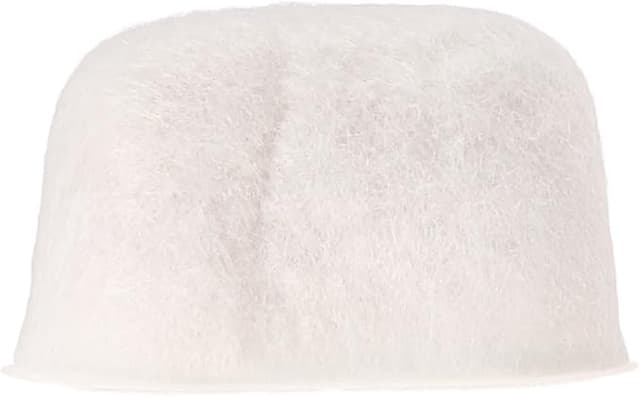
I pulled the old BWF100 out of the tank and it was disgusting — the white charcoal puck had gone a dingy brownish-gray, and there was a chalky ring of scale crusted around the holder where it sat. That ring is the part that scares me. Scale is what kills these machines. Not dramatically, but slowly: it coats the heating element, the boiler runs hotter to compensate, and one day the thing just doesn't come back on. So I went looking for replacements, and that's when the OEM-versus-compatible question landed in my lap.
The price math that pushed me off OEM
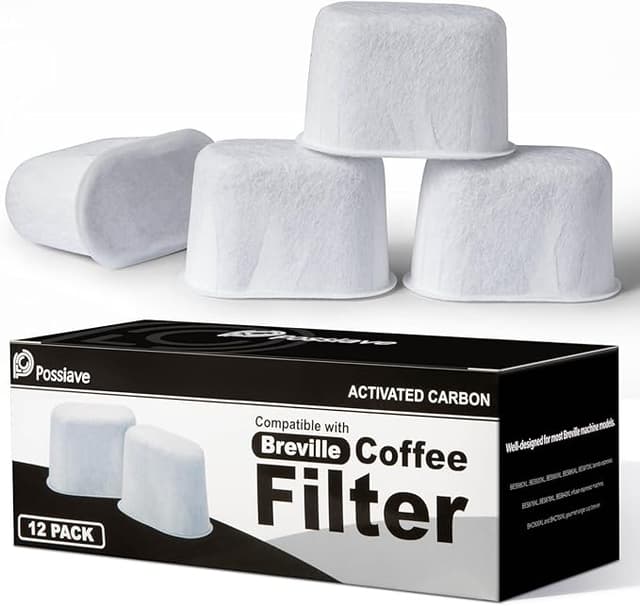
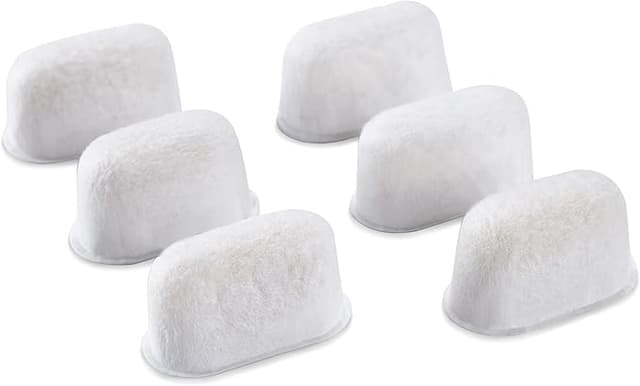
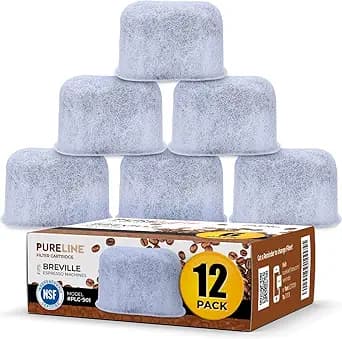
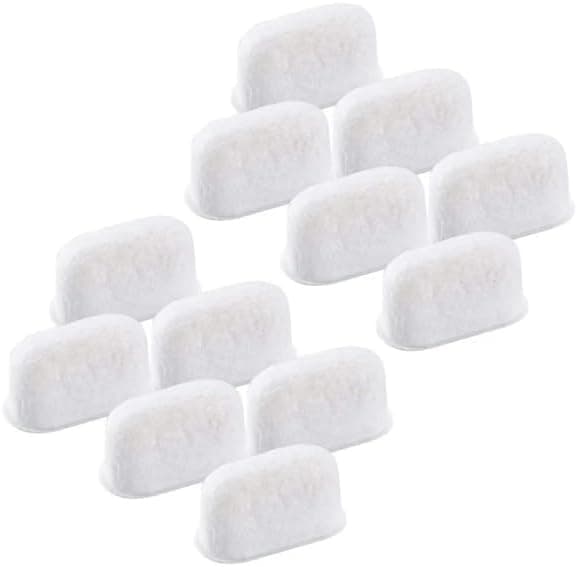
Breville's own BWF100 filters run about $13 for a 2-pack at most places — sometimes $15 if you buy them one at a time, which is the worst way to do it. You're meant to swap every two months. That's six filters a year. Buy them in OEM singles and you're looking at $40-something annually just to keep clean water running through a coffee maker. The compatible 6-pack I ended up trying was around $16 — so a full year of filters for less than what two OEM singles cost. That's not a rounding-error difference. That's a tank of gas.
I'll be honest about why I hesitated, though. A filter isn't a phone case. This water touches the inside of a machine I paid real money for, and "remove impurities" claims from a no-name brand made me nervous. So I treated the first pack like a test, not a purchase.
Does it actually fit and work?
Fit first, because that's where cheap filters usually betray you. The compatible puck dropped into the BWF100 holder with the same satisfying seat as the original — no shaving, no forcing. I did the soak step the instructions call for: five minutes submerged in water before installing. Don't skip that. The first time I rushed it and slotted a dry one in, the machine spat air and the first two shots sputtered. Soaked properly, it clicked into the holder, the holder went into the tank, and the gurgle from that bad morning was just… gone. Quiet heat-up again.
Taste came back the next morning. Clean, no pool-water note, crema back to that proper brown. I ran a TDS meter on the output because I'm that guy now — the compatible filter pulled my tap water down into the same ballpark as the OEM did when it was fresh. Within a few ppm. For making coffee, that's a wash. I genuinely could not taste a difference between the OEM-filtered shot and the compatible-filtered one once both were broken in.
Here's the real downside
The first day or two, there's a faint carbon taste. Not chlorine — more like the inside of a Brita pitcher you just opened. It's the loose charcoal dust that the cheaper packaging doesn't rinse out as thoroughly. The OEM ones have this too, but less. My fix: after the 5-minute soak, I give the filter a hard rinse under the tap and run one full tank of water through the machine without brewing before I make my first real cup. That flushes the dust. Skip it and your first espresso tastes a little ashy. Do it and you're fine.
The other thing — and this is the honest nitpick — the packaging is junk. Mine came as six pucks loose in a thin plastic sleeve, no individual wrapping. The OEM ones are sealed one at a time, which probably keeps them fresher on a shelf. Since I'm burning through one every two months, freshness across a year isn't a concern for me. But if you buy a 6-pack and a 2-pack, and the 2-pack sits in a humid cabinet for a year, I'd trust the sealed OEM to age better. Store the loose ones somewhere dry.
Why none of this is worth ignoring
Go back to that scale ring I found. A saturated, dead filter doesn't just dull your coffee — it stops protecting the boiler, and on a Breville the boiler is the whole ballgame. The filter is cheap insurance on an expensive machine. Which is exactly why the price gap matters so much: if a fresh filter every two months felt like a $13 chore, I'd be tempted to stretch it to four or five months. At under three bucks a filter, I have zero excuse. I swap it on schedule now because it costs me almost nothing to do it right.
So who should buy which?
If you only run your machine occasionally, store filters for a long time between swaps, or you just want the no-thought-required factory part and the $25-a-year difference doesn't register — buy the OEM. The sealed packaging and the slightly-less-dusty break-in are real, if small, advantages, and there's nothing wrong with the genuine part.
But for me, with a machine I use every single morning and a filter that's a consumable doing one straightforward job — pull scale and chlorine out of tap water — the compatible BWF100 has been the obvious call. Same fit, same taste once it's flushed, a quiet machine again, and a year of clean water for the price of two factory filters. I've bought my second 6-pack already. After that swimming-pool espresso, I'm never letting one go too long again — and now it's cheap enough that I won't have to.