Troubleshooting & Analysis
Two boxes on the counter, twenty bucks between them
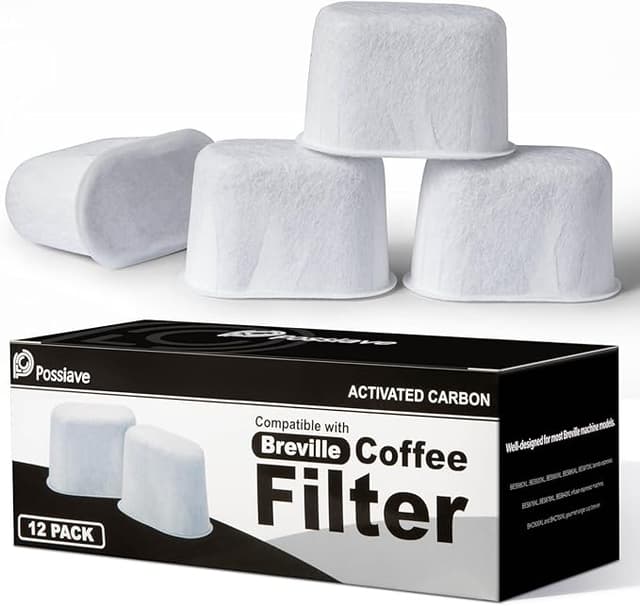
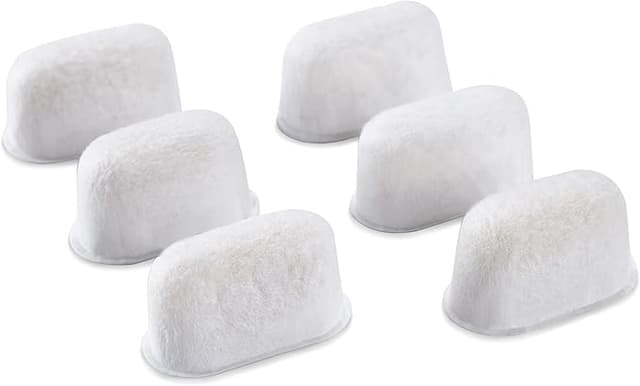
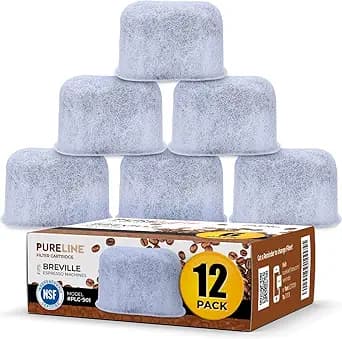
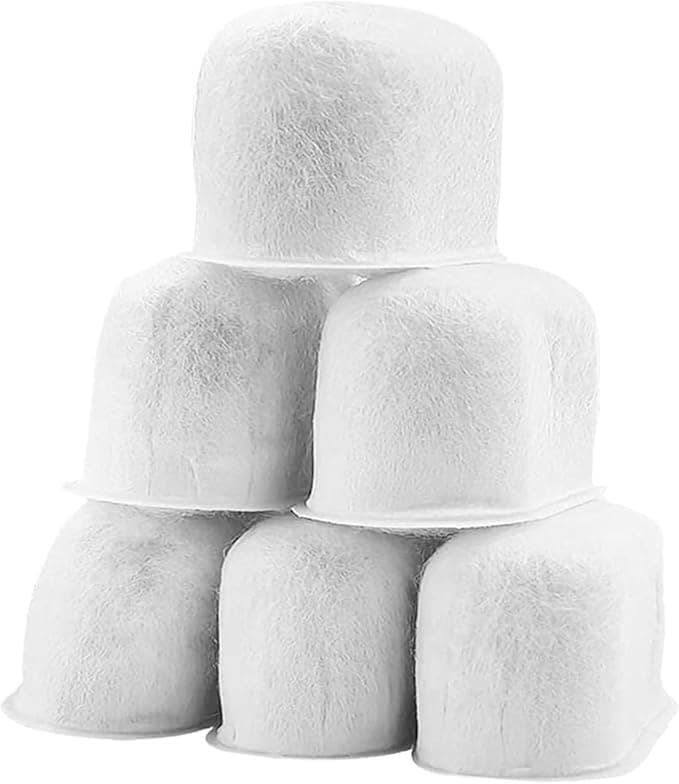
I had both sitting in front of me on the kitchen counter last spring. The genuine Breville Claro Swiss filters — a two-pack, $15.99 at the time — and a no-name compatible six-pack for $12.49. Same little disc shape. Same charcoal core. One gives you two filters, the other gives you six for less money. I stood there doing the math out loud like a crazy person, because my Barista Express (the BES870XL) had just thrown the descale light and I'd convinced myself the cheap filters were the reason it tasted flat.
They weren't, by the way. I'll get to that.
The actual cost, run out over a year
Breville says swap the filter every two months. So that's six filters a year if you're honest about it — and most people aren't, which is its own problem. With the OEM two-packs you're buying three packs a year: about $48 if the price holds, more when it doesn't. The compatible six-pack I grabbed covers the whole year for twelve and a half bucks. That's not a rounding error. That's a thirty-five dollar gap to put the same chunk of activated charcoal in the same water tank.
And the job these things do isn't complicated. They sit in the tank, water passes through carbon, chlorine and some of the dissolved junk gets pulled out before it hits the boiler. The expensive part of the Breville isn't the filter — it's the machine, and scale is what kills the machine. A filter that actually filters protects a five-hundred-dollar espresso maker. So the question was never "is the cheap carbon worse carbon." It was "does the cheap one fit and seal, or does it let unfiltered water sneak past."
Fit and install — where the cheap ones earned a side-eye
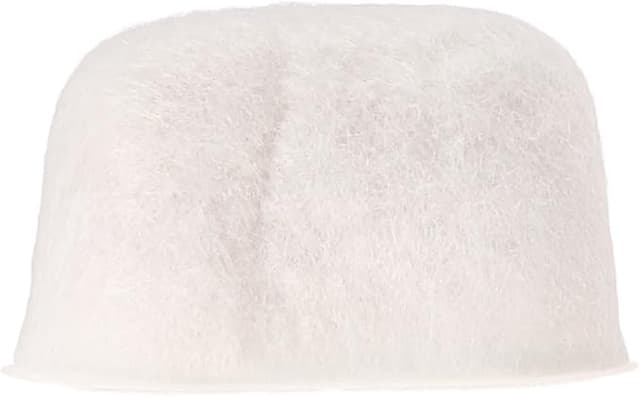
Here's my honest install. You soak the disc in a cup of water for five minutes first — non-negotiable, and skipping it is why people get a weak first pull. Tiny bubbles come off it while it sits. Then it snaps into the plastic filter holder, the holder clicks down into the bottom of the water tank, and the tank goes back on the machine.
The OEM filter seats with a clean, confident little click. You feel it grab. The first compatible one I tried — and this is the real downside, so pay attention — sat a hair loose in the holder. Not floppy, but it didn't bite the same way. I pulled the tank back off, reseated it, pressed harder, got it to hold. Out of the six in that pack, one of them I genuinely couldn't get to stay put and I tossed it. So call it a five-out-of-six hit rate on a budget pack. If you need every single unit to be perfect out of the bag, that's going to bug you. It bugged me for about a day.
But once a good one is seated, it's seated. I ran a full tank through, checked that the holder hadn't popped loose, and it was fine. Four months and a lot of double shots later, same disc holding firm until I swapped it on schedule.
What the water — and the coffee — actually did
I live in a hard-water town. Pre-filter, my tank water left a faint cloudy film on a glass. With the compatible filter in, that film backed way off — not gone, carbon doesn't pull every mineral, but clearly working. The espresso itself? I did a side-by-side over a week, OEM filter one batch, compatible the next, same beans, same 18g dose. I could not taste a difference in the cup. If a barista blind-tasted me I'd flunk. The crema looked the same, the body was the same.
Where the compatible one is a touch behind: I think the OEM carbon lasts a little longer before it tires out. Around week seven the compatible filter, my water started tasting very faintly of nothing-in-particular — that flat tap edge creeping back — a week or so earlier than the genuine one did. Two-month interval covers it either way, but if you're the type who stretches a filter to three months, the cheap one will give up first. Don't stretch it. Cheap filter, swapped on time, beats expensive filter you forgot about in March.
The thing that actually matters
A dead or saturated filter doesn't just make coffee taste dull. It stops pulling scale, and scale is the number-one reason these Breville machines die — crusted boilers, blocked lines, the descale light that never goes away. The filter is the cheap insurance. Which is exactly why the price gap is so dumb to ignore: the whole point is to swap it often, and you'll swap it more willingly when each one costs two dollars instead of eight.
So who buys which
Buy the genuine Claro Swiss if you're in a really hard-water region, run the machine daily for a café-level volume, and you want every filter to seat perfectly with zero fuss — the consistency is worth the premium to some people, and I won't argue them out of it.
For everyone else — home user, a few shots a day, normal-to-hard water — I grab the compatible six-pack and I have, three times now. You eat one possibly-loose unit per pack, you swap on the two-month dot instead of trying to stretch it, and you pour the same coffee for about a third of the yearly cost. I poured my morning double on a $12 pack this whole year and the machine's running clean. That's the verdict. The expensive box is fine. I just keep buying the cheap one.