Troubleshooting & Analysis
I didn't believe a $20 filter could be fine either
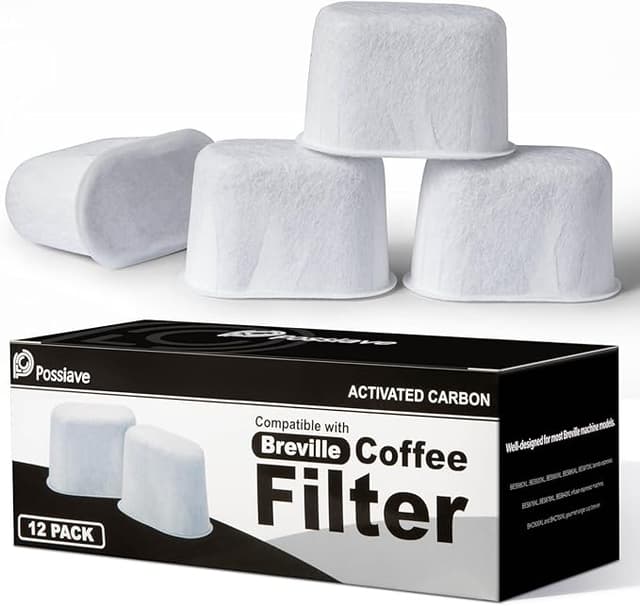
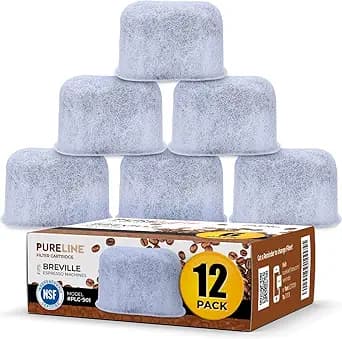
Here's the thing I said out loud, standing in my kitchen with my BES870XL hissing through its warm-up: "There's no way the cheap one is actually okay." I'd just watched a Breville-branded water filter ring up at fifty-something bucks for a small pack, and the compatible charcoal filters next to it were running around twenty. My gut said scam. My gut was wrong, and it took me four months of running the cheap ones to admit it.
So let me save you the four months. I bought these because I was annoyed, kept using them because they worked, and I'm typing this with a fresh one soaking in a glass next to me.
The price math that pushed me over
If you swap your filter every two months like Breville tells you to — and you should, more on that in a second — you're going through six a year. At OEM prices that's real money for what is, at the end of the day, a little puck of activated charcoal in a plastic cage. The compatible ones drop that yearly cost by more than half. Same job. A puck of charcoal doesn't get smarter because Breville's name is on the box.
That was the whole pitch to myself: it's not a circuit board, it's not a pump, it's a carbon filter. How badly could a third party screw up carbon?
Does it actually fit the holder?
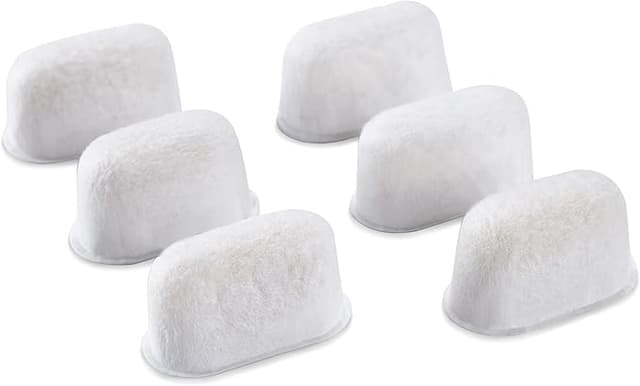
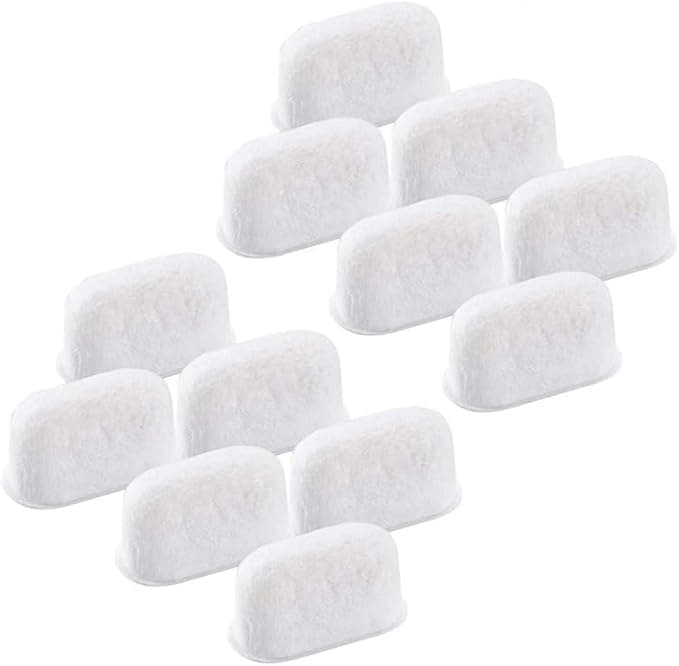
This was my first nervous moment, because a filter that's a hair too fat won't seat and a hair too thin rattles around and lets water sneak past unfiltered. I soaked the first one for the recommended five minutes, dropped it into the filter holder, and — it clicked. Snug. The holder closed without me forcing anything, and it dropped into the water tank exactly where the Breville unit sits.
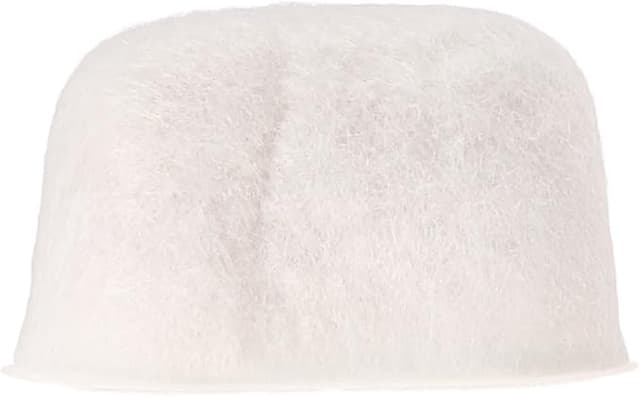
I'll be honest about the one nitpick: the molding on the compatible filter is a touch less crisp than the OEM. The seam where the two halves of the cage meet is a little rougher to the fingertip. Does it matter once it's submerged in the tank doing its job? No. But if you're the kind of person who notices that stuff, you'll notice it. I did.
The break-in nobody warns you about
First pull of espresso off a brand-new charcoal filter — OEM or compatible, doesn't matter — tastes a little flat. Slightly papery. That's the carbon settling and the fresh filter material rinsing through. With these compatibles I noticed it for maybe the first day, two shots in. By the third shot it was gone and the water was clean and neutral, which is exactly what you want under good coffee. If you want to skip the whole thing, run a tank of plain water through before your first real shot. I started doing that and now I barely register it.
Where it's as good as OEM — and where it isn't
On the thing that actually matters — pulling chlorine taste and impurities out so your espresso tastes like espresso and not like tap — I genuinely could not tell you which filter was in the tank in a blind tasting. I tried. My coffee tastes the same on the compatible as it did on the Breville one. Smoother than straight tap, no off-notes, no funk.
Where the OEM has a slight edge: I think the branded filters hold their flow a little more consistently into month three if you push them past the replacement window. The compatibles seem to load up a touch faster. Which honestly doesn't matter, because you're not supposed to push any of them past two months anyway — and that brings me to the part people ignore.
Why a dead filter is a real problem, not a marketing scare
Scale. Mineral buildup is the number one killer of these machines, and it's a quiet one — it creeps into the boiler and the lines and one day your machine just throws a fit or stops heating right. A working filter cuts down what reaches the guts of the BES870XL. A saturated, months-overdue filter does almost nothing; the carbon's spent and it's just sitting there. So the cheap filter doesn't just protect your taste, it protects a several-hundred-dollar machine. That math makes the cost of going compatible look even better — you're not skimping on protection, you're getting the same protection for less and actually replacing it on schedule because it doesn't hurt to.
That last part is the sneaky benefit. When a six-pack costs a fortune, people stretch their filters to four, five, six months to make them last. With the cheaper ones I swap on time, every two months, no guilt. The on-time swap protects the machine more than a premium filter run twice as long ever could.
Who should skip these — and who shouldn't
If you're still under warranty and you're the anxious type who'd rather not give Breville any reason to argue, run the OEM filter and sleep easy. Same if money genuinely isn't a factor and you just want the branded thing in the branded box. No shame in that.
But for everybody else — anyone staring at that price gap thinking "this feels like a ripoff" — yeah, it kind of is. The compatible charcoal filter soaked in, seated with a click, pulled the impurities out, and made coffee that tastes exactly like it did before, for less than half the running cost. Four months in, on my second pack, I'm not going back. The cheap one is fine. I didn't believe it either, and now I buy it on purpose.