Troubleshooting & Analysis
The morning my Barista Express tasted like a swimming pool
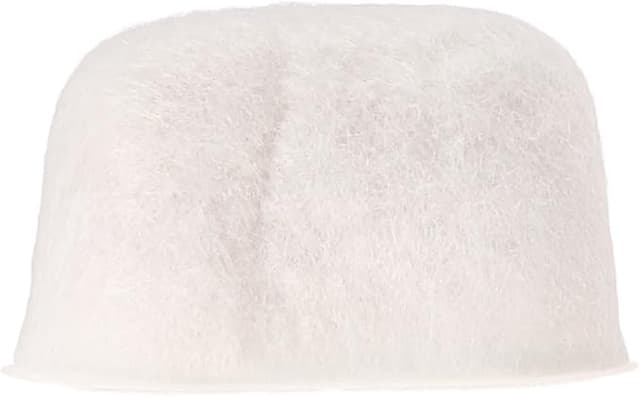
I knew something was wrong before I even pulled the shot. The water coming out of my BES870XL had that flat, slightly chemical edge to it — like a hotel ice machine. I'd been lazy. The little charcoal filter sitting in the tank had been in there since, honestly, I'd lost count. Five months? Six? Way past the two-month mark Breville tells you. When I finally fished it out, the white mesh had gone a grayish-brown, and there was a faint slimy film on the plastic cage. That was the taste in my cup. A dead filter doesn't just stop working — it starts working against you, dumping back whatever it spent months soaking up.
That clogged-filter morning is what sent me down the rabbit hole of compatible replacements, because here's the thing that actually annoyed me: I'd been avoiding swapping the filter partly out of laziness, but partly because the Breville-branded ones felt overpriced for what they are.
The price math nobody does until they're mad about it
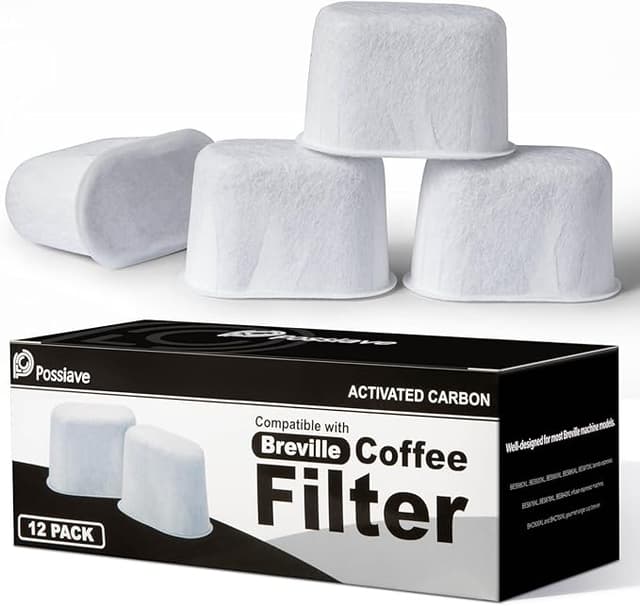
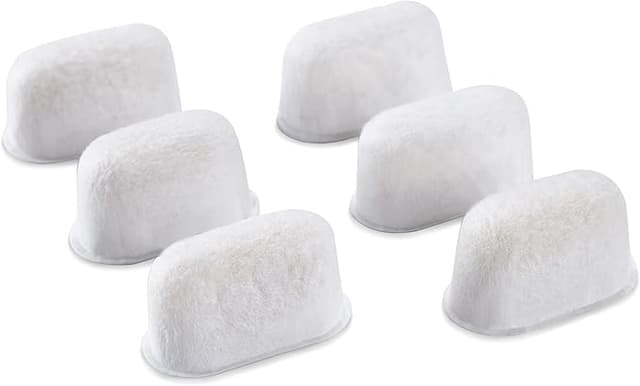
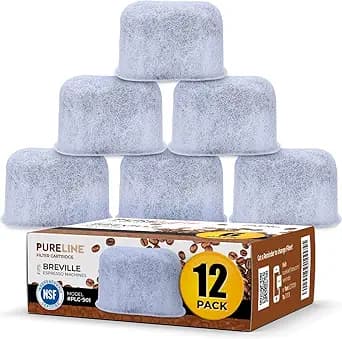
A genuine Breville six-pack runs about $20 — call it $3.30 a filter. You're told to change every two months, so that's six filters a year, roughly $20 annually if you actually keep up. Not bank-breaking. But the compatible packs I started buying come twelve to a box for around $13. That's a touch over a dollar each. Same year of filters, under $7. And because they're cheaper, I stopped rationing them — which, given what my neglected one did to my coffee, is the whole point.
So the real cost of going OEM isn't the $13 difference. It's that the higher price quietly nudges you toward stretching each filter too long. The clogged one in my tank was Breville's own. Brand on the box didn't save me from myself.
Does it actually fit? Yeah — with one nitpick
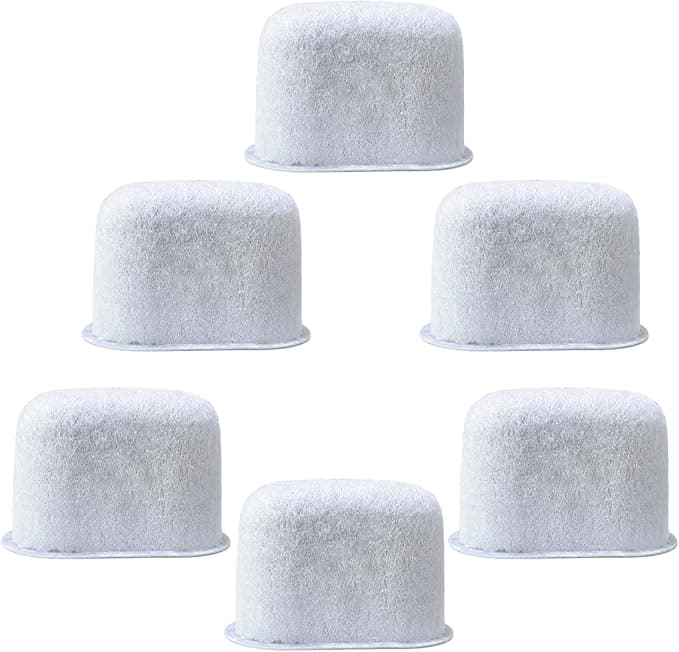
The install is the same dance as the original. Drop the filter in a cup of water for five minutes so the charcoal saturates and stops floating — you'll see little bubbles stream off it, that's normal. Snap it into the holder, and seat the holder into the bracket inside the water tank. On mine the compatible filter clicked into the holder with a slightly firmer push than the Breville one. Not loose — if anything a hair tight the first time, enough that I double-checked I had it oriented right. Once it's in, the tank drops back into the machine exactly like always. No leaks, no float, no warning lights.
One honest gripe on fit: the plastic frame on the compatible ones is a little rougher around the molding seam. You can feel the flashing with a fingernail. It doesn't touch performance — it never contacts your water path in a way that matters — but if you're someone who notices that stuff, you'll notice it.
How it actually performs in the cup
I've now run these for the better part of a year across two-month cycles. Side by side with a fresh Breville filter, I genuinely cannot taste a difference in the espresso. Both knock out the chlorine flatness and give you that clean, slightly sweet water that lets the bean actually show up. Where it counts — scale — is the bigger deal anyway. Hard water is what murders these machines; mineral crust builds in the boiler and the group, and a saturated or absent filter just speeds that along. The charcoal here pulls chlorine and the off-tastes; you still want to descale on schedule regardless of brand, so don't let any filter — OEM or not — talk you into skipping that.
The one spot where I'll give the genuine filter a slim edge: longevity feels a touch shorter on the cheap ones. By week seven or eight I sometimes catch the faintest return of that flat taste, a little earlier than the Breville held out. My fix is dumb and free — I just change them at six or seven weeks instead of eight. At a dollar a filter, swapping a week early costs me nothing and keeps the cup honest.
The downside I won't pretend isn't there
First day or two out of a fresh pack, there's a faint new-plastic smell on the dry filter before you soak it. The soak mostly kills it, and I run and dump one tank of water before pulling a real shot — after that it's gone. But if you skip the soak-and-flush, your first coffee can carry a whisper of that. So don't skip it. Cheap packaging too — they come in a thin plastic sleeve, not the tidy Breville box. Doesn't change the filter. Just looks like what it is: a no-frills part.
Who should buy which
If you're the type who will absolutely never remember to change a filter and you want the longest possible interval squeezed out of each one, the genuine Breville buys you maybe an extra week of margin. Pay the small premium, fine. And if your machine's still under warranty and you're nervous about anything non-original in the tank — these don't contact the warranty in any way I've seen, but if it'll keep you up at night, that's a real reason.
For everyone else? I went back to the clogged-filter morning that started this and asked myself: would brand-name have saved me? No. My neglect did the damage, and the cheaper filters are the thing that finally got me changing them on time because I stopped treating each one as precious. Same charcoal job, a third of the cost, fits my BES870XL with one firm click. I've bought them four times now, and I'll buy them again the next time my cup tells me it's been too long.