Troubleshooting & Analysis
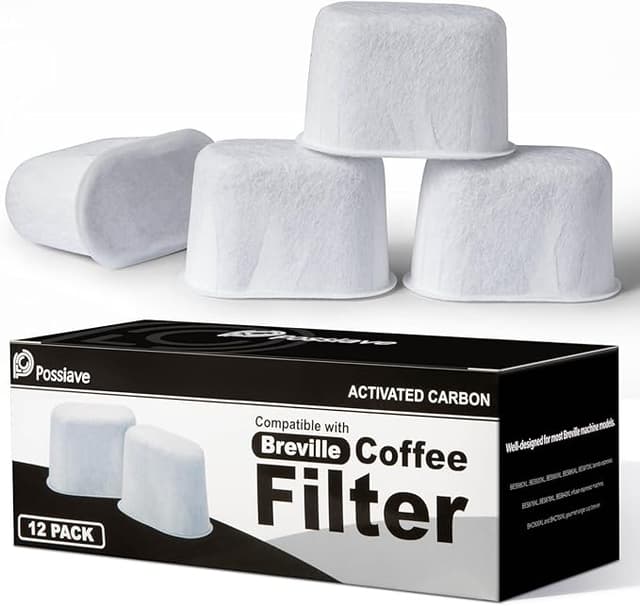
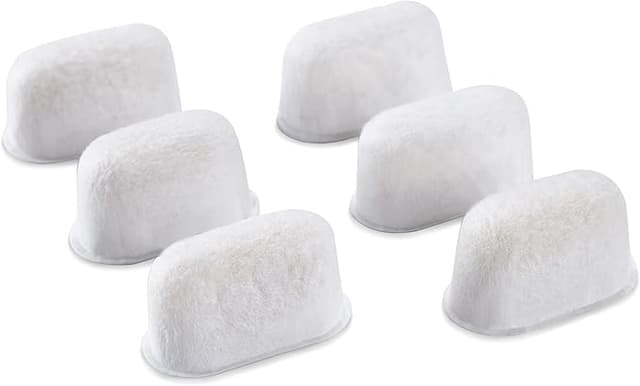
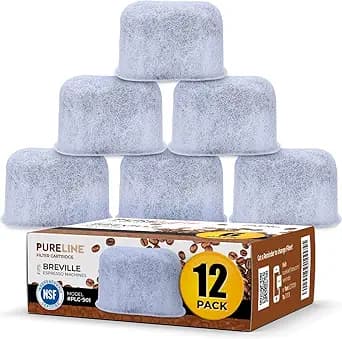
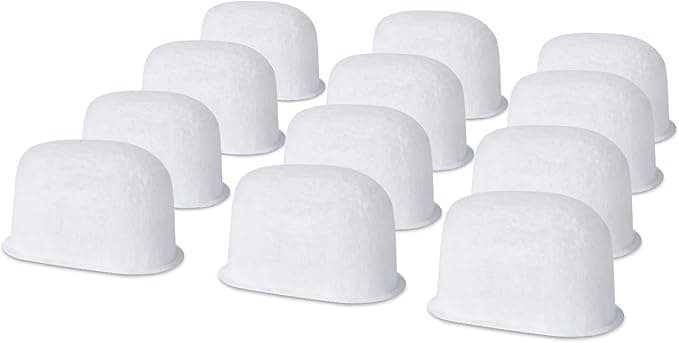
I had both filters sitting on my kitchen counter, still in their plastic, while the BES870XL hissed through its warm-up cycle behind me. On the left, the Breville-branded Claro pack — the BES008 swiss filters, the ones the manual tells you to use. On the right, a six-pack of compatible charcoal filters that cost me less than a single OEM two-pack. Same shape. Same little disc that drops into the holder. I stood there longer than I'd like to admit, because this is a $700 machine and the internet is full of people swearing the cheap filters will scale it to death. So I bought both, ran them back to back, and here's what actually happened.
The price gap is the whole reason you're reading this
Let me put real numbers on it. A genuine Breville Claro two-pack runs me about $14 when it's in stock, sometimes closer to $18 if it isn't. That's $7 a filter, and you're swapping every two months, so call it roughly $42 a year just to keep your water clean. The compatible six-pack I bought was $16 — under $3 a filter. Run the same year on those and you're spending around $16 total. The savings aren't dramatic on any single swap. Over the life of the machine, though, you're looking at a couple hundred bucks that could've gone to actual beans instead of little charcoal pucks.
And that's the thing nobody says out loud: the filter is a consumable. You are going to buy a lot of these. The math compounds.
Does it actually fit?
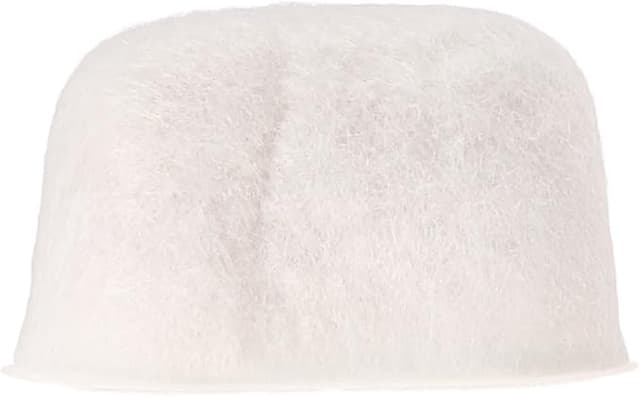
This was my real worry. A filter that's a millimeter off doesn't seat, and then you've got water sneaking around it instead of through it. So — the install. You soak the disc in a cup of water for five minutes first (this isn't optional; a dry charcoal filter floats and traps air, and you'll get a weird gurgle). Then it presses into the filter holder, and the holder clips into the base of the water tank. On the OEM, that press is firm and you feel a clean little seat.
On the compatible filter? It seated. But honestly, the fit was a hair looser. Not loose enough to leak — I checked the tank for bypass channeling and the water was moving through the carbon, not around it — but the disc didn't grip the holder with that same confident snap. I had to press it a second time on two of the six. Once it's in the tank under water pressure it doesn't matter, but if you're the type who needs everything to click perfectly, that tiny bit of slack will bug you.
What it does well, and where OEM still edges ahead
Here's why this filter matters at all: it's not really about taste first, it's about your boiler. Scale buildup is what kills these machines — calcium creeping into the heating element and the lines until the pump strains and the temperature drifts. The charcoal pulls chlorine and the off-flavors, and the filtration knocks down the minerals that crust everything up. A saturated, dead filter does neither, which is why letting one run six months instead of two is how people end up with a $700 paperweight.
The compatible charcoal did the chlorine job just as well as the Breville disc — my tap water has a faint pool smell some weeks, and both filters scrubbed it out completely. Espresso pulled through the aftermarket filter tasted clean. No cardboard, no flatness. If anything the first shot of the first day had the very faintest whiff of fresh charcoal, the way a new Brita pitcher does on day one. Gone by the second tank.
Where OEM still wins, if I'm being straight with you: the genuine Claro filters seem to hold their scale-reduction a touch longer toward the end of the two-month window. By week seven or eight, my water on the compatible filter felt slightly "harder" than the same point on the OEM. Not a failure — I just started swapping the cheap ones at about seven weeks instead of stretching to eight, and at $3 a pop that's a non-issue.
The real downside, stated plainly
The packaging is junk. Each filter came in a thin plastic sleeve, no individual seal, all six rattling around in one bag. The OEM packs are sealed per-filter, and there's a reason for that — charcoal absorbs whatever's around it, including kitchen smells, while it sits in your cupboard. I'd toss the loose ones in a zip-top bag the day they arrive. Treat that as a chore the OEM saves you from.
That's the honest knock. Looser seat on a couple, cheap packaging, and a slightly shorter practical lifespan. None of it touched the espresso in the cup.
So who should buy what
If your BES870XL is under warranty and you're nervous about giving Breville any excuse to deny a claim, buy the genuine BES008 and don't think about it again — the $30 a year of peace is cheap insurance against a service argument. Same if you live somewhere with brutally hard water and want every last bit of scale protection the manufacturer engineered for.
For everyone else — for me — the compatible charcoal filter does the same job for a fraction of the cost. I swap mine a week early, keep them in a sealed bag, and my machine has pulled clean shots through them for months with zero scale warnings. I'd buy this pack again. I have, twice now. The OEM disc isn't worth four times the money to fix a problem this filter doesn't actually have.