Troubleshooting & Analysis
The first thing I noticed was the wet-cardboard smell — and then it was gone in three minutes
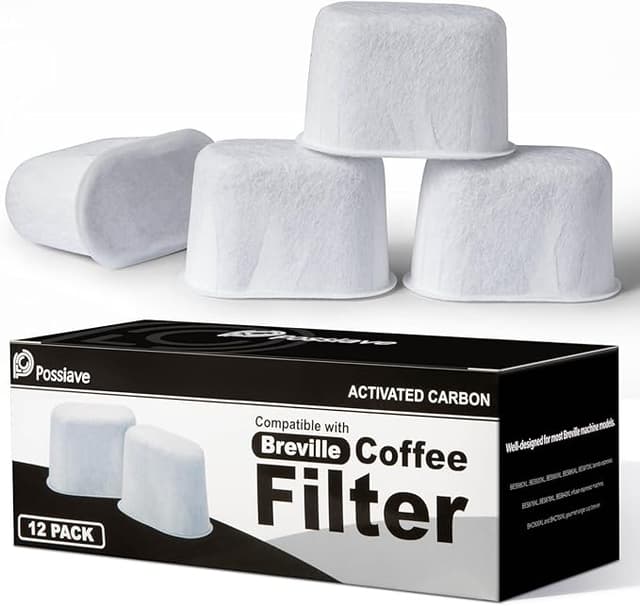
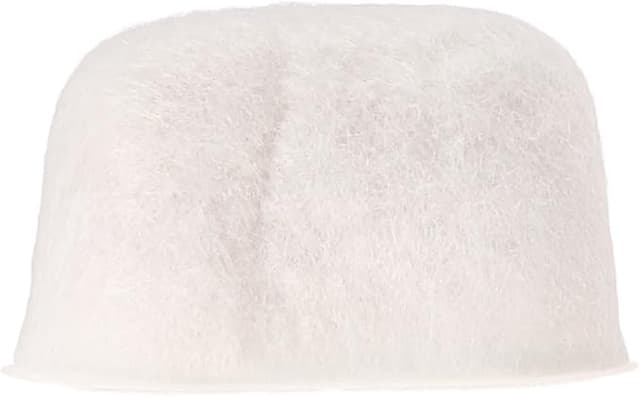
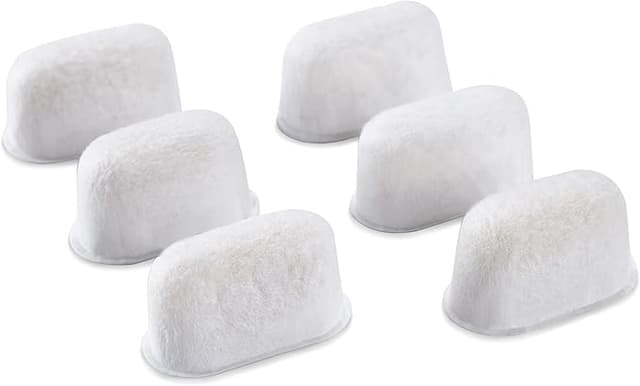
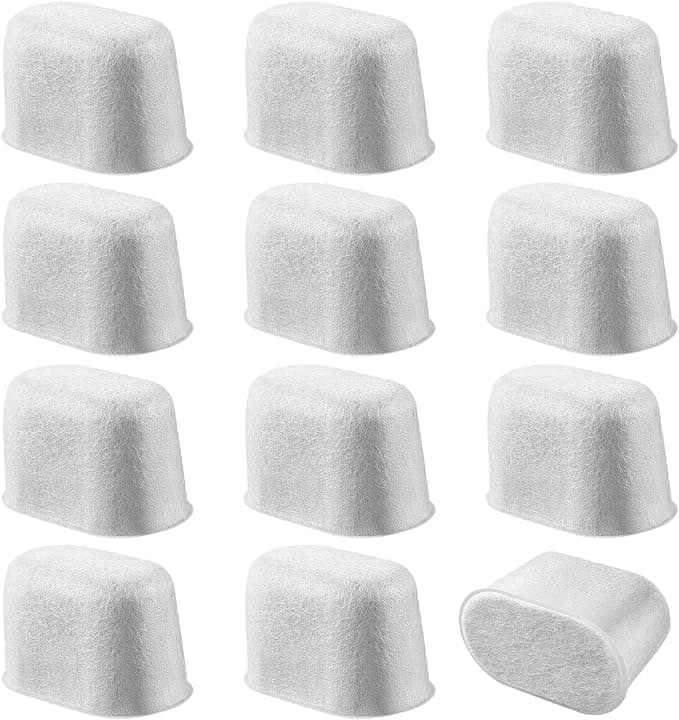
I pulled the new charcoal filter out of the bag, held it up to my nose out of habit, and got a faint whiff of damp cardboard with something a little chemical underneath. Honestly, my first thought was, "great, I just cheaped out and now my espresso is going to taste like a fish tank." So I did what the directions say to do anyway: dropped it in a cup of water and let it soak for five minutes. By minute three the smell had basically given up. By the time I pressed it into the holder and felt that small, dull click as it seated in the tank, it felt exactly like the Breville-branded one that shipped with my Barista Express. Same click. Same snug seat. No wobble.
That click matters more than it sounds, by the way. The factory Breville puck seats with a specific resistance, and if a compatible one is even a hair off it'll either float loose in the tank or sit proud and let unfiltered water sneak right past it. This one didn't. It dropped into the holder, the holder pressed into the keyed spot on the tank floor, done.
What I was actually trying to dodge: paying twice for water
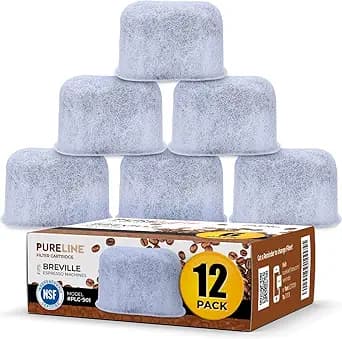
Here's the math that pushed me to try the off-brand route in the first place. Breville's own water filters run somewhere around $11 to $15 for a two-pack, and you're told to swap them every two months. The compatible six-pack I bought was about $18 — so roughly $3 a filter against $6-plus from Breville. Over a year I'm changing it six times. That's about $18 for a year of filtration the cheap way versus $36-ish if I stay loyal to the branded box. Eighteen bucks isn't going to change anybody's life. But it's eighteen dollars for water, every year, forever, on a machine I already dropped seven hundred on. That stung in a way the raw number doesn't quite explain.
And the thing this little filter is quietly doing is the real reason it exists: keeping scale out of the BES870XL's boiler and group head. Mineral crust on the heating element is the number-one way these machines die — the temperature starts drifting, the pump strains, and eventually you're descaling constantly or shopping for a replacement. The charcoal pulls chlorine and a good chunk of the dissolved minerals before they ever reach the boiler. So a saturated, dead filter isn't a flavor problem first. It's a "my expensive machine is slowly turning into a kettle full of limestone" problem.
Fit and install — genuinely a non-event
The routine is dead simple and the cheap puck didn't fight me on any of it. Soak it five minutes so the carbon wets through and stops floating. Push it into the plastic holder until it bottoms out. Drop the holder into its keyed spot in the tank, refill, and you're set — swap it every two months. The one extra thing I did: the first tankful, I ran straight into the drip tray instead of pulling a shot, just to flush any loose carbon dust. Smart move, because that first flush ran a touch gray for a few seconds. After that, clear.
One small thing the cheap version does worse — the date dial. Breville's holder has a little ring you twist to mark the install month so you remember when it's due. A couple of the compatible holders I've used had a stiffer, cheaper-feeling dial you basically can't turn without a thumbnail. Minor. But it's the kind of corner-cut you feel under your finger.
Does the coffee taste the same? Mostly — with one honest caveat
Side by side, same beans, same grind, I could not reliably pick the factory-filtered shot from the compatible-filtered one. Water tasted clean, no chlorine edge, no off note dragging down the crema. My tap water here is moderately hard, and after a few weeks the steam wand and the portafilter basket weren't building that chalky film as fast as they did when I ran the machine with no filter at all. So it's doing the job.
The caveat — and this is a real downside, not a polite fake one — is consistency between filters in the same pack. Out of my six, five were perfect. One had a slightly loose fit in the holder, enough that I could feel it shift when I tilted the tank. I didn't trust it, so I chucked it and grabbed the next one. With a name-brand pack I've never had to toss one. So you're trading a little quality-control roulette for the lower price. If you got a loose one and didn't catch it, you'd be running partly unfiltered water for two months without knowing.
Who should just buy the Breville one
If you're the type who'd lose sleep over that one loose filter, or you've got brutally hard water and you want every last bit of certainty protecting a machine you've babied for years — buy the OEM. Paying double for that quiet is a legitimate thing to want, and I'm not going to argue you out of it. Same if your machine's still under warranty and you're jumpy about Breville pointing at a third-party part if something fails. They shouldn't — water filters aren't a warranty trigger — but jumpy is jumpy.
For me, though? Five out of six were indistinguishable from factory, the install was identical down to the click, the scale protection is clearly working, and I'm keeping eighteen dollars a year instead of handing it back for the same puck in nicer packaging. I checked the loose one, tossed it, moved on. That was the whole cost. I bought my second six-pack last month — which probably tells you where I landed better than anything else I can say. It's been fine in my BES870XL for going on eight months now, and yeah, I'd buy it again. I already did.