Troubleshooting & Analysis
The day my Barista Express started spitting
I knew something was wrong when the steam wand started sputtering instead of hissing. My BES870XL had been pulling shots for almost a year on the same little charcoal filter I'd forgotten existed — and one morning the pump sounded strained, the water tasted faintly metallic, and there was a chalky white crust creeping up inside the tank. Scale. I'd let the filter die and the machine was paying for it.
That's the thing nobody warns you about with these Breville machines. The filter isn't a luxury. It's the cheap part standing between your $700 espresso machine and a slow, scaly death.
What I'd been ignoring
The water filter in the BES870XL tank is supposed to get swapped about every two months. Mine had gone roughly five. In hard-water areas — and I'm in one — that's how you end up with limescale building inside the boiler and the group head, choking flow and dulling every shot. The official line is dramatic but honest: scale buildup is the number one reason these machines fail. Watching that crust form in my tank, I believed it.
So I went looking for replacements. And here's where the math got me.
The price gap that pushed me to compatible
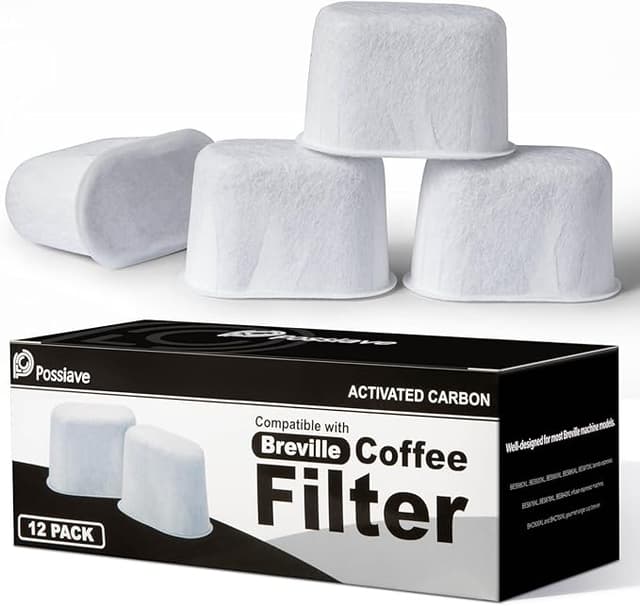
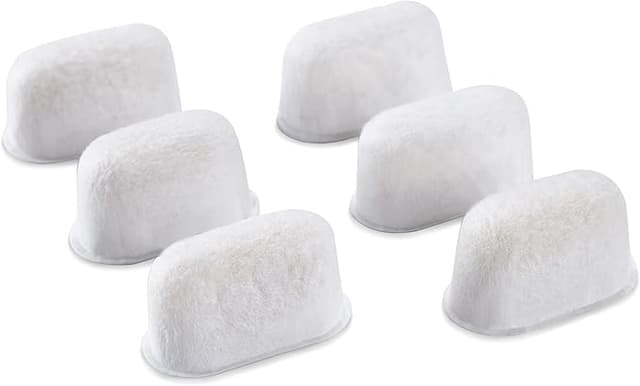
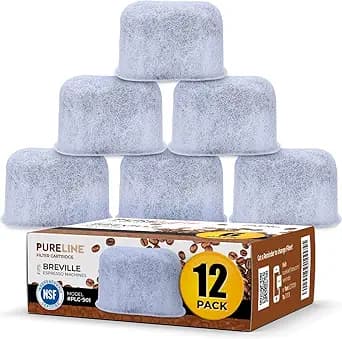
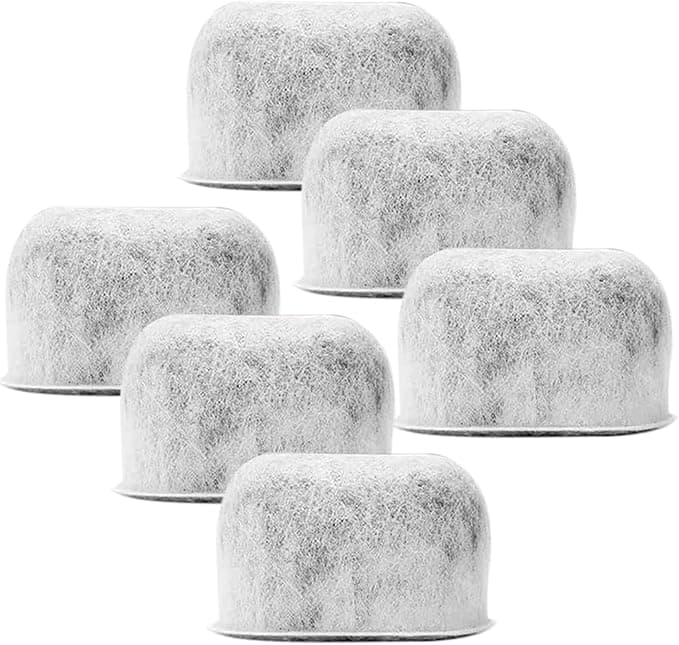
Breville's own charcoal filters aren't outrageous on a per-unit basis, but you're buying them six times a year, forever, and the branded packs charge a premium for the little Breville logo on a disc of carbon. The compatible filters I switched to do the identical job — same charcoal media, same fit in the holder — for noticeably less per filter. Over a year of swaps that adds up to real money I'd rather spend on beans.
I'll be straight: a water filter is about the lowest-stakes place to go aftermarket. It's activated charcoal in a plastic shell sitting in your tank. There's no firmware, no electronics, nothing proprietary to "match." If it fits the holder and filters the water, it's doing the whole job.
Does it actually fit?
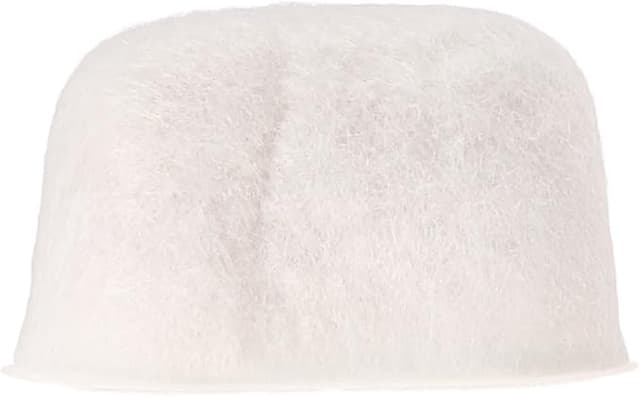
This was my one real worry going in — that the compatible disc would be a hair off and rattle around or not seat in the holder. It didn't. The install is genuinely the same routine as OEM. You soak the filter in water for about five minutes first (don't skip this — a dry filter floats and channels water around it instead of through it), press it into the filter holder, then drop the holder into the water tank. Click, done.
The fit on mine was snug. Not loose, not forced. If I'm nitpicking, the plastic on the compatible holder clip felt a touch lighter than the Breville one — slightly thinner, slightly cheaper in the hand. But it locked in place and held, and that's what matters when it's submerged and out of sight.
The honest performance take
After soaking and installing, the first tank ran clean. Water tasted neutral again — no metallic edge, no flatness. Shots pulled normal pressure within a day, once the new filter had fully wetted through.
One real downside, and I'm not going to pretend it didn't happen: the first day, the very first tank had a faint plastic-ish taste. Not strong, but I noticed it in a glass of plain filtered water. I ran one full tank through without making coffee — just cycling water out the wand and hot-water spout — and by the second tank it was gone completely. After that, no difference I could detect versus the Breville filter. None. Same clarity, same taste, same protection against scale as far as my tank crust (or lack of it) tells me.
That break-in step isn't unique to compatible filters, by the way — I had to do the same flush the first time I used an OEM one years ago. Charcoal is charcoal. It needs a rinse.
Why this matters more than it sounds
Look, it's easy to treat the filter as optional because the machine still runs without one. It does — right up until it doesn't. A saturated or missing filter lets minerals through, and those minerals don't leave. They cake onto the heating element and narrow the water paths until your shots run weak and slow and the pump works harder than it should. My sputtering steam wand was the early warning. People who ignore it longer end up paying for a descale-that-won't-descale or a repair bill that dwarfs a year of filters.
Keeping a filter in — and actually changing it on schedule — is the cheapest insurance you'll ever buy for a machine this expensive. The brand on the disc doesn't change that math. Changing it on time does.
Who should buy what
If you're the type who wants Breville's name on every component for warranty peace and you don't mind paying the markup, buy OEM — no argument from me, it's a fine filter. And if you live somewhere with genuinely brutal water, consider changing whatever filter you use a little more often than every two months regardless of brand.
But for me? After the scare, after watching the compatible filter clear my water and keep my tank crust-free through multiple swaps, I keep buying these. Same charcoal, same fit, same job, meaningfully less money — and I'd rather put the savings toward better coffee than a logo. I've reordered them twice now. That's the realest endorsement I can give: I spent my own money on them again.
Set a reminder for the two-month swap, soak before you install, flush the first tank, and your Barista Express will keep pulling clean shots for years. Don't make my mistake and wait for the sputter.