Troubleshooting & Analysis
The smell told me everything before the coffee did
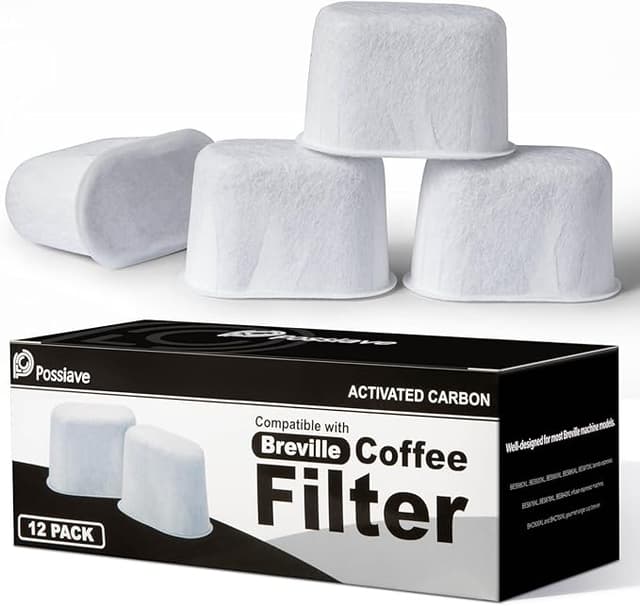
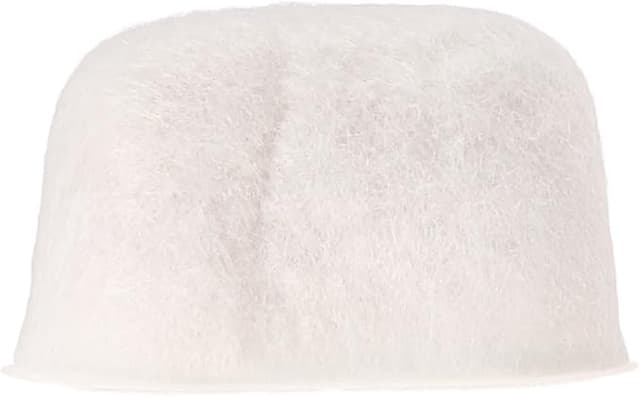
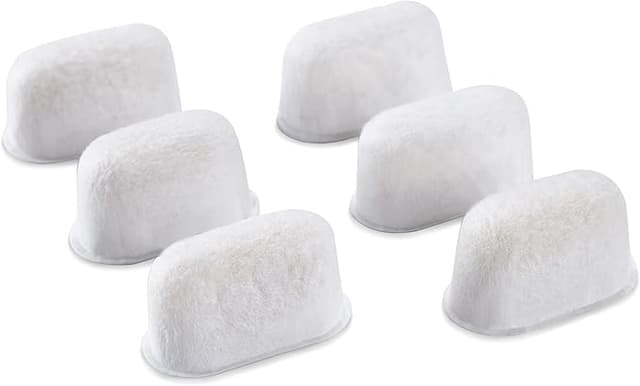
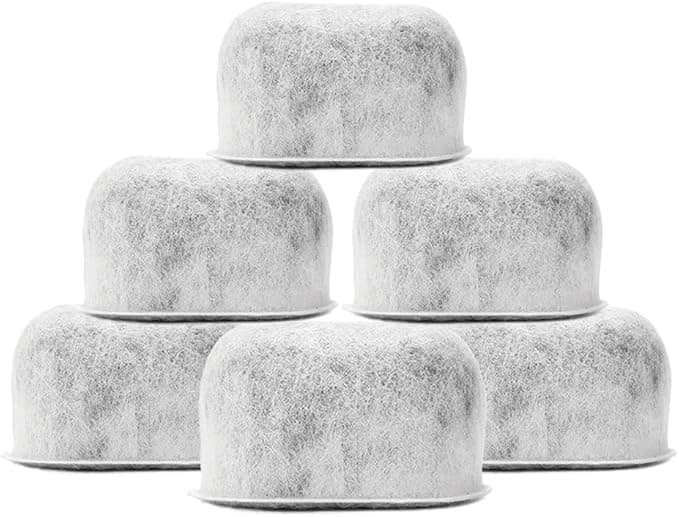
Here's the thing nobody warns you about: pull a fresh charcoal water filter out of the bag and it smells faintly of a new aquarium. That damp, mineral, slightly-plastic carbon smell. I noticed it the second I tore open the first compatible filter for my Breville BES870XL — and honestly, my gut went "oh no, I bought junk." I'd been running genuine Breville pucks for two years. This one looked close but not identical. Slightly grayer mesh. A seam on the plastic cage that the OEM doesn't have.
So I did what the instructions say — soaked it in a mug of cold water for five minutes — and watched a thin stream of fine black carbon dust drift off it like silt. That's normal, by the way. The OEM does it too, just a touch less. After the soak the smell was basically gone, and the puck went from suspiciously light to having a real heft to it.
The price gap that started this whole experiment
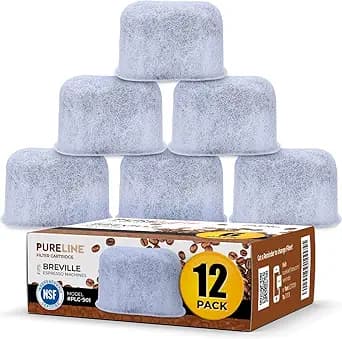
Breville's own filters aren't outrageous, but they add up. A genuine 6-pack runs me around $28 at the going rate — so call it about $4.65 a filter. You're meant to swap every two months, which is six filters a year, roughly $28 annually if you buy the one pack and ration it. The compatible 6-pack I've been using costs $13.99. That's $2.33 a filter, and a yearly spend closer to $14.
Fourteen bucks saved a year isn't going to change your life. I'll be straight about that. But over the realistic 8–10 year lifespan of a BES870XL? That's well over a hundred dollars in carbon pucks, for a part that does one job: pulling chlorine and scale-forming minerals out of your tank water before they ever touch the boiler.
Does it actually seat right?
This was my real worry. The filter clips into a little plastic holder, and that holder sits in the back corner of the water tank. If the aftermarket puck is even a millimeter off, it either won't click or it floats loose and water sneaks past unfiltered.
Mine clicked. Not as crisply as the Breville — the OEM gives you a confident snap, this one was more of a soft "thunk" that made me press it twice to be sure. But it locked. The holder closed flush, dropped into the tank, and the lid shut without me forcing anything. I've now swapped four of these over about eight months and every one has fit. One had a slightly proud edge on the cage that I had to rotate to get flush. Minor. Took ten seconds.
What it does as well as OEM — and where it's a hair behind
Taste is the whole point, so I paid attention. My tap water is moderately hard — Phoenix, you know how it is. With a fresh compatible filter, my espresso pulled the same as it did on Breville: clean, no chlorine tang, crema looked right. I ran a side-by-side over a weekend, same beans, same grind, and I genuinely could not pick the cup made with the aftermarket filter from the OEM one. Neither could my wife, who is pickier than I am.
Where it's behind: longevity, a little. I get the sense the carbon load is slightly less dense than Breville's. Around week six or seven I started catching the faintest chlorine note creeping back in, where the OEM held clean closer to the full eight weeks. So I just changed it at the two-month mark on the dot instead of stretching it. Given the price, swapping a touch sooner costs me nothing.
The genuine downside
The packaging is cheap and the quality control is inconsistent. In my pack of six, one filter had a visibly looser mesh wrap than the others — I set that one aside and used it last, and it shed more carbon dust on the soak than its siblings. None of them were defective, exactly, but they're not the uniform, machine-perfect units Breville ships. If you're someone who needs every part to look factory-fresh, this will bug you.
Also: that first-soak carbon dust. Do the five-minute soak in a separate cup, not in the tank, and give it a quick rinse under the faucet before you install it. Skip that and you'll get a little gray cloud in your first tank. Not harmful, just gritty-looking.
Why this part matters more than people think
A coffee water filter isn't really about taste alone — it's the cheapest insurance you've got against scale. Hard-water minerals are what crater these machines; a clogged or skipped filter means calcium building up inside the boiler and lines, and that's the failure that ends a $700 espresso machine years early. A $2 puck doing its job quietly in the back of the tank is protecting a serious investment. The catch is you have to actually change it. A saturated filter is worse than no plan at all, because you think you're covered and you're not.
Who should buy OEM instead — and what I personally grab
If you're under warranty and the paranoid type, or you've got genuinely brutal water and want the maximum carbon load holding the full eight weeks, buy the Breville pucks. The few extra dollars buys you tighter consistency and a slightly longer interval. No shame in that.
For everyone else — me included — the compatible filter does the same job for half the money, fits the BES870XL, and made coffee I couldn't tell apart in a blind taste. I change it every two months like clockwork, eat the slightly-cheaper packaging, and pocket the difference. I'm on my second pack now, and when this one runs out I'll buy a third. That's the most honest endorsement I've got: I kept spending my own money on it.