Troubleshooting & Analysis
Sixty bucks a year to filter water. Let that sink in.
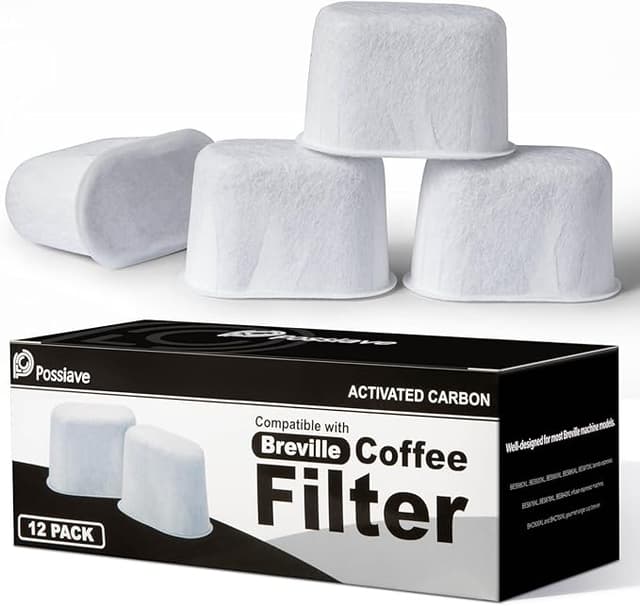
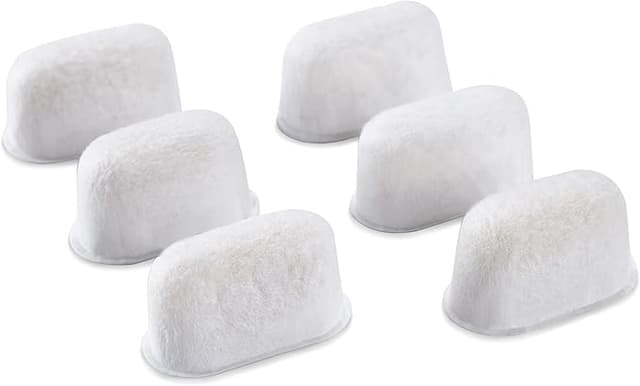
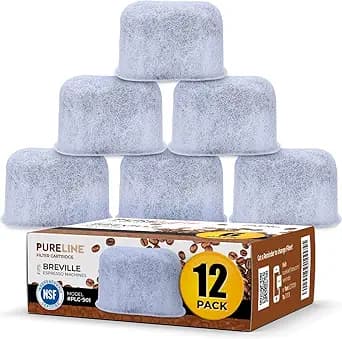
I did the math one morning while my Breville BES870XL was hissing through its warm-up cycle, and it annoyed me enough that I actually wrote it on the back of a receipt. Breville's own charcoal water filters run about $5 a pop, you swap them every two months, so call it six filters a year. Thirty-ish dollars if you catch them on sale, closer to forty by the time shipping and the "Breville-branded" markup do their thing. For a puck of activated charcoal the size of a wine cork. Meanwhile the compatible ones I'd been eyeing were running roughly twelve dollars for a six-pack. Same two-month interval. Same job.
So the annual gap is something like $30–40 versus $12. On a machine that already cost me six hundred dollars, paying a premium on the *cheapest* consumable in the whole system felt backwards. I bought the compatible pack mostly out of spite. Then I used it for the better part of a year, and here's the honest report.
What the filter is actually doing in there (and why a dead one matters)
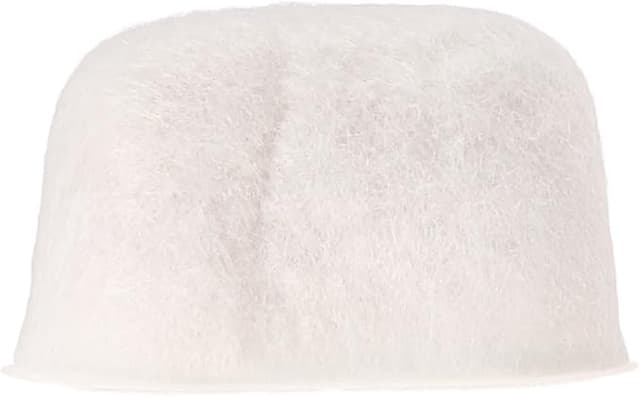
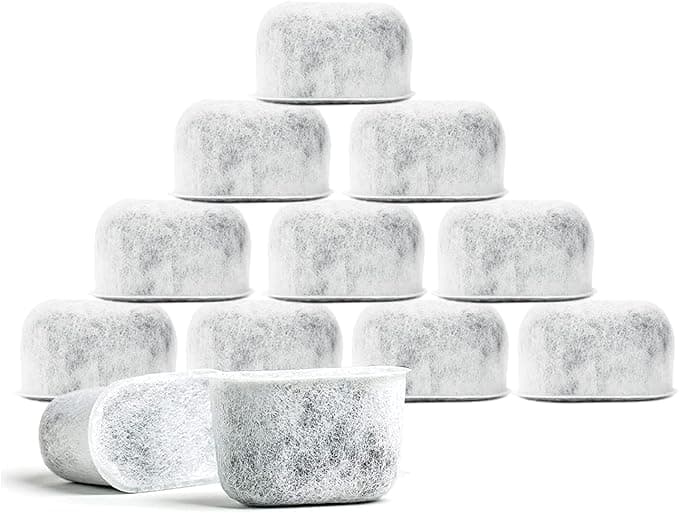
This isn't the puck in the portafilter — people mix that up. This is the little charcoal cartridge that clips into the holder inside your water tank. Its whole life's purpose is pulling chlorine and the off-tastes out of your tap water before it ever hits the boiler, and slowing down the scale that builds up on the heating element. That scale is the thing that quietly kills these machines. Not a dramatic death — just a slow climb in descale-light frequency until one day the pump's straining and the shots taste flat and metallic. A saturated, months-overdue filter stops adsorbing anything and basically becomes a wet sponge sitting in your tank doing nothing. So whatever you put in there, the real rule is *change it*. A cheap filter you actually swap on schedule beats an OEM one you forget about for half a year.
Fit and install — the part I was nervous about
This is where compatible parts usually fall apart, so I went in skeptical. You soak the filter in a cup of water for about five minutes first — you'll see little bubbles come off it as the air works out, that's normal and kind of satisfying. Then it presses into the plastic filter holder, and the holder drops into the bottom of the water tank.
The press-in fit on the compatible ones I got was a hair tighter than Breville's. First one, I genuinely thought it wasn't going to seat — I had to give it a firm push with my thumb until it clicked flush. Not loose, which is the failure I was worried about. If anything it grips a touch harder. Once it's in the holder and the tank's back on the machine, you cannot tell the difference. No rattle, no float, no gap where unfiltered water sneaks past. I've reseated it a dozen times by now and it's the same every time.
How it actually performs
Side by side, blind, with my morning flat white? I can't tell the OEM filter from this one in the cup. And I tried — I ran a Breville filter for two months, then switched to the compatible for two months, same beans, same grind, same water from the same tap. The shots pulled the same. No chlorine note, no weird aftertaste, crema looked identical.
Where I'll be straight with you: I don't have a lab, so I can't hand you a chlorine-reduction percentage or tell you the charcoal grade is byte-for-byte identical to Breville's. What I *can* tell you is that after a year my descale light is coming on at the same interval it always did, the water tastes clean, and the machine isn't throwing any new tantrums. For a water pre-filter, that's the whole job, and it's doing it.
The downsides — because there are some
The packaging is cheap. Mine came in a flimsy bagged six-pack with the kind of printing that smudges, versus Breville's tidy little box. Doesn't affect the filter, but if you're someone who likes the unboxing to feel premium, this'll bug you. Second — and this is the real one — the first day or two after installing a fresh one, I caught a faint plastic-ish smell from the very first tank. It blew off completely after one full tank ran through, and honestly I get a whiff of the same thing from new OEM filters too, just slightly less. If that worries you, run a tank of plain water through and dump it before you brew. I do that anyway as a habit.
And the soak step matters more with these. Skip it, drop a dry one straight in, and you'll get a slow trickle and trapped air for the first cup. Five minutes in a glass of water. Don't rush it.
So who should still buy OEM?
If your machine's under warranty and you're the type who'd lose sleep over a tech blaming a third-party part for an unrelated failure — buy Breville's, keep the receipts, sleep fine. It's your six hundred dollar machine. That peace is worth the few extra bucks to some people, and I won't argue you out of it.
For everyone else: this is the easiest place in the whole Breville system to stop overpaying. It seats right, it tastes the same, and the only honest knocks against it are ugly packaging and a one-tank break-in smell that rinses out. I've now reordered the compatible six-pack twice. At roughly a third of the running cost, doing the identical job in my tank every single morning, I'd buy it again — and, well, I just did.