Troubleshooting & Analysis
I did the math at 6 a.m. and almost spit out my coffee
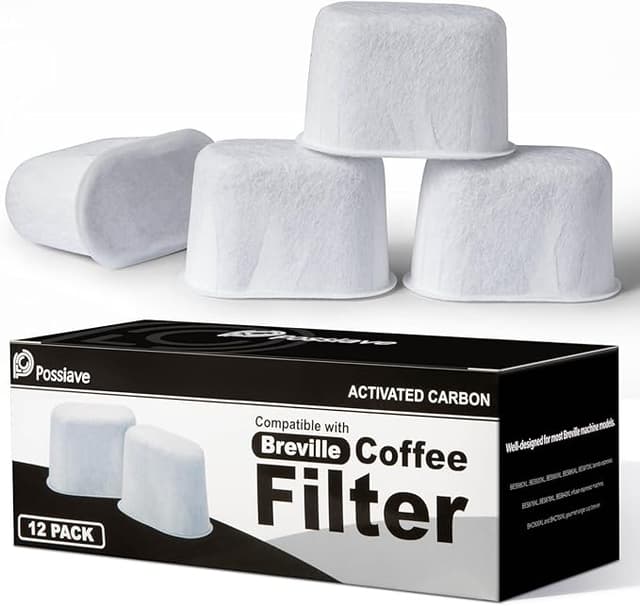
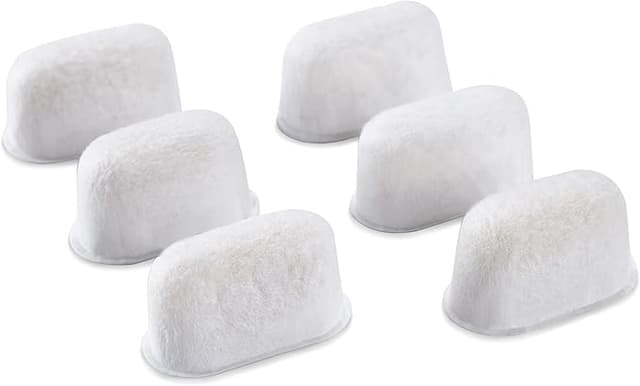
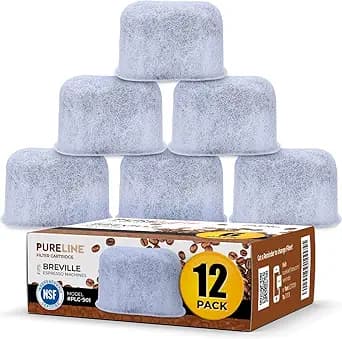
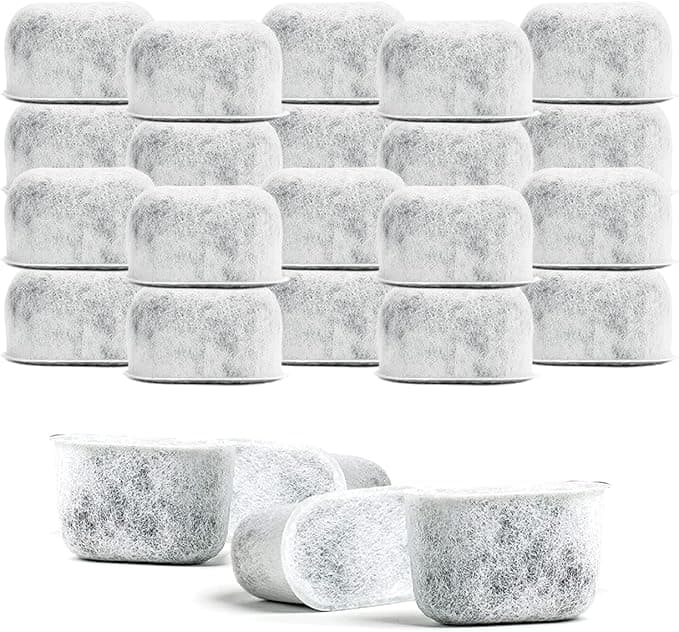
Six filters a year. That's what the Breville Barista Express asks for if you actually follow the every-two-months rule — and most of us don't, which is a separate problem I'll get to. The genuine Breville-branded water filters run me about $4 a pop when I buy the small pack, and the compatible charcoal ones I switched to land closer to $1.30 each in a six-pack. Call it $24 a year versus $8. Not a mortgage payment, sure. But it's the principle of the thing: I'm paying a premium on a chunk of carbon and mesh that sits in a plastic tank and does one job. Once I saw the per-unit gap laid out, I couldn't unsee it.
So I bought the cheap ones. Here's the honest version of how that went, because I've been running them in my own BES870XL for the better part of a year now.
Do they actually fit the tank?
This was my first worry. The Barista Express filter isn't some universal disc — it clips into a little holder that then seats in the back-left corner of the water tank, and if the geometry is off by a couple millimeters the holder won't close or the tank won't drop back in flush. I've seen aftermarket parts for other machines that were "compatible" in name only.
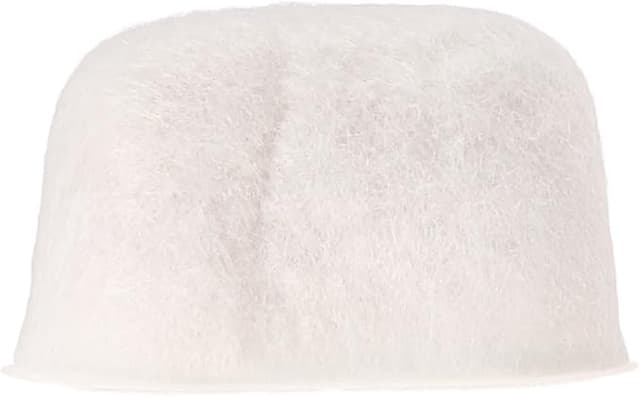
These weren't. The filter slides into the holder, the holder snaps shut with that same small click, and the whole assembly drops into the tank exactly where the OEM one did. I did notice the plastic frame on the compatible filter is a hair less rigid — you can flex it a little more between your fingers than the Breville one. In the tank, sitting in water, doing nothing but filtering? Doesn't matter at all. But I'll be honest that the first time I held one I thought, "this feels cheaper," and it does. It just doesn't perform cheaper.
One thing worth doing right, and the instructions get this correct: soak the filter in a cup of water for five full minutes before you install it. I rushed it the first time, dropped a dry one straight in, and got a faint flurry of fine black carbon dust in the tank water. Harmless, but it looks alarming. Soak it, give it a gentle swish, and that's gone.
What it does as well as the real one
The whole reason this filter exists is scale and taste. Hard water carries dissolved minerals, and in an espresso machine that means limescale creeping into the boiler and the lines — and scale is genuinely the thing that kills these machines. Not the pump, not the grinder. Scale. The charcoal also pulls chlorine and the off-flavors that ride along with it, and that part you can taste.
I live somewhere with moderately hard, very chlorine-forward tap water. With a fresh compatible filter in, my shots taste cleaner — less of that flat, slightly municipal edge, more of whatever the bean is actually doing. I ran a side-by-side once, OEM filter in the tank one week and the compatible one the next, same beans, same grind, same routine. I could not tell the espresso apart. My partner couldn't either, and she's pickier about coffee than I am.
The downsides, because there always are some
Two real ones. First, that plastic-and-carbon smell when you open the bag — the compatible filters have a slightly stronger "new packaging" odor than the Breville ones did. The five-minute soak handles it, and it's gone from the water by the time you've pulled your first shot, but it's there on day one and I'd rather tell you than have you panic.
Second, and this is the honest catch: there's no descale indicator tied to these. The machine doesn't know what filter you put in. So the "replace every 2 months" interval is on you to remember. I started writing the swap date on the bottom of the holder in marker, because I am exactly the kind of person who forgets and then wonders three months later why the water tastes a little tired. A saturated filter isn't dangerous, but it's stopped doing its job — it's just sitting there while minerals waltz past it into your boiler. That's the failure path that ends with a $600 machine throwing scale errors. The filter is the cheap insurance; the trick is actually changing it.
Who should just buy the Breville-branded ones
If you're still inside your warranty window and you're the anxious type who'd lie awake wondering whether an aftermarket part voids something — buy the OEM ones and sleep. The peace of money isn't worth the worry for you, and that's a legitimate call. Same if your water is genuinely brutal hard water; I'd want to pair any filter with a real descaling routine regardless of brand, and at that point the few bucks of difference is noise.
For everyone else — and that's most of us — here's where I land. I've now run compatible charcoal filters through this machine for the better part of a year. The fit is right, the coffee tastes the same, the only tells are a slightly flimsier frame and a day-one smell that rinses out. For roughly a third of the price, doing the identical job, I keep buying the compatible ones. I bought another six-pack last month, in fact. The machine's running clean, the espresso's good, and I stopped paying brand tax on a carbon puck. Easy call.