Troubleshooting & Analysis
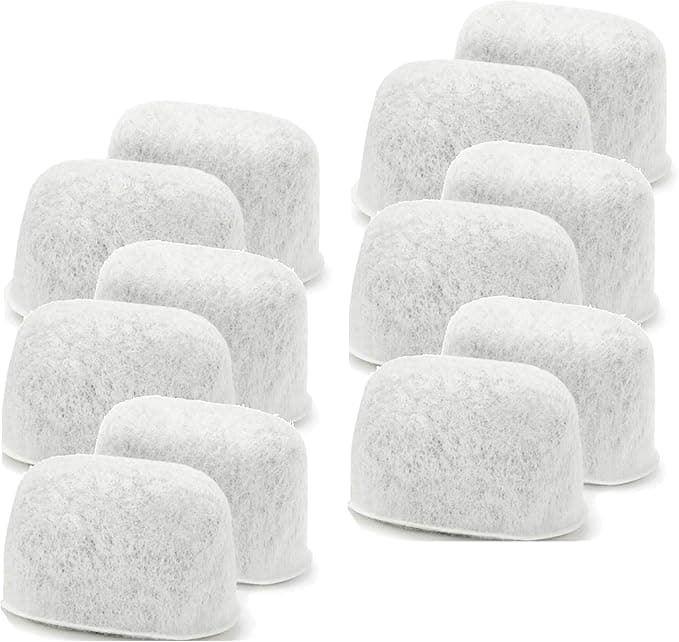
The first thing I noticed wasn't the taste. It was the smell. I pulled the compatible filter out of its little plastic sleeve, and there's this faint charcoal-and-new-plastic odor — not chemical exactly, just that "fresh out of a bag" thing. Soaked it the five minutes the instructions ask for, and the smell mostly rinsed off in the water. Mostly. I'll come back to that.
I've owned a Breville Barista Express (the BES870XL) for going on three years now, and I'd been buying Breville's own branded water filters that whole time without really thinking about it. Then I actually looked at what I was spending. The OEM filters run me somewhere around $13–16 for a two-pack depending on where I grab them, and Breville says swap every two months. So call it six filters a year, maybe $40-something annually just to keep water from gunking up the machine. The compatible charcoal filters I switched to were closer to $10 for a six-pack. That's not a typo. A whole year of filters for roughly what two OEM ones cost.
My first reaction was the same one you probably have: this is a $700 espresso machine. Am I about to wreck it to save thirty bucks?
Does it actually fit the holder?
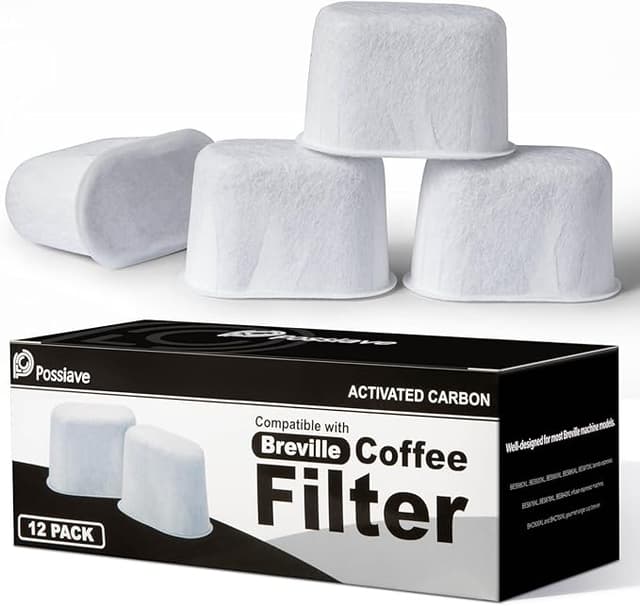
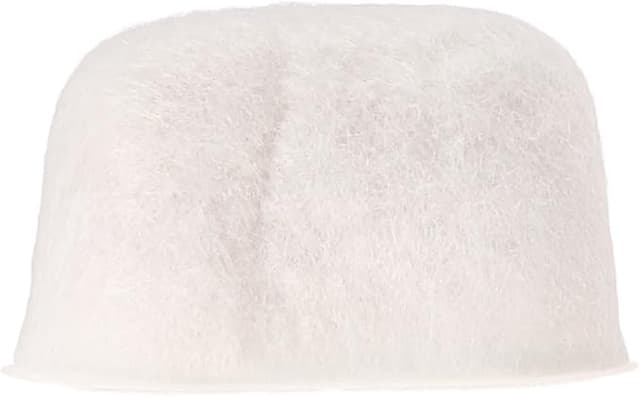
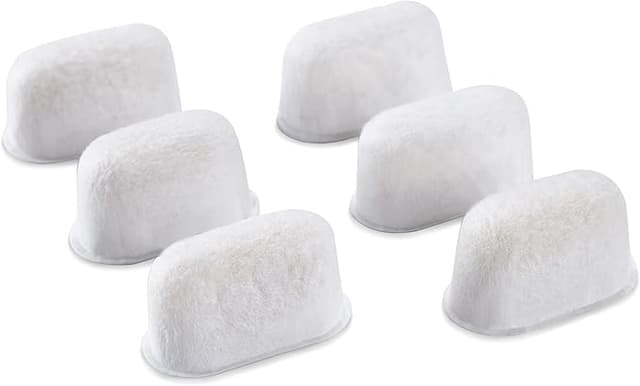
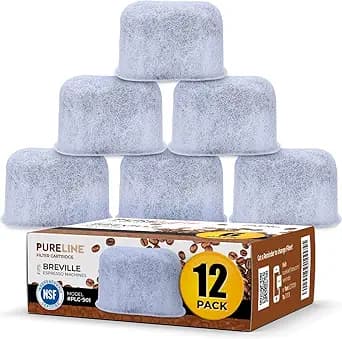
Short answer, yes. The BES870XL uses a small puck-style filter that drops into the plastic holder clip, and that whole assembly sits in the water tank. The compatible ones I bought seated into the holder with the same little click the Breville ones make — no shaving, no forcing. If anything the fit was a hair snugger than I expected, which I'd rather have than loose.
One honest note on install: soak it. The directions say five minutes and they mean it. The first time I got impatient and only gave it about two, and the charcoal hadn't fully wetted through, so the first half-tank of water tasted a little flat and dusty. Soaked the next one the full time, ran a tank through and dumped it before brewing, and that fixed it completely. So — soak, seat it in the holder, holder goes in the tank, done. Takes longer to read about it than to do it.
What it does, and where it lags
Here's the thing people get confused about. This filter isn't there to make your espresso taste like a third-wave café. Its real job is removing chlorine and the off-tastes from your tap water, and — this is the part that actually matters for the machine — cutting down the scale-causing minerals that build up inside Breville's boiler and pump. Scale is the number one killer of these machines. A clogged, crusted-up boiler is what turns a $700 espresso maker into a $700 paperweight.
On the taste side, side by side with the OEM filter, I genuinely could not tell my morning shot apart. Same crema, same clarity. My tap water is moderately hard, and both filters knocked the chlorine bite out of it equally well.
Where the compatible one lags, if I'm being straight with you: it doesn't last quite as long in my experience. Breville's branded filter held its taste-improving punch for the full two months. The cheaper charcoal one started letting a little more chlorine flavor through somewhere around week six or seven for me, on hard water. So I just swap it a touch early — maybe every seven weeks instead of eight. Given the price, that math still wins by a mile. You could change it every five weeks and still spend less than OEM.
The real downside
The packaging is cheap, and I mean cheap. Thin plastic sleeves, no individual sealing, a label that looks like it was printed at home. A couple of the pucks in my six-pack had loose charcoal dust around the edges that I had to rinse off before soaking. Cosmetically it does not inspire confidence next to Breville's tidy little boxed filters. If you're someone who needs the unboxing to feel premium, this'll bug you.
And that faint plastic smell I mentioned up top — on one filter out of the six, it lingered into the first brew. Just the first one. I dumped that initial tank, ran clean water through, and it was gone by the second. Annoying, not dangerous, and only happened once across the pack.
Who should skip it
If you've got really hard water and you're the type who'll forget to change a filter for four months, buy OEM, or honestly look at a dedicated water softening pitcher feeding the tank — because at that point you want every bit of scale protection you can get, and a slightly-faster-fading charcoal puck left in too long isn't doing you favors. Same if you're still under warranty and the paranoid part of your brain won't let you run a third-party part. I get it.
But for me? I've now run these compatible charcoal filters in my BES870XL for the better part of a year. The machine descales the same as it always did, the coffee tastes identical, and I'm spending maybe a quarter of what I used to on filters. The packaging is junk and one in six had a smell I had to rinse out. Those are the trade-offs, laid out plain. For roughly $10 a year instead of $40-plus, doing the exact same job inside the tank — I bought another six-pack last month without thinking twice. That's the most honest endorsement I can give anything: I spent my own money on it again.