Troubleshooting & Analysis
The morning my espresso tasted like a swimming pool
It crept up on me. One Saturday I pulled a shot off my Breville and there it was — a flat, slightly chemical edge underneath the crema. Pool water. I blamed the beans, bought a fresh bag, same thing. Then I popped the lid off the water tank and found the little charcoal filter I'd forgotten about. It had been in there since... honestly, I couldn't tell you. Months past its two-month life. The thing was a gray, waterlogged hockey puck, and the bottom of my tank had a faint white crust starting to build along the seams. That crust is the warning shot. Scale doesn't politely announce itself — it just quietly chews through the heating element until one day the machine won't come up to temperature.
So I went looking for replacements. And that's where the sticker math hit me.
The price gap nobody warns you about
Breville's own charcoal water filters — the round ones that clip into the holder inside the tank — run about $19 for a two-pack last I checked. Two filters. At a swap every two months, that's a year and change of coffee for nineteen bucks, sure, but you're back at the checkout twice a year paying premium for what is, mechanically, a puck of activated carbon in a plastic cage.
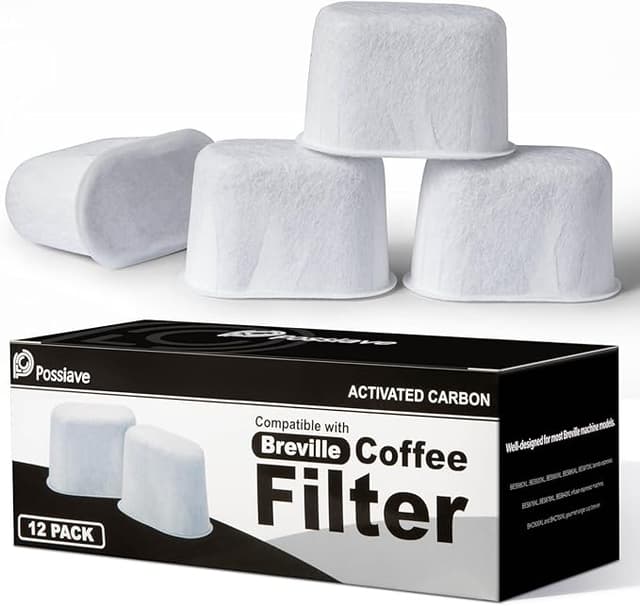
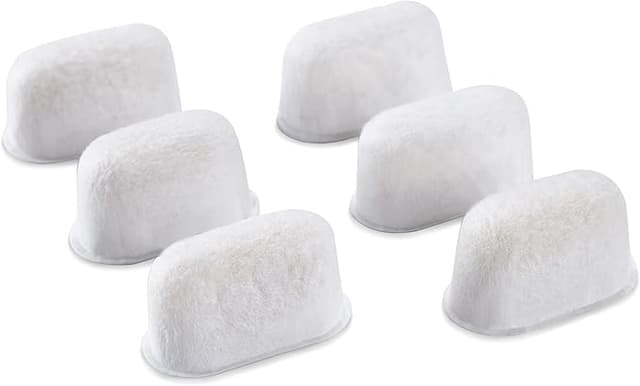
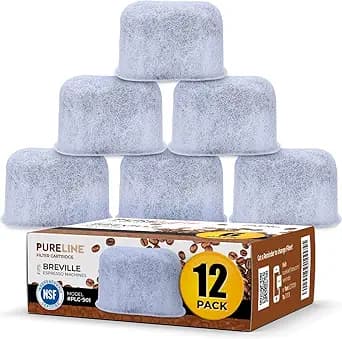
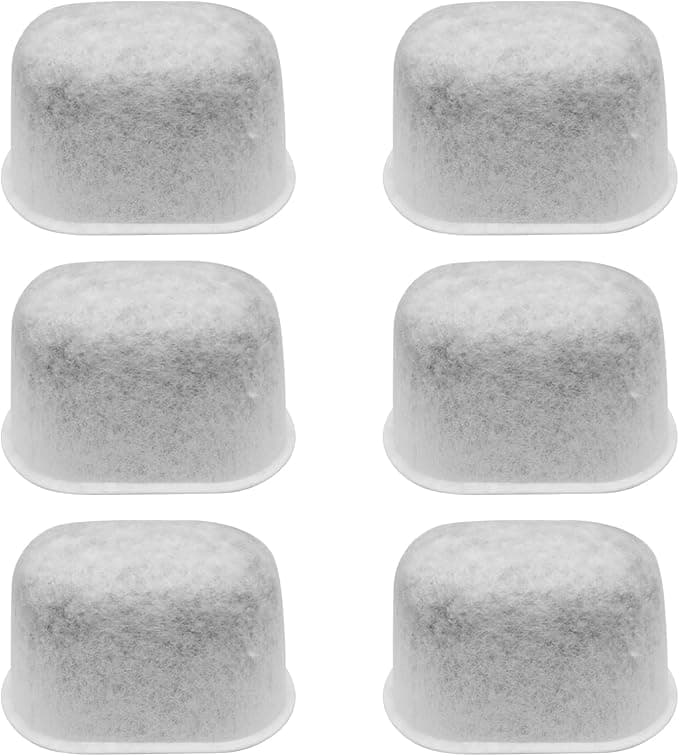
The compatible six-pack I landed on was $13.95. Six filters. Do that annual math: the OEM route is roughly $19 for two cycles a year, call it close to $20 a year if you're disciplined. The compatible six-pack covers a full year of swaps for under fourteen dollars and leaves you three filters in the drawer. I'm not great at remembering to reorder — having spares sitting right there is the actual reason I now change them on time.
Does it fit, or is it a fight?
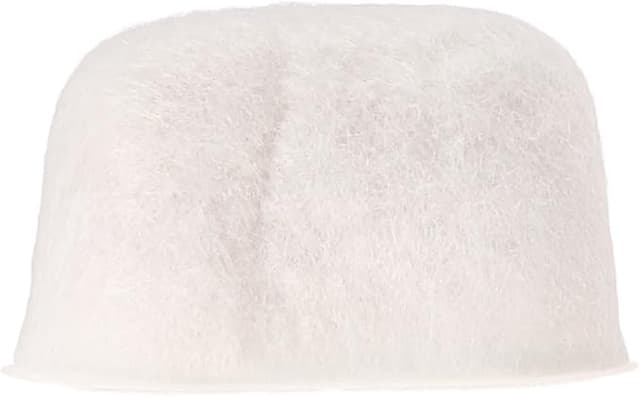
This was my worry. The Breville tank holder has a specific snap, and a filter that's a millimeter off just rattles around doing nothing. I soaked the compatible one in a bowl of cool water for the full five minutes the instructions call for — don't skip that, a dry carbon filter floats and channels water around itself instead of through it. Pressed it into the holder. It clicked. Seated flush, no wiggle, the holder lid closed without me leaning on it.
I'll be straight about the fit, though: the plastic frame is a hair less precise than the genuine one. On the OEM filter the seam where the two halves meet is tight enough you can't catch it with a fingernail. On this one I could feel a very slight ridge. It still sealed in the holder fine — the holder is what does the sealing, not the filter's own frame — but if you're the type who notices that stuff, you'll notice it.
How it actually brews
First three days, there was a faint smell. Not strong, but if you stick your nose in the tank you get a whiff of fresh plastic and carbon. I ran two full tanks through without making coffee — just cycled water through the group head and the hot water spout — and by day three it was gone. After that? My shots went back to tasting clean. The chemical pool-water note that started this whole thing disappeared. Side by side against my memory of the genuine filter, I genuinely can't tell the water apart.
Where the OEM might have a slight edge is longevity at the very tail end. The compatible carbon seems to lose a little punch in the last couple weeks of its two-month window — I caught a faint return of hard-water taste around week seven on one of them, a touch earlier than I remember the Breville one fading. The fix is dumb simple: swap on schedule instead of stretching it. Which I should be doing anyway. The whole reason I'm writing this is that I didn't.
The part that actually matters
Here's the real stakes, and it's not flavor. A saturated, ignored filter is how scale gets a foothold, and scale buildup is the thing that actually kills these machines — clogged lines, a heating element working harder and hotter than it should, eventually a unit that won't heat. A $14 six-pack that keeps me swapping on time is cheap insurance against a $600 espresso machine dying early. The filter's job isn't really to make coffee taste good. It's to keep the machine alive long enough to make ten thousand more cups.
Who should skip the compatible one
If you're still inside your Breville warranty and you're the cautious type, I get using the genuine filter — some folks worry aftermarket parts give a manufacturer an excuse to deny a claim. I've never seen Breville actually fight a warranty over a water filter, but if that's a nagging thought for you, the $5 difference per cycle isn't worth the anxiety. Buy theirs.
Who I'd tell to grab this one
Everybody else. If your machine's out of warranty, if you've been stretching your filters because reordering two at a time is a pain, if you just don't want to pay a premium for a carbon puck — this is the easy call. The frame's a touch rougher, there's a two-day break-in smell, and the carbon fades a bit early if you push past eight weeks. None of that touches the cup once it's settled in.
I've reordered the six-pack twice now. My tank's crust is gone, my shots are clean, and I've got spares in the drawer so I actually change them on time. For under fourteen bucks a year, doing the exact job the expensive one does — yeah, I'd buy it again. I have.