Troubleshooting & Analysis
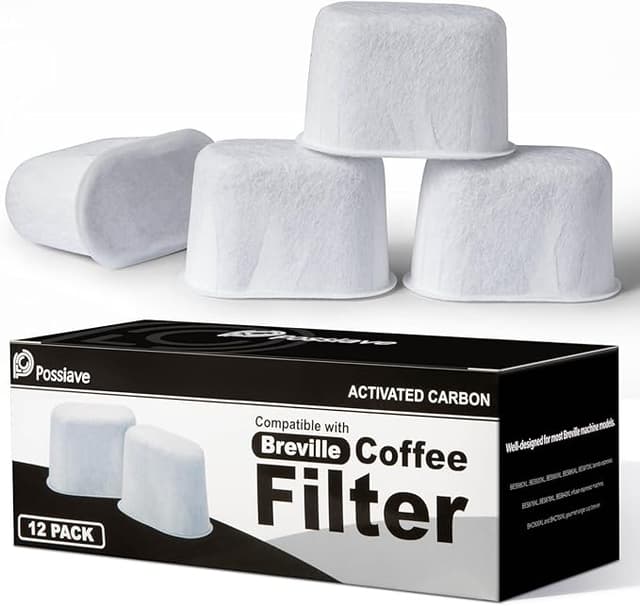
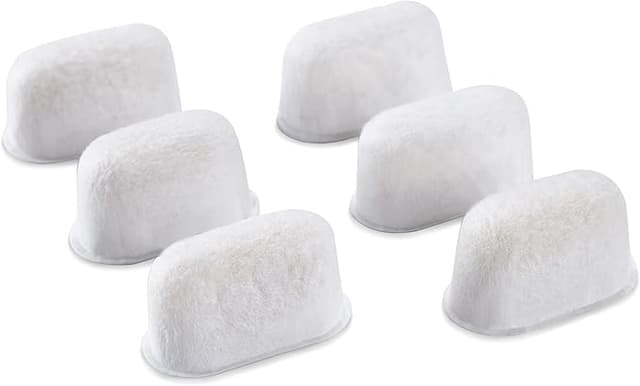
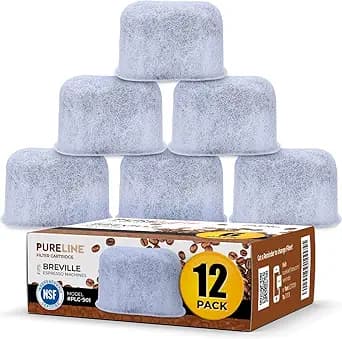
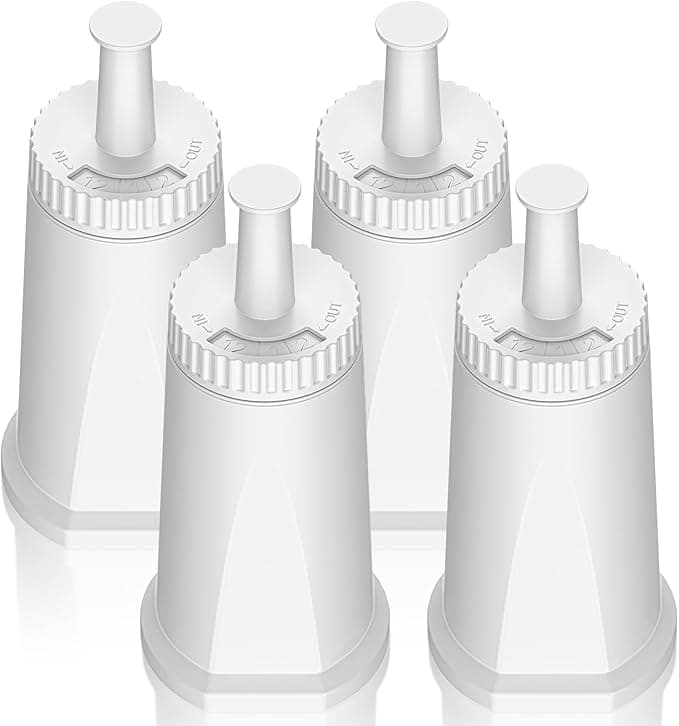
The two of them sat side by side on my counter, both still sealed, while my Barista Express ran its warm-up cycle and spat a little water into the drip tray. Left: the Breville-branded charcoal disc, the one the manual points you to. Right: a six-pack of compatible filters that cost me less than a single OEM two-pack. Identical little pucks. Same hole in the middle, same shape that drops into the holder. I stood there longer than I want to admit, because this is a several-hundred-dollar machine and half the internet swears the cheap filters will scale it into an early grave. So I did the dumb thing and bought both, ran them back to back over a few months, and here's what actually happened.
Start with the money, because that's why you're here
Real numbers. A genuine Breville charcoal two-pack runs me about $14 when it's in stock — call it $7 a filter. You're meant to swap every two months, so that's six a year, roughly $42 annually just to keep the water clean before it ever touches a bean. The compatible six-pack I bought was $13. That's a hair over $2 a filter, about $13 to cover the same full year. On any single swap the gap looks small. Stretch it across the life of the machine, though, and it's a couple hundred bucks that could've gone to actual coffee instead of little charcoal discs.
And the part nobody says plainly: this is a consumable. You will buy a lot of these over the years. The difference compounds.
Does it actually seat?
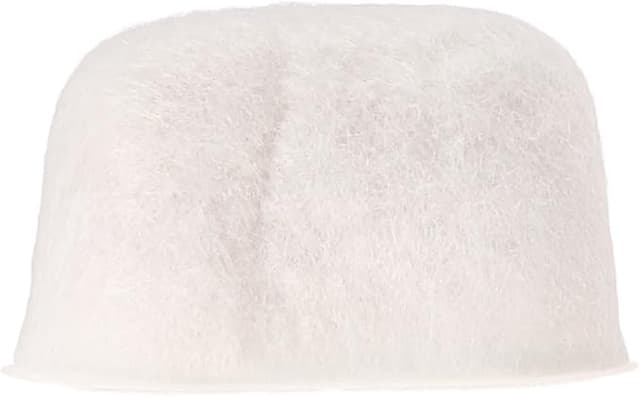
This was my real nerve. A filter that's a millimeter off doesn't sit right, water sneaks around it instead of through it, and then you're paying for filtration you aren't getting. So — the install. You soak the disc in a cup of water for five minutes first, and don't skip that; a dry charcoal puck floats and traps air, and you'll get a gurgle and a half-primed tank. Then it presses into the filter holder, and the holder clips down into the base of the water tank.
On the OEM disc that press is firm — a clean little seat you can feel. The compatible one? It went in. But honestly, the fit was a touch looser. Not leaking-loose; I checked the tank and the water was pulling through the carbon, not channeling around it. But the disc didn't grab the holder with that same confident click, and on two of the six I had to press a second time to know it was home. Once it's submerged and under pump pressure it doesn't matter. If you're the kind of person who needs everything to snap perfectly into place, that bit of slack will nag at you. It nagged at me for about a day.
What it does well, and where the OEM still edges it
Here's why this filter matters at all, and it's not taste first — it's your boiler. Scale is what kills these machines: calcium creeping into the heating element and the lines until the pump strains and the brew temp drifts. The charcoal pulls chlorine and the off-flavors; the filtration knocks down the minerals that crust everything up. A dead, saturated filter does neither, which is exactly how someone ends up with an expensive paperweight after letting one ride six months instead of two.
The compatible charcoal handled the chlorine job as well as the Breville disc. My tap water gets a faint pool smell some weeks, and both filters scrubbed it out clean. Espresso pulled through the aftermarket one tasted right — no cardboard, no flatness. The very first shot off a fresh disc had a whisper of new-charcoal smell, the way a brand-new water pitcher does on day one. Gone by the second tank.
Where the genuine disc still wins, straight up: it seemed to hold its scale-reduction a little longer toward the end of the two-month window. By week seven or eight my water on the compatible filter felt slightly harder than the OEM at the same point. Not a failure — I just started swapping the cheap ones at about seven weeks instead of stretching to eight. At two bucks a disc, that's nothing.
The real downside, no sugarcoating
The packaging is junk. All six came rattling around loose in one bag, each in a thin plastic sleeve, none individually sealed. The OEM packs seal each filter, and there's a reason — charcoal soaks up whatever's near it while it sits in your cupboard, including kitchen smells. So the day mine arrived I dropped the spares into a zip-top bag. Treat that as a small chore the OEM quietly does for you. That's the honest knock: a looser seat on a couple of them, cheap packaging, and a slightly shorter practical life. None of it ever showed up in the cup.
So who buys what
If your machine is still under warranty and you don't want to hand Breville any excuse to argue a claim, buy the genuine disc and stop thinking about it — that's cheap insurance against a service headache. Same goes if you're on brutally hard water and want every last bit of scale protection the manufacturer designed in.
For everyone else — for me — the compatible charcoal does the same work for a quarter of the price. I swap mine a week early, keep the spares in a sealed bag, and my machine has pulled clean shots through them for months with no scale trouble. I've bought this pack twice now. The OEM disc just isn't worth four times the money to solve a problem this one doesn't actually have.