Troubleshooting & Analysis
Twenty-eight dollars for six little discs of charcoal
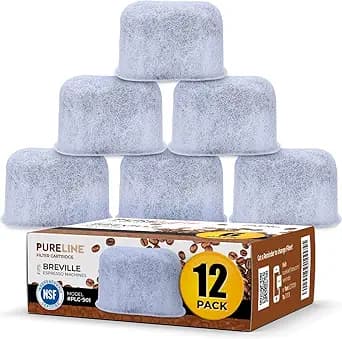
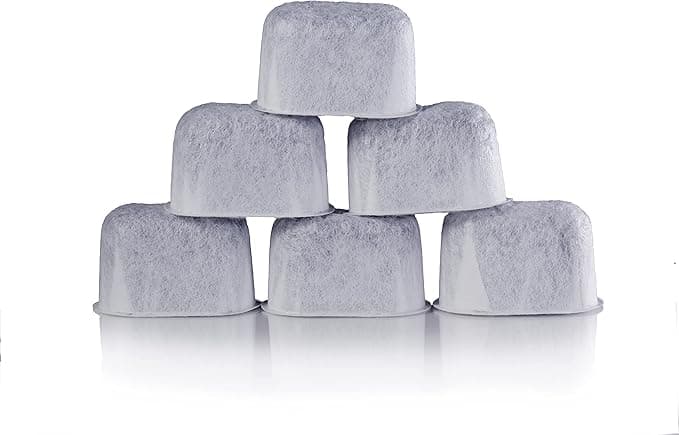
That was the number that stopped me. Six genuine Breville water filters — the round BWF100-style pucks that drop into the tank of a Barista Express or Bambino — running right about $28 on the day I looked. Do the math the way I did, standing in my kitchen with a dead filter in my hand: you swap every two months, so that's six filters a year, so the OEM pack is basically a yearly subscription I never signed up for. Meanwhile a twelve-pack of compatible discs sat one listing down for around $14. Twice the filters, half the money. A full year of OEM for what a year and change of the off-brand costs.
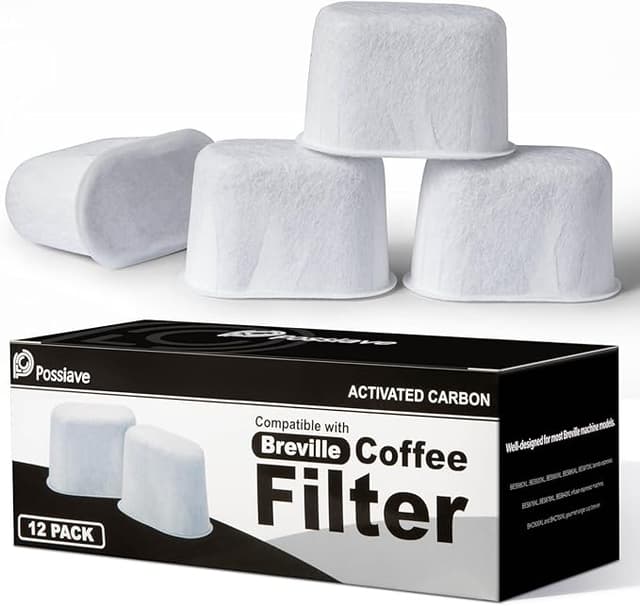
I bought the cheap one. I'd been running my Barista Express for three years on genuine filters out of pure habit, and honestly the only reason I finally switched was that I forgot to reorder, my last OEM puck went brown, and I didn't feel like paying express shipping to fix a mistake. So the compatible pack showed up instead. I've now been on it for about eight months. Here's what actually happened.
The install is the same — which is the whole point
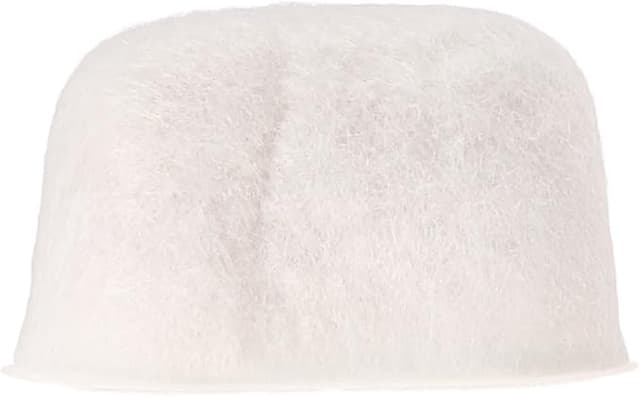
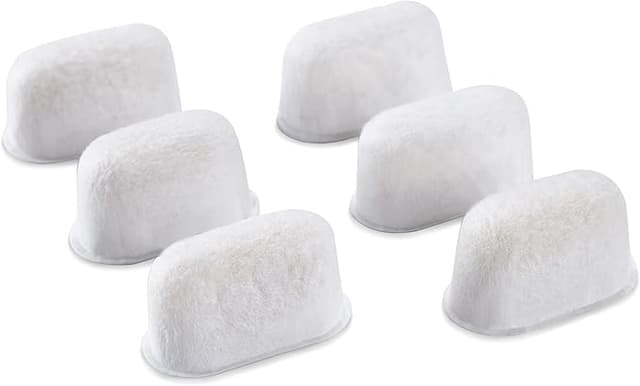
These don't ask anything new of you. Soak the disc in a cup of water for five minutes first — and do not skip this, because a dry charcoal puck will float and dump fine black dust into your tank, which is a genuinely annoying ten-minute cleanup I did to myself once. Once it's soaked, it presses into the little plastic filter holder, the holder clips into the base of the water tank, and you're done. The compatible disc seated into my Breville holder with the same firm push as the original. No wobble, no gap around the rim.
That fit matters more than people think. If the disc is a hair undersized, water sneaks around it instead of through it and you're filtering nothing. I held a genuine Breville puck next to the compatible one on the counter and the diameter was a match — close enough that I couldn't feel a difference seating them. After eight months and four swaps, every disc has clicked into the holder cleanly. Not one was warped or shy of the edge.
What it does — and the one place it's behind
The job here is simple: pull chlorine and scale-forming minerals out of your tap water before they hit the machine's heating system. Scale is what kills these espresso machines. It builds up inside the thermocoil, the heater works harder, the pump strains, and one day the thing just won't come up to temperature. Filtered water is the cheapest insurance you can buy against a $600 repair, and a saturated, months-old filter does nothing — it's just a brown sponge sitting in your tank.
On chlorine, the compatible disc has been a wash with OEM. My tap water has a faint pool smell straight from the faucet, and after the filter that smell is gone from the cup. My espresso tastes clean. I did a side-by-side shot the first week, OEM-filtered water versus compatible-filtered, same beans same grind, and I could not pick the winner blind. My wife couldn't either.
Where it's a touch behind: longevity at the edges. I've got moderately hard water, and around the seven-week mark on the compatible disc I started noticing the descale-soon behavior creeping in a little earlier than I remembered with genuine filters — a faint mineral edge sneaking back into the water. Not dramatic. But it's why I now swap these at the two-month mark religiously instead of stretching them to ten weeks like I used to with OEM. If your water is soft, you'll probably never notice this. If it's hard, treat two months as a hard ceiling, not a suggestion.
The real downside
The packaging is junk. The genuine Breville filters come individually sealed; my compatible twelve-pack came as a loose stack of discs in one plastic sleeve, rattling around. A couple of the discs near the top had shed a little charcoal dust in transit, so the first time I unpacked them my fingers came away gray. It doesn't hurt anything — the soak-and-rinse step washes that loose dust off before the disc ever goes in the tank — but it looks cheap, and if you're someone who wants everything to feel premium, this part will bug you. The product works. The presentation tells you exactly how they got the price down.
The other thing: there's no Breville logo, no part-number stamp, nothing to reassure you it's "real." For a charcoal-and-mesh disc that you throw away every two months, I've made my peace with that. For some people it'll itch.
Who should skip this
If you're inside the warranty window on a new machine and you're the type who reads the fine print, stick with genuine — some warranty language gets twitchy about third-party consumables, and on a brand-new $600 machine it's not worth the argument. And if you have very hard water and you know you'll forget to swap on schedule, the slightly-longer OEM grace period might actually save you a descale headache.
Everybody else? Look, I ran genuine filters for three years and these for the last eight months, and the water in my cup tastes the same. The disc fits the same, protects the machine the same, and costs me roughly half. The packaging is ugly and the hard-water longevity is a week shorter — those are the honest trade-offs. For fourteen dollars instead of twenty-eight, doing the exact same job in the exact same slot, I've reordered the compatible pack twice now. I'll buy it again when this stack runs out.