Troubleshooting & Analysis
The smell that told me my filter was dead
I noticed it on a Tuesday. Walked into my bedroom after work and the air had this faint sour-laundry thing going on — not strong, just wrong. My Winix 5500-2 was humming along like always, light glowing blue, acting like everything was fine. It wasn't. I pulled the front panel and the Filter H sitting in there had gone from white to this gray-brown the color of a wet paper bag, and when I held it up to my face it smelled like the inside of a gym shoe. That's the part nobody warns you about. A saturated HEPA doesn't just stop cleaning the air. It starts feeding it back to you. Whatever the filter caught over the months — dust, dander, and yeah, mold spores if your room runs humid like mine does in summer — that stuff sits there and breeds, and the fan happily blows it back into the room you sleep in.
So I'd let it go way too long. My fault. I'd been ignoring the reset light because, honestly, replacing it felt like a $60 chore I kept putting off. And that's the whole reason I started buying compatible filters in the first place.
The price gap is the actual story
Here's the math that made me switch. Winix wants real money for the genuine combo, and the 5500-2 eats a filter roughly every 12 months if you run it daily like I do — more like 8-9 months if you've got pets or a smoker or, in my case, a window that faces a busy street. The compatible Filter H I've been buying runs about half the OEM price. Call it a $25-30 swing every single year, for as long as you own the unit. Over the life of the machine that's more than I paid for the purifier. When I first did that subtraction in my head standing in the aisle, I figured the cheap one had to be garbage. It's the only way the price makes sense, right?
It isn't garbage. That's the annoying part of the truth.
Does it actually fit?
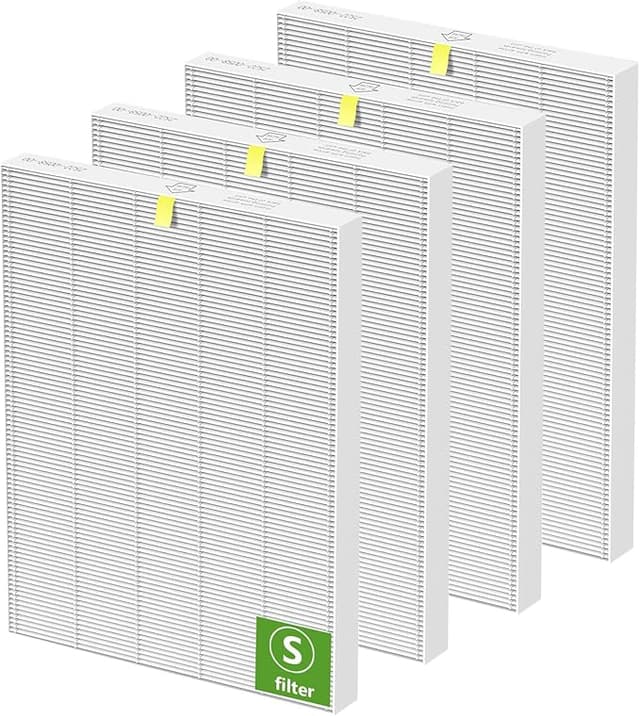
Yes — and I was waiting for it not to. The install on the 5500-2 is genuinely four steps and a toddler could do it: unplug it, pop the old filter out, slot the new one in, hold the reset until the light clears. The compatible Filter H seated with the same click the OEM gives you. No shimming, no forcing, no taping the panel shut. I'll give you one honest caveat though — the plastic frame on the aftermarket one feels a hair looser in the housing than the Winix original. Not loose enough to rattle or leak air around the edges, I checked, but if you run your finger along the seam you can feel it's a touch less snug. After four months in my unit it hasn't shifted or buzzed. It's a build-quality tell, not a performance problem.
How it actually performs
This is the True HEPA H13 layer most people are buying it for, and on the thing that matters — pulling particulates out of the air — I genuinely cannot tell it apart from the genuine cartridge. I keep a cheap air-quality monitor on my dresser, the kind that reads PM2.5. When I dropped a fresh compatible filter in after my dead-filter fiasco, the room number fell off a cliff within about twenty minutes, same curve I remember from the OEM. The sour smell was gone by morning. Cooking smoke from the kitchen clears about as fast as it ever did.
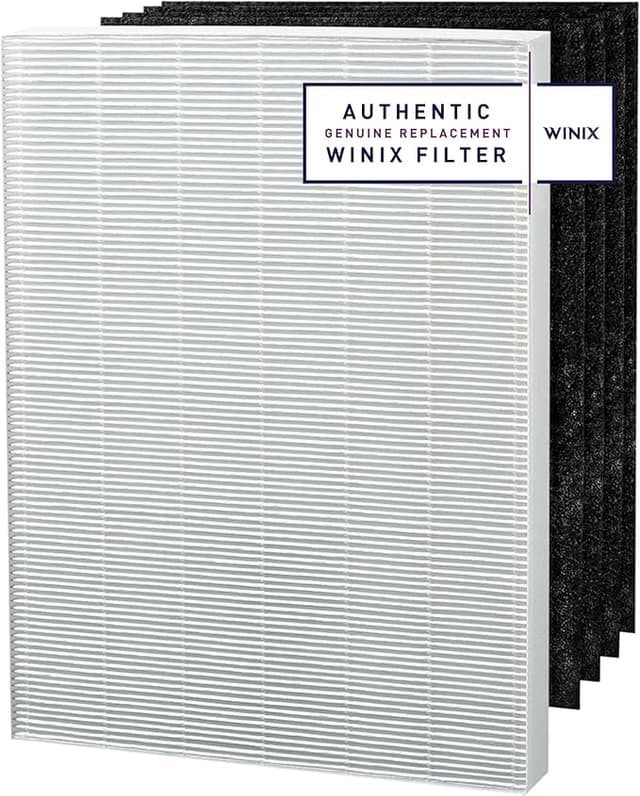
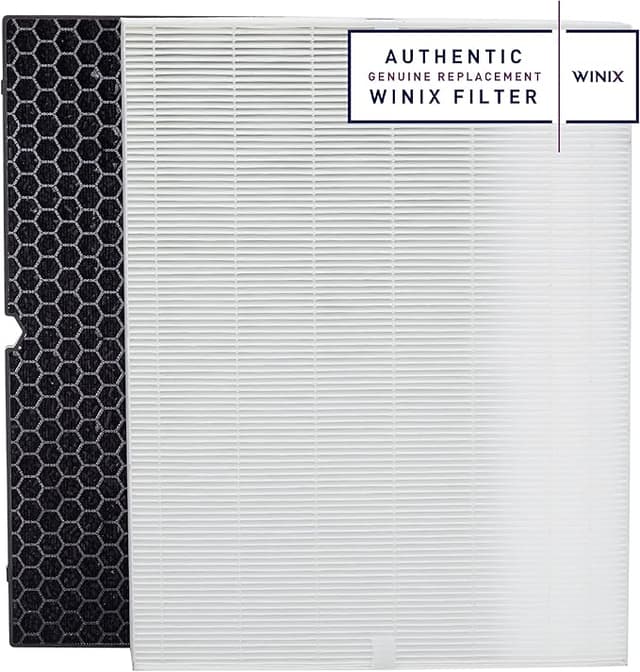
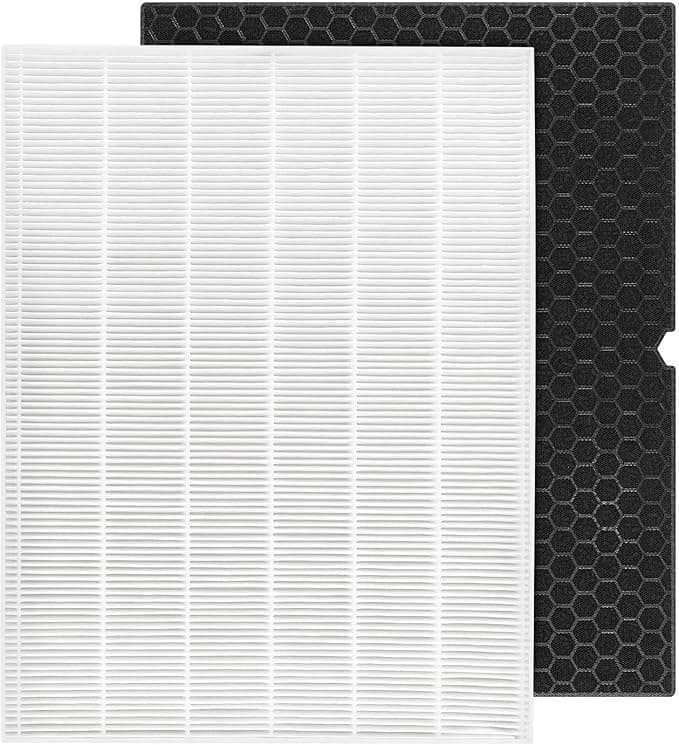
Where it's a step behind: the carbon. The 5500-2 filter is HEPA plus a carbon layer for odors, and the carbon on the compatible one feels a little thinner. With OEM I'd get maybe a full year of solid smell-killing. With the aftermarket version I notice the odor knockdown fading a month or two sooner toward the end of its life — by month ten it's clearly less hungry for kitchen smells than it was new. For dust and allergens, no difference I can measure. For odors over the long haul, the OEM has a slight edge. Worth knowing if you bought this purifier specifically to fight cooking or pet smells.
The downsides I'd actually tell a friend
The packaging is cheap — mine showed up in a thin plastic sleeve instead of the proper box, and the filter had a faint compressed look I didn't love until it puffed back out after a day. There's a light plastic-and-new-carbon smell for the first two or three days; I ran the unit on high for an evening with the window cracked and it was gone. And the carbon fade I already mentioned. None of these are dealbreakers for me, but I'd rather you hear them now than feel cheated later.
So who should skip it?
If you bought the 5500-2 mainly as an odor machine — heavy smoker in the house, frying every night, a litter box in the same room — the OEM's beefier carbon might genuinely earn its price for you, and I won't argue. Same if you're the type who'll be annoyed by a slightly looser frame on principle. Buy the genuine one and sleep easy.
For everyone else? Look — I let a dead filter sit too long once and learned exactly why these matter. Now I swap on schedule because it's half the price to do it, which means I actually do it instead of putting it off for two months like before. That's the real safety win nobody mentions: an affordable filter is the one you'll actually replace on time. The compatible Filter H does the core HEPA job neck-and-neck with the original for around half the cost, it drops right in, and I've now bought it three times for my own bedroom. I'd buy it again — and I'm about to, because mine's due in a couple weeks and this time I'm not waiting for the smell to remind me.