Troubleshooting & Analysis
The click. That's the thing nobody mentions until you've swapped a few of these. When the Filter O seats correctly in a Winix 1712-0, you feel a soft, definite click as the door panel snaps over it — and the first time I dropped one of these compatibles in, I caught myself listening for it like a paranoid mechanic. It clicked. Same place, same little resistance at the end. I exhaled. Then I noticed the smell.
Let me back up.
I didn't trust the cheap one either
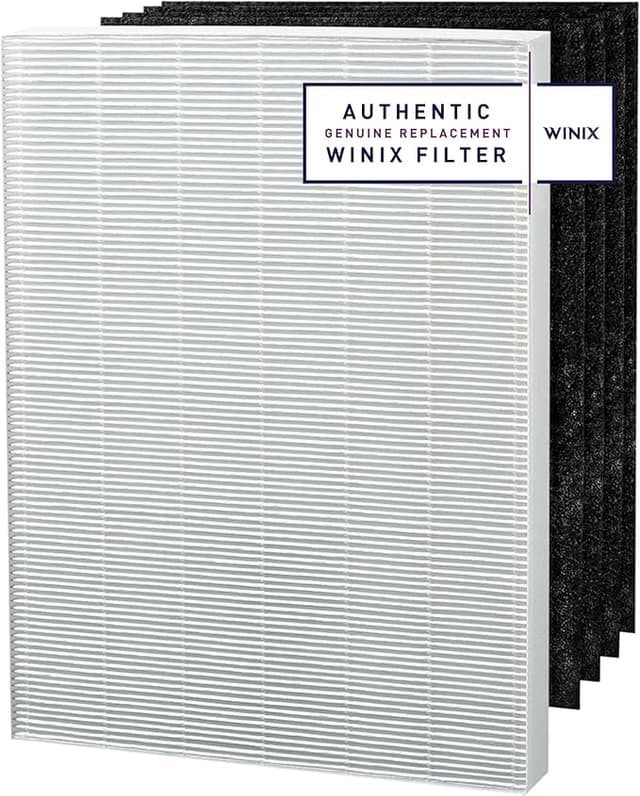
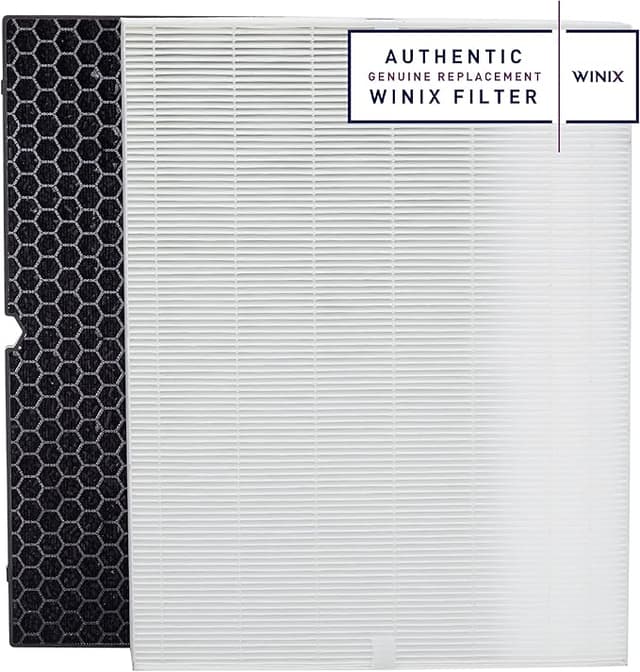
I run a 1712-0 in my bedroom — it's the unit that's been humming next to my nightstand for going on three years. The OEM replacement filter for it is one of those purchases that makes you do a small double-take at checkout. You're staring at forty-some dollars for what is, functionally, a pleated sheet of HEPA media and a carbon pre-layer wrapped in plastic. And the machine wants a fresh one roughly once a year if you actually run it. So it's not a one-time sting. It's a yearly subscription you didn't sign up for.
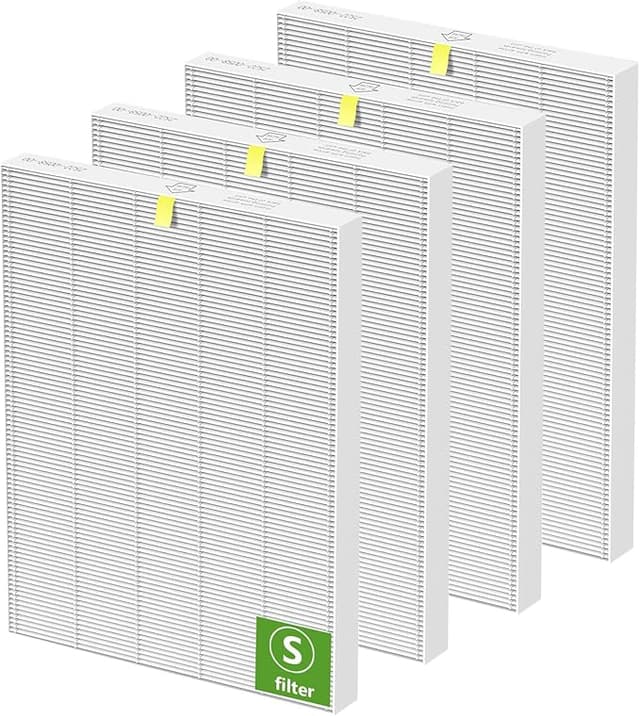
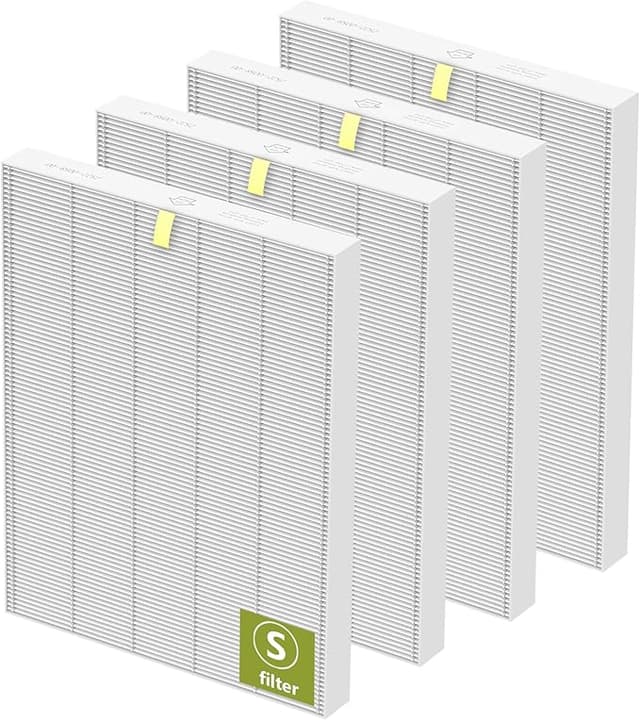
The Filter O — the compatible H13 unit — landed at right around half that. Twenty-ish dollars. And my honest first reaction wasn't excitement, it was suspicion. Half price usually means half something. Half the media, half the seal, half the lifespan. I bought one anyway, mostly to see where the corners got cut.
The smell. Let's just talk about it.
Here's the real downside, the one I'd want a friend to tell me: for the first two, maybe three days, there's a faint plastic-and-new-carbon smell when the unit's running. Not chemical, not alarming — more like the inside of a new appliance box. My OEM filters did this too, honestly, but this one was a touch stronger out of the gate. I ran the purifier on medium with the bedroom door open for an afternoon and by day three I couldn't find the smell if I went looking. By day four it was just... air. Clean air.
If you're sensitive to that kind of thing, pull it out of the bag and let it breathe on a shelf for a day before you install it. That alone basically erases the complaint.
Fit and install — the part I was bracing for
This is where compatibles usually betray themselves. A frame that's a millimeter too wide, a corner that bows, a filter you have to wrestle past the housing. I've had aftermarket filters for other machines that I genuinely had to bend to get seated.
Not this one. The 1712-0 swap is about as foolproof as it gets, and the Filter O respects that:
- Unplug the unit first. I know, I know — but the fan can spin down and you don't want fingers near it. Two seconds.
- Pop the front panel and lift the old filter straight out. It'll be grim. Mine looked like a coffee filter that lost a fight.
- Slide the new HEPA in, oriented the same way the old one came out.
- Close it up, plug back in, and hold the reset to clear the filter light.
The whole thing is a ninety-second job. The Filter O seated with that same click I mentioned. If I'm nitpicking — and I am — the frame felt a hair less rigid than the OEM when I held it before installing. Slightly more give if you squeeze the plastic edge. But once it's in the housing, that's irrelevant; the panel holds it flush and there was no gap, no air whistling past the edge, no rattle when the fan ramped up to high at 2 a.m.
How it actually performs
This is a True HEPA H13 filter, and that grade matters — H13 captures the fine stuff, the 0.3-micron particles that the cheaper "HEPA-type" knockoffs wave through. I wasn't going to take that on faith either, so I leaned on the dumbest, most honest test I have: my own nose and my own allergies.
I'm bad in spring. Pollen turns me into a faucet. The week I put the Filter O in was peak season, and the bedroom stayed the one room in the house where I wasn't sniffling. Dust on the nightstand — the stuff that normally films over in a few days — slowed way down. The carbon layer knocked back the cooking smell that usually drifts in from the kitchen. In day-to-day living I could not tell you, blindfolded, whether the OEM or this was in the machine.
Where's it a touch behind? If I'm being scrupulous, I'd guess the OEM carbon layer lasts a little longer at killing odors over the back half of the year — that's the spot where pricier filters tend to hold an edge. I'll know for sure in a few months. But for particulate, which is the whole job, it's pulling its weight.
Why a tired filter is the part that actually scares me
Quick word, because it's the thing people get wrong. The danger with these units isn't using a compatible filter — it's running any filter too long. A saturated HEPA doesn't just stop helping; it becomes a reservoir. Trapped damp gunk and mold can start to multiply, and the airflow shoves it back into the room. That's the actual hazard. So the smart move is to swap on schedule — and a $20 filter makes "swap on schedule" a decision you'll actually follow, instead of squinting at a $45 one and telling yourself it's probably got another few months in it. (It doesn't.)
So who should skip it?
If your 1712-0 is still under a warranty that has fine print about non-OEM parts, and you care about that, buy the Winix branded one and sleep easy. Same if you've got a specific medical-grade air requirement where you want the paper trail of the original manufacturer. No argument from me there.
For everyone else — for me — the math isn't close. Same H13 grade, a seal that held tight, a fit that clicked home like it belonged, for roughly half the annual cost. The plastic smell is real and it's gone in three days. The frame is slightly less stiff and it does not matter once the door is shut.
I've bought the Filter O twice now for this unit. That's the most honest endorsement I've got: I spent my own money on the second one without thinking twice. Fifty bucks a year back in my pocket, doing the same job. I'd grab it again — and when this one's spent, I will.