Troubleshooting & Analysis
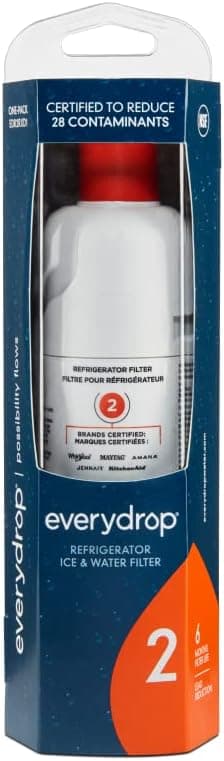
The first thing I noticed wasn't the taste. It was the click. When I pushed the compatible Filter 2 up into the housing on my Whirlpool side-by-side and gave it that quarter-turn, it seated with a softer, slightly cheaper-sounding click than the OEM cartridge I'd been buying for years. Not a bad click. Just... a hair less confident. I stood there with my hand still on it for a second, half-expecting water to spray out the top. It didn't. Three years and a lot of glasses of water later, it still hasn't.
That little moment of doubt is exactly why you're reading this, so let me get to it. I've run aftermarket Filter 2 cartridges in two different Whirlpool fridges, and I'll tell you what I actually noticed — the good, and the one thing that genuinely annoyed me.
The price gap is the whole reason I switched
Here's the math that pushed me off the OEM cartridge. A genuine Whirlpool Filter 2 runs me somewhere around $45 to $50 a pop, depending on whether I caught a sale. The compatible one I've been buying is closer to $20 — and they usually sell in a 3-pack that knocks the per-filter cost down even more. Whirlpool tells you to swap this filter every six months, so that's two filters a year, every year, for as long as you own the fridge.
Run that out. OEM is roughly $90 to $100 a year. The compatible route is more like $40. Over a five-year stretch you're looking at a couple hundred dollars saved — for a part whose entire job is to sit in a slot and pass water through carbon. That gap is what made me suspicious in the first place. How can it be half the price and not be junk?
Fit and install: easier than you'd fear, but check one thing
Installing the Filter 2 is genuinely a 30-second job, and the compatible one follows the same drill as the OEM. You twist the old cartridge to release it, slide the new one in, and lock it with that quarter-turn. No tools, no shutting off your water line, no kneeling on the kitchen floor cursing.
The one thing I'll flag: after I lock a new one in, I run about three gallons of water through the dispenser before I trust it. You're flushing out trapped air and the loose carbon dust that any new carbon filter sheds. Skip this and your first few glasses come out spitting and a little gray-looking. That's normal — it's the filter waking up, not a defect — but you want it done before someone pours a glass for a guest. The OEM needs this flush too, honestly. People just forget.
Fit-wise, the compatible cartridge dropped into the housing on both my fridges with no shaving, no forcing, no weird gaps. If I'm being picky, the molded plastic on the collar feels a touch thinner than Whirlpool's, and the seam where the two halves meet is a little more visible. Cosmetic. It seals where it counts.
Performance: the water tastes the same, and that's the point
I did the dumb-but-useful test: poured a glass from the OEM filter, swapped in the compatible one, flushed it, poured another, and tried to tell them apart blind. I couldn't. Both pulled out that faint chlorine bite my tap water has and left the water clean and a little crisp. Ice came out clear, no cloudy core, no off smell when it melted.
Where's the catch? If you push the filter hard near the end of its life, I think the OEM holds its flow rate a touch better in the last few weeks. With the compatible one, around month five and a half the dispenser flow felt slightly slower to me — like the carbon was loading up a bit faster. Not dramatic. But it's the small honest difference I noticed, and it's the kind of thing the marketing copy will never tell you.
The downside I actually didn't like
The packaging. I know that sounds petty, but hear me out. My OEM filters always came with a clear date sticker and a sealed bag that obviously hadn't been opened. A couple of the compatible 3-packs I bought showed up in thin plastic, one cartridge rattling a little loose in the box, no date label at all. Nothing was wrong with the filter itself — but it made me write the install date on the side with a Sharpie so I'd actually remember when six months was up. If you're the type who relies on the box to remind you, the cheaper packaging works against you.
Why a dead filter is the real risk
This is the part worth taking seriously, OEM or not. The danger isn't buying the wrong brand — it's leaving any filter in past its date. A saturated cartridge stops pulling contaminants and just becomes a wet sponge sitting in your water path. Worst case, it can start releasing what it caught back into the water you drink. At that point you're paying for filtration and getting tap. So whichever cartridge you choose, the date you swap it matters more than the logo on it.
So who should buy what?
If your fridge is still under a warranty that specifically demands genuine parts, or you just sleep better with the factory cartridge, buy the OEM and don't think twice — that's a fair reason. And look, if remembering to write a date on a filter sounds like one chore too many, the OEM packaging does that babysitting for you.
But for everyone else? I've run the compatible Filter 2 for three years across two fridges. Same clean water, same clear ice, the same simple twist-and-lock install — at roughly half the yearly cost. The slightly cheaper click and the no-frills box were the price of admission, and I made my peace with both. I'd buy it again. I just did, actually — there's a fresh 3-pack in my pantry right now.