Troubleshooting & Analysis
The click is how I knew it was seated
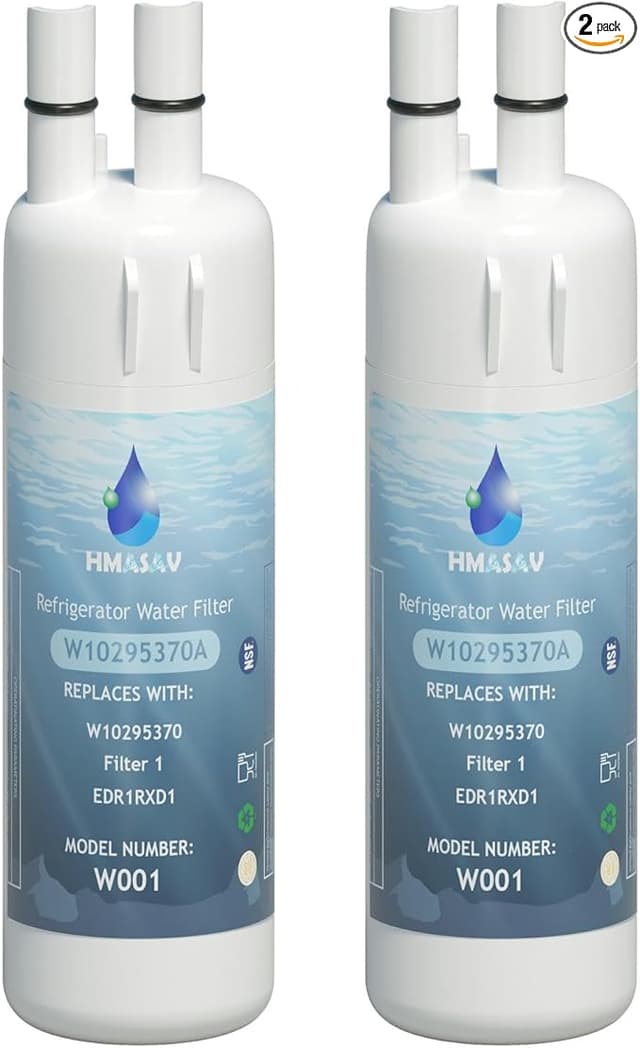
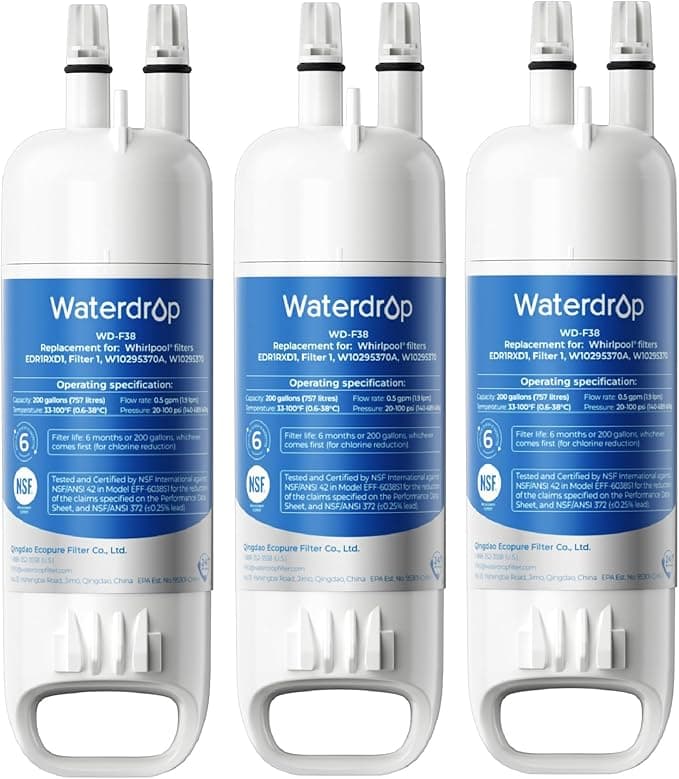
You know that little quarter-turn click when a fridge filter locks home? That's the thing I was listening for the first time I swapped a third-party Filter 1 into my Whirlpool side-by-side. OEM EveryDrop has spoiled me — it seats with this confident, slightly buttery resistance and then a clean snap. The compatible one I'd just paid twenty-two bucks for went in a hair drier, a touch more plastic-on-plastic drag, and the click was a little flatter. For about half a second I thought, great, I cheaped out and now it's going to leak all over the crisper.
It didn't. Four months in, it still doesn't. But let me back up, because that half-second of doubt is exactly the spot you're standing in right now.
The number that started this
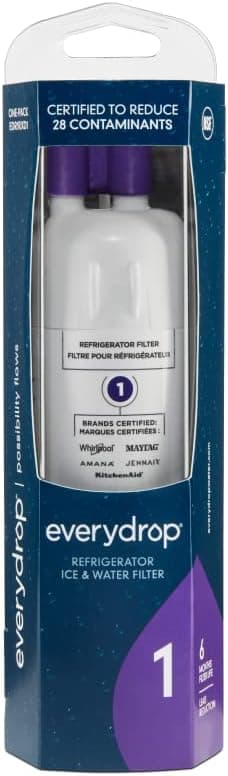
A genuine EveryDrop Filter 1 — the EDR1RXD1, the one Whirlpool stamps their own logo on — runs me around $45 at the warehouse store, and I've seen it as high as $54 when I forgot to stock up. Whirlpool wants you changing it every six months. So that's roughly $90 a year to keep clean water and clear ice, and a chunk of that ninety dollars is the logo on the box. The compatible Filter 1 I bought was $22. Two of those a year is $44. I'm pocketing about $46 every twelve months for a part that screws into the exact same socket.
I'm not a guy who flushes money for the brand name if the cheap thing does the job. The question was only ever: does the cheap thing actually do the job?
Fit and install — honest version
The swap itself is dead simple and it's the same on both. You twist the spent filter to release it — mine sits in the upper-right corner of the fridge compartment, some Whirlpools put it in the base grille — pull it straight out, push the new one in, and turn it until it locks. Then you run about three gallons through the dispenser to clear the air and the carbon dust out of the line. That last part isn't optional. Skip the flush and your first few glasses come out cloudy with tiny bubbles and taste faintly of pencil shavings.
Here's the real talk on fit: the compatible cartridge's collar is molded a fraction looser than OEM. Side by side on the counter you'd barely notice, but you feel it going in. After the first install I pulled mine back out and reseated it once just to make sure it was fully home — that's me being paranoid, not a defect. Once it locked, it locked. No drips, no weeping at the housing, no error light. The fridge never threw a fit about an "unrecognized" filter either, which I half expected.
How the water actually tastes
This is where I figured the corner would get cut, and it mostly didn't. The water comes out crisp, no metallic edge, no chlorine smell. My tap water has a noticeable pool-y note straight from the faucet and this knocks it flat, same as the EveryDrop did. The filter I bought carries NSF certification for the standard contaminants — chlorine, taste, odor, the particulate stuff — so it's not a hollow tube of charcoal pretending. Ice is clear, not that cloudy white you get from a saturated cartridge.
Where it's a step behind OEM: flow. By month three I noticed the dispenser ran a touch slower than it did fresh — filling a tall glass took maybe a second or two longer than it had with a new EveryDrop at the same age. Nothing dramatic, but the OEM held its flow rate a little more stubbornly deep into its life. If you've got a houseful of people hammering the water and ice all day, you might feel that more than I did.
The downside I'd want a friend to tell me
The packaging is junk — a thin clamshell and a flimsy paper sleeve, no satisfying box. Cosmetic, doesn't touch performance, but it does make you wonder for a second what you bought. Bigger thing: the first two or three days, the dispensed water had a faint plastic taste even after I'd run my three gallons. I ended up flushing closer to five gallons total before it fully cleared. With OEM that off-taste is gone almost immediately. So budget an extra couple gallons down the drain and don't judge it on glass number one.
And the part that actually matters for safety, not just taste: a filter you forget about is worse than no upgrade at all. Carbon saturates, and a maxed-out cartridge stops pulling contaminants and can start shedding what it caught back into your water — at that point you're essentially drinking tap quality through a dirty straw. Whatever filter you run, OEM or this, the six-month clock is the part you can't cheap out on. I write the install date on the cartridge in marker so I'm not guessing.
So who buys which
If your fridge is under warranty and you're the type who'd lose sleep over a service tech blaming an aftermarket part, or you've got a heavy-use household that leans on the dispenser constantly — buy the EveryDrop, eat the $45, sleep fine. That's a legitimate call.
For everybody else? I've now run compatible Filter 1 cartridges through two full six-month cycles. Same clean water, same clear ice, same simple twist-and-lock, for roughly half the money — about $46 a year back in my pocket for a slightly looser collar and an extra two gallons of flushing on day one. I bought another two-pack last month without thinking twice. That's the most honest endorsement I've got: I voted with my own wallet, again.