Troubleshooting & Analysis
The click is what sold me, honestly
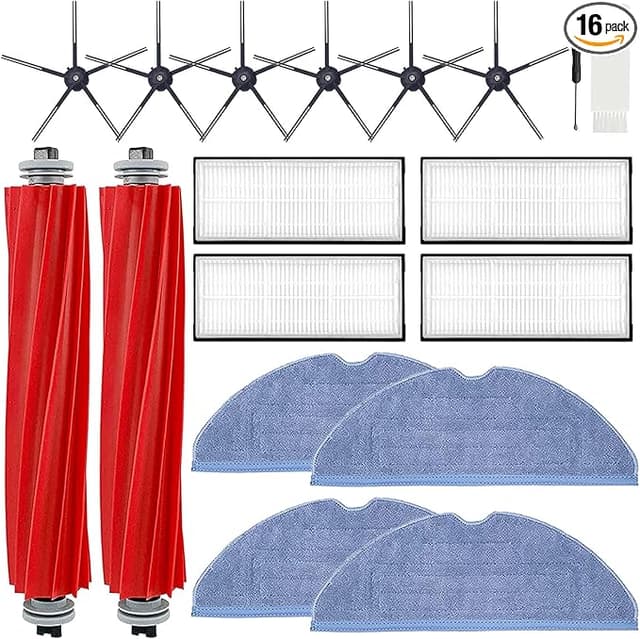
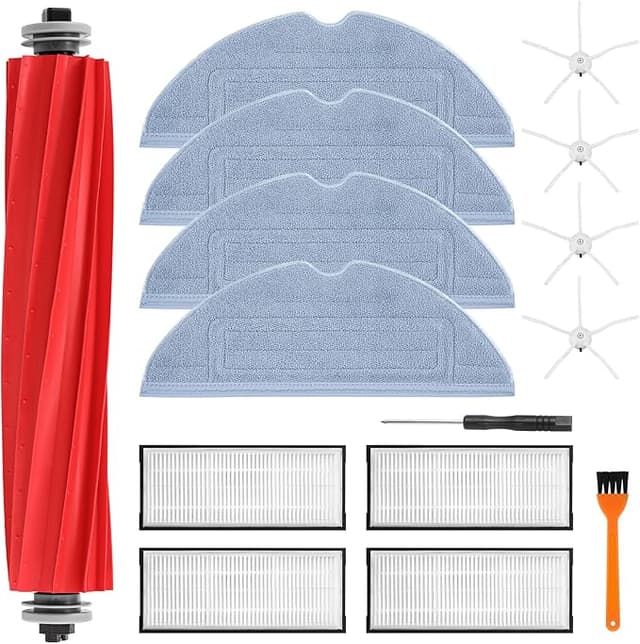
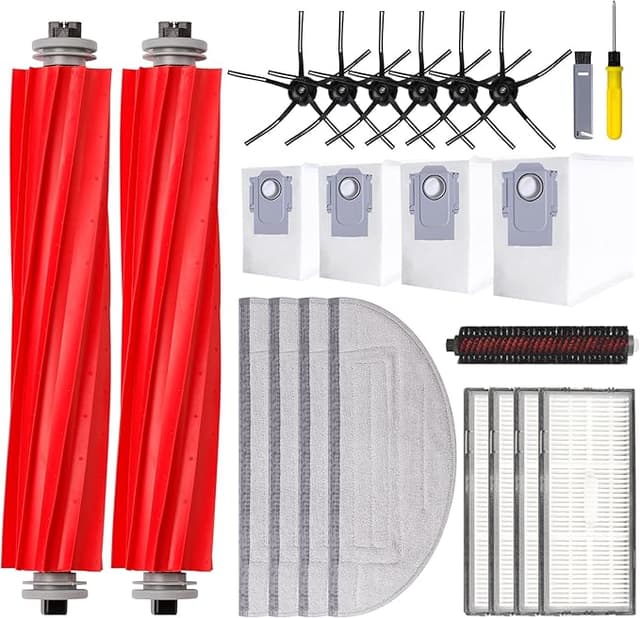
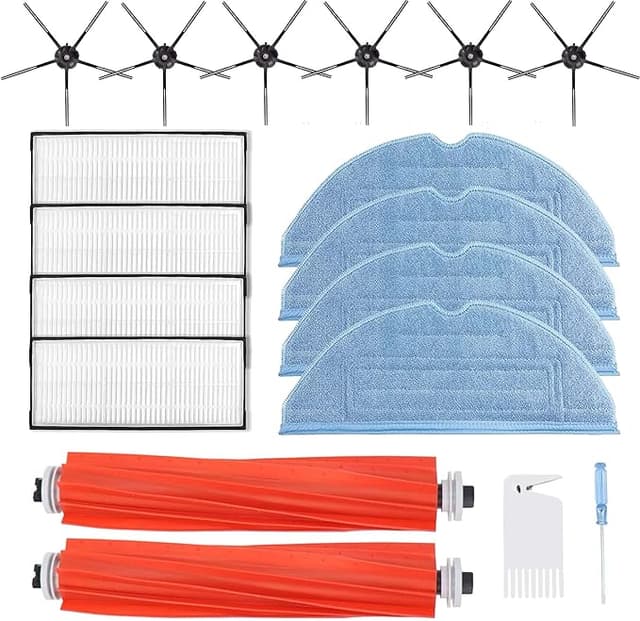
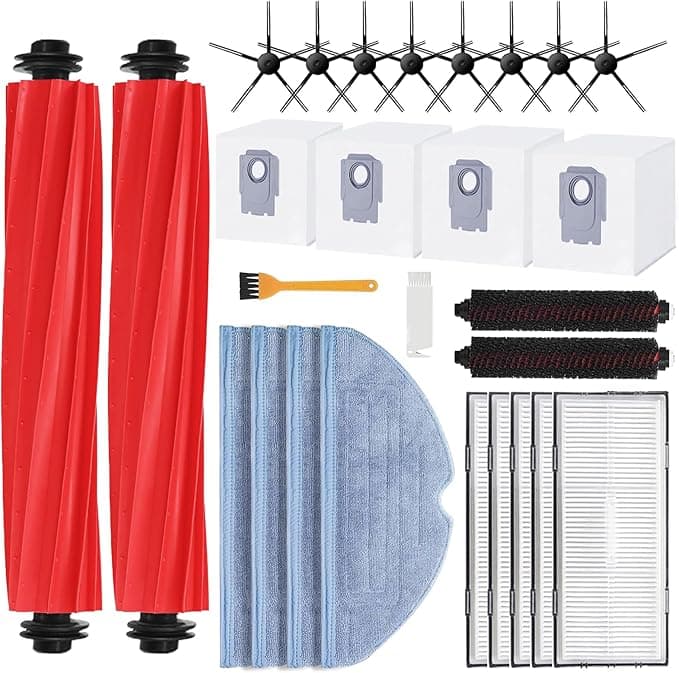
First thing I noticed, before performance, before anything — was the sound the new main brush made when it dropped into the bay on my Roborock S7 MAXV. That little plastic clack-snap when the bristle module seats and the side tabs catch. My OEM brush made the same sound for about a year and a half before it got so matted I couldn't pretend anymore. So when this generic kit clicked in identically, sat flush, no rocking, no gap at the ends — okay. That's the first hurdle cleared. A lot of cheap replacement parts fail right there, sitting a millimeter proud so the cover won't close. This one didn't.
And there was a smell. Faint, but it's there — a new-rubber, slightly chemical thing off the mop pads when you peel them out of the bag. Lasted maybe two days of use. I'm telling you this because every honest review of an aftermarket part has this detail and the fake ones leave it out. It's gone now. But day one, running it in my kitchen, I caught it.
What I was actually paying before
Here's the math that pushed me off the OEM cliff. Roborock's first-party replacement bundle — main brush, side brush, the washable filter, a couple of mop cloths — runs you somewhere north of $45 if you buy it as the branded accessory kit, and that's before you're restocking mop pads every few weeks. This generic kit landed around $20 for a comparable spread of parts. Call it a $25 gap per refresh. I do a full consumables swap maybe two, three times a year between the brushes wearing and the pads getting too crusty to revive. That's $50 to $75 a year I'm just… not spending now. For a robot vacuum that's already a several-hundred-dollar machine, throwing OEM money at $20 worth of bristles and felt started to feel a little silly.
I'm not going to pretend the savings are life-changing. It's the principle plus the steady drip. Over the life of the S7 MAXV that's real money, and the parts are doing the same job.
Fitting it: easier than the manual makes it sound
You don't need the screwdriver they mention for most of this, at least not on my unit. Power it down first — I always pull it off the dock so it's not trying to do anything mid-swap. The old main brush lifts out once you flip the green retainer cover; pay attention to which way the bristle pattern runs before you yank it, because the new one wants to go in the same orientation and it's easy to get cocky and force it backward. Side brush is a single press-fit on my model, no screw, though I've heard some MAXV units have a tiny Phillips holding it — check yours. The mop pads snap onto the plate, and the dust bag (if you're running the dock version) slots in one obvious way.
The one spot I fumbled: the side brush on this generic set has slightly stiffer arms than the OEM, so it took an extra press to fully seat the center. Felt like it wasn't going to click, then it did. Snug after that. No flinging-off mid-clean, which was my worry.
Four months in — the honest performance read
The main brush picks up like the original. Dog hair, the grit my kids track in off the patio, the under-couch dust bunnies — no drop-off in suction or pickup that I can feel on the carpet or the tile. The mop pads are where I'd say it does the job but I notice the difference: the felt is a touch thinner than Roborock's own cloths. It mops fine, leaves the floor clean, but it dries out a hair faster and I think I'll cycle through these pads a little quicker than the originals. Not a dealbreaker at this price — I'd rather swap a $20 kit more often than baby a $45 one.
The washable filter is genuinely good. I rinse it on the same schedule, it dries the same, airflow seems unaffected. If anything I'm more willing to swap it on time now because replacements don't cost a small fortune, and that matters more than people think.
The real downside, not a fake one
Here's the part I'd want a friend to tell me. The packaging is cheap and there's no real documentation — you get the parts in a plastic bag and you're on your own for which mop pad type matches your exact dock setup, so if you've got the auto-empty-and-wash dock you want to double-check the pad style before you order. I got the right ones, but I had to actually read the listing carefully instead of trusting it blind.
And the mop-cloth longevity thing is real. Don't expect these to outlast OEM. They won't. The felt nap flattens a little sooner. That's the trade you're making for the lower price, and I'm making it on purpose — but you should go in knowing it, not feel cheated three weeks later when a pad looks tired. The brushes and filter, though? I genuinely can't tell those apart from first-party in daily use.
Why I don't slack on swapping these
One thing I won't get loose about: a clogged main brush wrapped in hair, a saturated filter, a packed dust bag — that's how these robots cook themselves. The motor works harder pulling air through a choked filter, it runs hot, and at the bad end of that you're looking at a dead unit or worse. Beyond the machine, a vacuum that's just redistributing old dust and dander isn't cleaning, it's stirring. The whole reason cheap consumables matter is they remove the excuse to stretch a worn part one more month. Cheap parts mean I actually replace on schedule.
The verdict — who buys what
If you lease your floors out for surgery, or you're the type who genuinely cannot stand a mop pad that's 10% less plush than factory, buy the Roborock OEM kit and don't think about it. Same if your dock has some oddball pad format you're not sure about — sometimes the certainty is worth the markup.
But for me, in a normal home with a dog and two messy kids? This generic kit does the same work for roughly $25 less per refresh, the brush and filter are dead even with OEM, and the only real concession is mop pads I swap a little more often — which the price more than pays for. I'm on my second round of these now. That's the most honest endorsement I've got: I already bought it again.