Troubleshooting & Analysis
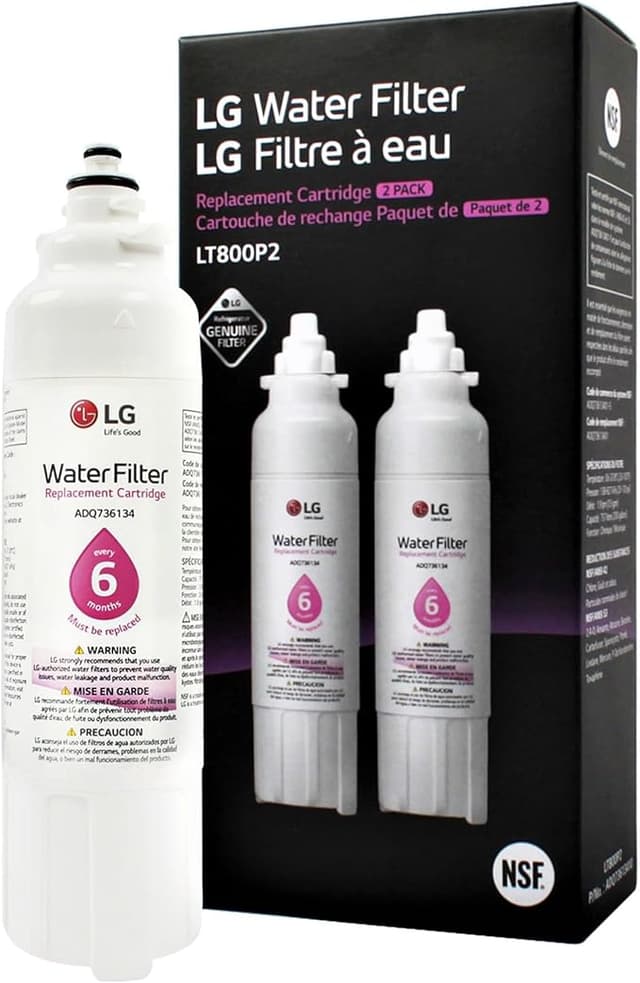
Fifty-four dollars. That's what LG wanted for a single LT800P water filter the last time I stood in the appliance aisle holding one. A little plastic cartridge the size of a soda can, and they price it like a car part. You change it every six months — the fridge nags you with that little light whether you like it or not — so that's a hundred and eight bucks a year to keep drinking your own tap water through a logo. I'd been paying it for two years before I finally got annoyed enough to do something about it.
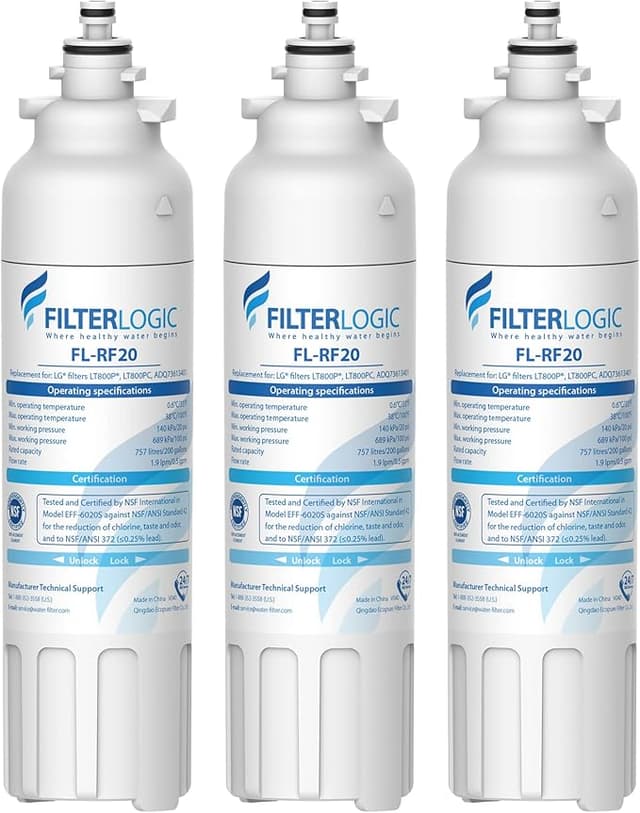
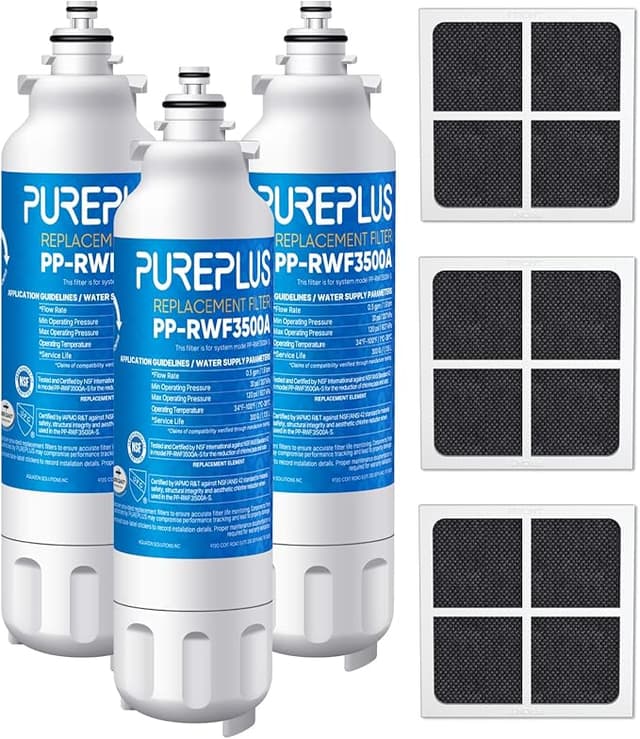
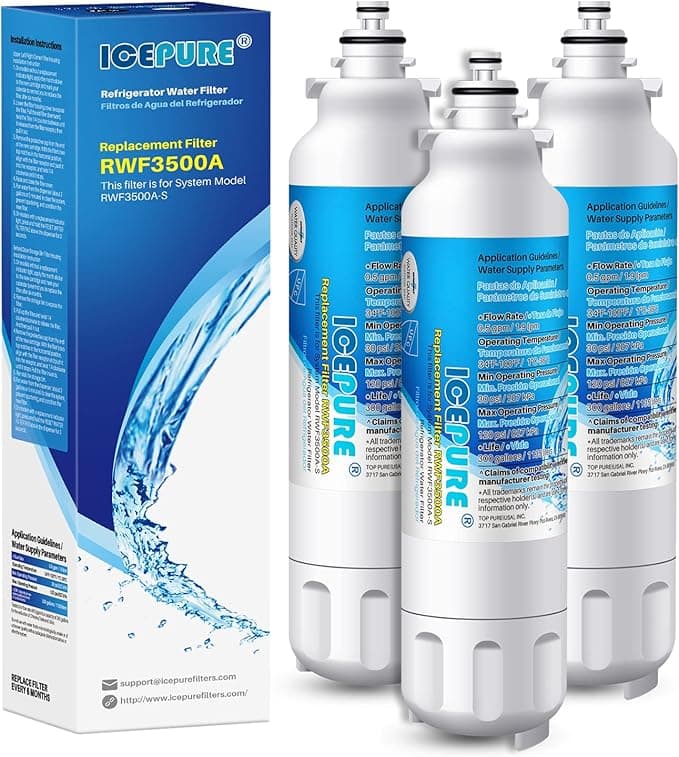
The something was a compatible filter, part #7361340, that ran me about twenty-five. Half. And I want to tell you exactly how that went, because I was as skeptical as you probably are right now, staring at the cheap one and wondering if it's going to wreck your fridge or taste like a garden hose.
The math that finally got me
Two filters a year on the OEM is roughly $108. Two of these is closer to $50. Over the life of the fridge — call it ten years — that's a $580 gap going to a part number on a box. I don't know about you, but I'd rather have the $580. The only question that mattered was whether the cheap one actually does the job, and that took me about four months of using it to answer honestly.
Does it actually fit?
This is the part everybody worries about, so let me be specific. The LT800P sits behind that flip-down door in the upper right of the fridge interior. You twist the old one — and I mean a firm quarter-turn, mine never comes loose on the first gentle try — pull it straight out, then push the new one in and twist it to lock. With the OEM, that lock-in has a confident little click. With the 7361340, honestly, the click felt a hair softer. The frame is maybe a touch less precise than LG's molding. It seated fine, sealed fine, no drips — but if you're the type who notices these things, you'll notice it's not quite the same satisfying snap. After four months it hasn't budged or leaked a drop, so the looser feel was just feel, not function.
Then you flush it. Run about three gallons through the dispenser before you trust the first glass — this clears the air out of the line and rinses off the carbon dust that every new filter sheds. Skip this and your first pour comes out spitting and a little gray. Do it, and the water runs clear.
What it tastes like (and the first-week thing)
I'll give you the downside up front, because there is one. The first day or two, the ice had the faintest plastic edge to it — that brand-new-filter smell you get from any cartridge, OEM included, but I'd say a touch more noticeable here. By day three it was gone completely and hasn't come back. If I hadn't been paying close attention for this exact reason, I'm not sure I'd have caught it.
After break-in? The water is genuinely good. Crisp, cold, no chlorine bite, no metallic aftertaste. I did the dumb test where you pour a glass from the filter and a glass straight from the tap and try them blind — the filtered one wins easily, same as the OEM did. These carry the NSF certification for reducing the stuff you actually care about, so this isn't just charcoal-flavored placebo. The ice is clear, not cloudy, which is usually the first sign a filter's slacking.
Where it's a step behind
I'm not going to pretend it's identical. Two real things. The packaging is cheap — a thin printed box and a baggie, versus LG's molded clamshell. Doesn't affect the water, but it tells you where they saved money. And the flow rate, by month four, dropped off maybe a touch sooner than I remember the OEM doing. Nothing dramatic, the dispenser still fills a glass at a normal pace, but I'd plan to swap it right at the six-month mark rather than stretching it to seven or eight like I sometimes lazily did with the LG one.
Why you can't just skip it
Quick reality check, because I've watched people do this. A filter that's past its life doesn't just get "less effective" — once that carbon is saturated, it stops grabbing contaminants and the water passing through is basically what's coming from your pipes, plus whatever's been sitting in a wet filter for nine months. That's the actual reason the fridge bugs you about it. So whatever you buy, OEM or this, the rule is the same: change it on schedule. The only thing that changes here is how much it stings your wallet to do the right thing.
So who should buy what
If your fridge is a high-end LG still under warranty and you're nervous about anyone giving you grief over an aftermarket part, buy the OEM and sleep easy — that's worth something to some people, and I won't argue. Same if a slightly softer click or a thinner box is going to live in your head.
But me? After four months of clear ice and good water in my own kitchen, paying half the price, I refilled with the 7361340 without a second thought — and I'll do it again at the next six-month light. Look, it's a water filter. It needs to fit, seal, and clean, and this one does all three for twenty-five bucks instead of fifty. The OEM's job is to put LG's name on a part. This one's job is to filter my water. It does that. I'm keeping the difference.