Troubleshooting & Analysis
The day my ice cubes smelled like a swimming pool
I noticed it in a glass of iced tea, of all things. A faint chlorine tang riding on the back of every sip — the kind of smell you'd expect bending over a hotel pool, not drinking from your own fridge. My LG had been humming along fine, or so I thought. Then I pulled the cartridge.
It had been in there closer to nine months than six. The carbon block, which goes in a clean off-white, had gone a dingy gray-brown, and there was this faint sour-musty edge to it when I held it up close. That's the part nobody tells you about a filter past its date: it doesn't just stop working. A saturated carbon block can start handing back the junk it spent months trapping, so the water coming out can actually measure worse than what's coming into the house. I'd been pouring that into my kid's water bottle every morning, thinking I was doing the responsible thing.
So yeah. I got religious about replacement intervals after that. And I also did the math that sent me looking at compatibles in the first place.
What LG wants vs. what I actually pay
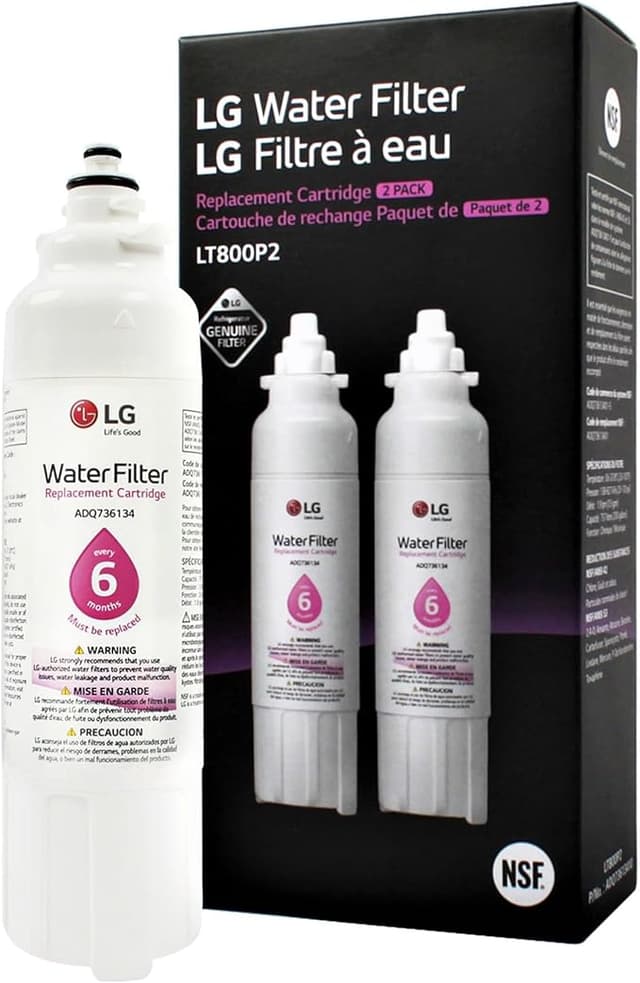
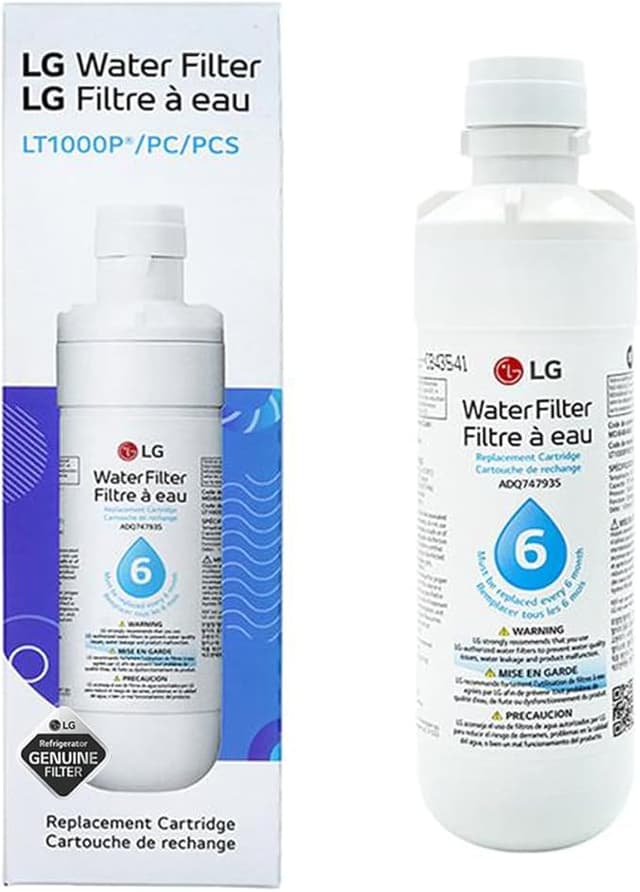
The LT120 is the filter for a bunch of LG refrigerators, and if you buy it the official way you're staring down a price that makes you wince twice a year. Genuine LG cartridges run in that $45-ish-and-up neighborhood depending on where you grab them, and you're supposed to swap roughly every six months. Two of those a year and you're spending real money to drink your own tap water.
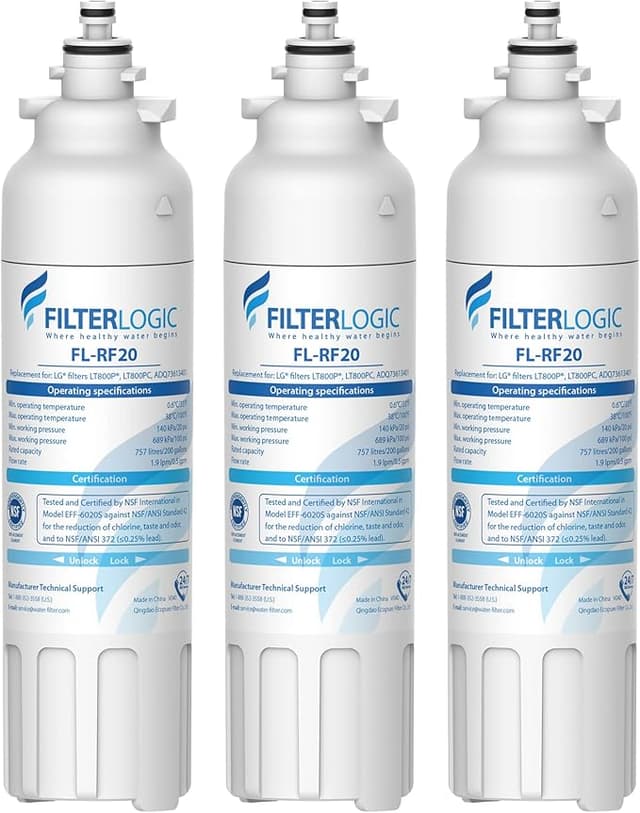
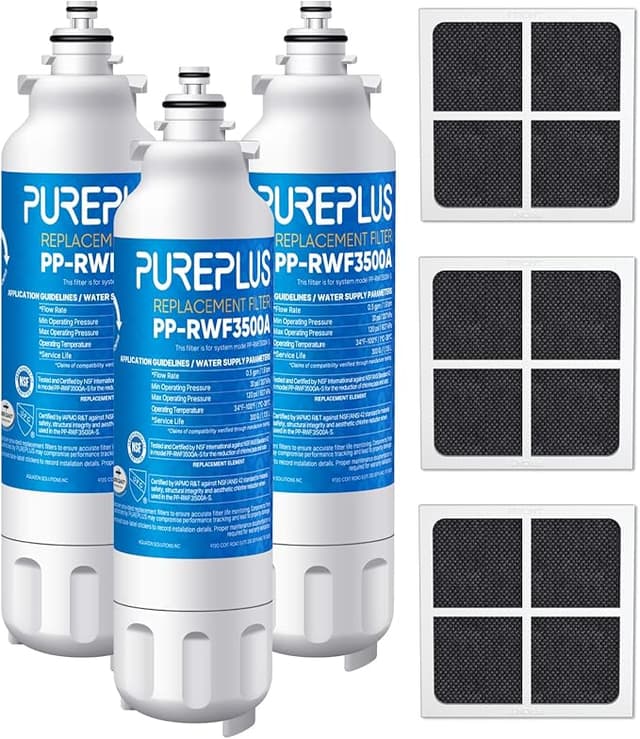
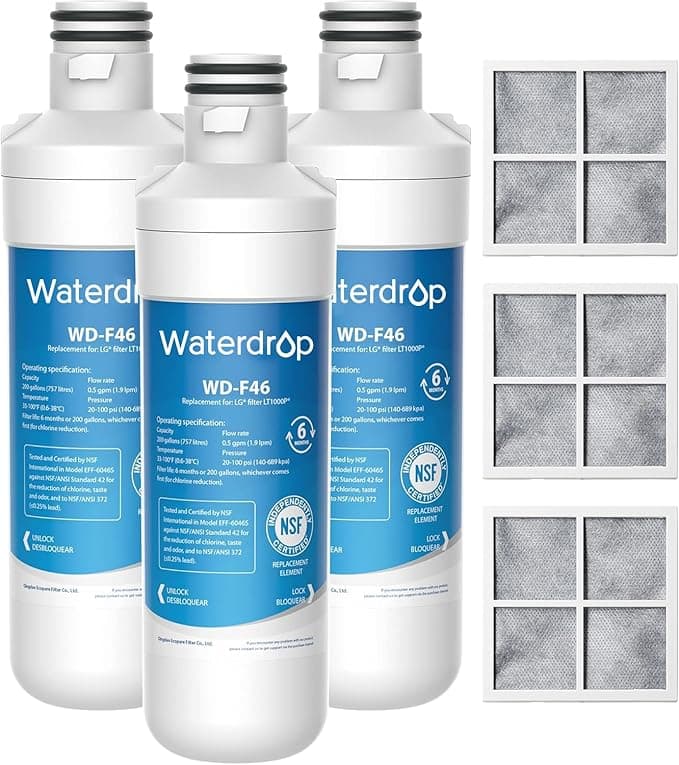
The compatible I've been running — sold as a replacement for part #7479350 — costs me less for a two-pack, for the whole year, than a single OEM filter. That's not a typo. Two replacements, the way you're supposed to do it, for under the price of one genuine cartridge. The first time I saw that gap I assumed the cheap one had to be cutting a corner somewhere. I bought one to prove myself right.
Does it actually fit? Honestly, mostly yes
Install on these LG units is dead simple, which helps, because a sloppy aftermarket part shows its seams during the swap. Mine's the internal style — you find the cartridge up in the upper right inside the fridge, push the release, and the old one slides straight out. New one in, push until it clicks. That click matters; it's the seal seating. On the base-grille models it's a quarter-turn instead, twist till it locks.
Here's the one bit of fiddling I'll cop to. The compatible's frame is a hair — and I mean a hair — looser in the housing than the genuine LG was. The first time, I pushed, didn't get a confident click, pulled it back out, reseated it, and the second time it snapped in clean. Since then it's been fine every swap. It seats, it holds, no drips, no rattling. But it doesn't go in with quite the same tank-solid thunk the OEM had. If you're the type who needs everything to feel premium, that'll bug you for about four seconds.
One thing you cannot skip, OEM or compatible: flush it. Run the dispenser for about four gallons — three, four minutes — before you drink a drop. The first water out carries loose carbon fines and tastes faintly of, well, new filter. With this compatible the break-in taste was a touch more noticeable than I remember from LG, slightly flat-plasticky for the first pitcher or so. Flush it properly and that's gone. Skip the flush and you'll blame the filter for something that was your fault.
Performance: where it matches, where it lags
The media inside is the same idea as the genuine part — an activated carbon block, and this one's carrying NSF 42/53 certification, which is the part I actually cared about. That covers the taste-and-odor stuff (chlorine, that pool smell) plus a chunk of the nastier contaminant-reduction claims. In practice: my water tastes clean, the chlorine bite is gone, ice is clear and doesn't smell like anything. Through a full six-month run it held up — no taste creeping back at month four or five the way a genuinely cheap filter does.
Where's it a touch behind? Flow. I think the OEM dispensed a smidge faster when both were brand new. We're talking a couple seconds filling a tall glass, the kind of thing you'd never notice unless you were specifically watching for it like a weirdo, which I was. By month two they felt identical to me anyway.
The real downsides, no spin
The packaging is cheap — thin plastic, a sticker that's a little crooked. Doesn't affect the water, but it doesn't inspire confidence when it lands on your porch. The slightly looser frame I already mentioned. And the first-pitcher break-in taste is real, so don't be lazy about the flush. That's the honest list.
Who should just buy the OEM
If your fridge is under warranty and you're the cautious sort who doesn't want to give a manufacturer any excuse to point at a third-party part, buy the LG. Same if a few seconds of flow or a crooked sticker is going to live in your head. No shame in it.
For everyone else — for me — the verdict's easy. Same carbon-block job, the certification I wanted, a year of clean water for less than one official cartridge costs, and a swap that takes two minutes. The one trade is a frame that seats a hair less snug and a flush you shouldn't skip anyway. I've now bought it three times running, and the only filter that ever scared me was the OEM one I left in nine months too long. Set a phone reminder, swap it on time, and the cheap one does everything you need it to.