Troubleshooting & Analysis
The week my ice started tasting like the back of a cabinet
I caught it in a glass of water first. Faint, musty — like a damp basement smell had somehow gotten into my fridge. I figured it was the leftovers. Tossed half the shelf. Smell stayed. Then my wife mentioned the ice tasted "off," and that's when it clicked: I hadn't changed the water filter in my LG since, honestly, I couldn't tell you. Probably pushing eight or nine months on a filter LG rates for six.
That musty hit is what a saturated carbon filter does. The carbon stops grabbing chlorine and the gunk that rides along with it, and at some point it doesn't just stop helping — it starts handing the water back whatever it was holding. So by the time you're tasting basement in your ice cubes, you're basically drinking filtered-then-unfiltered water, paying for a filter that quit weeks ago. That was my LT1000P moment. Long overdue.
The part where I balked at the price
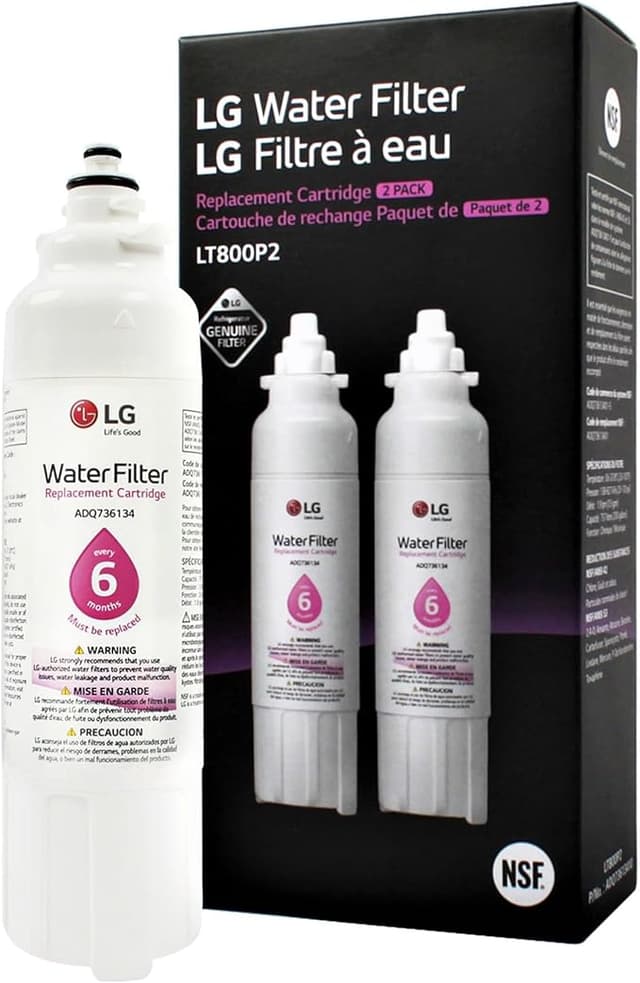
Here's what almost made me put it off again. The genuine LG LT1000P runs around $45–$55 a pop, and you're supposed to swap it twice a year. Call it a hundred bucks a year for water that should, frankly, just be water. I stood in the kitchen doing that math and felt a little robbed — it's a chunk of carbon in a plastic shell, and I'm paying logo money for it.
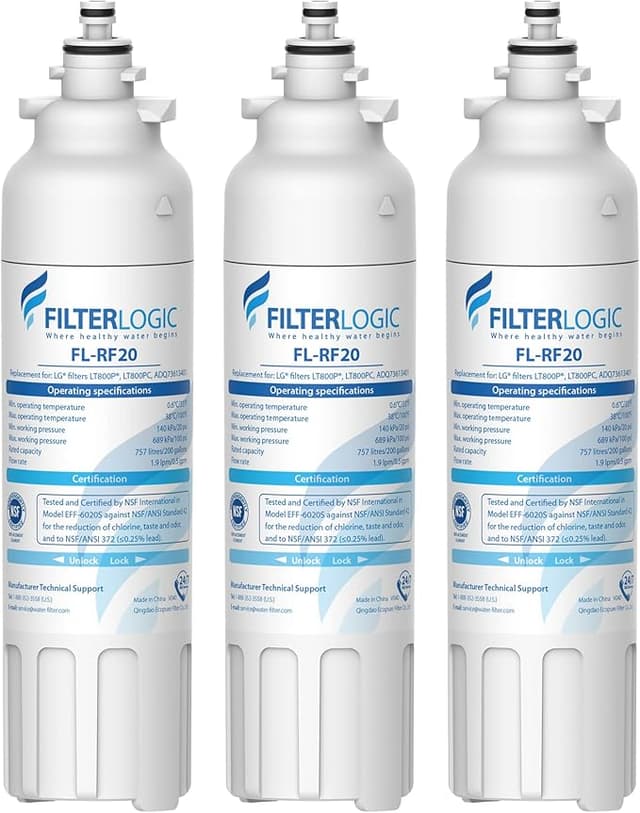
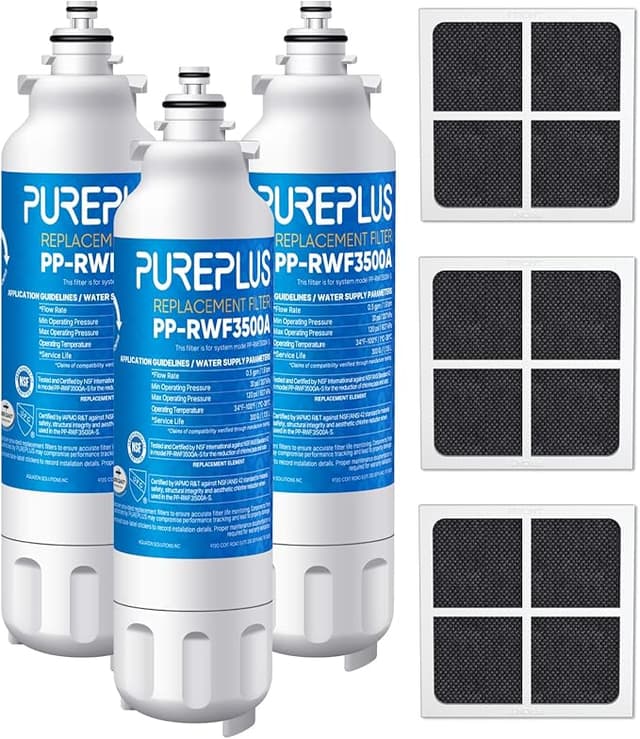
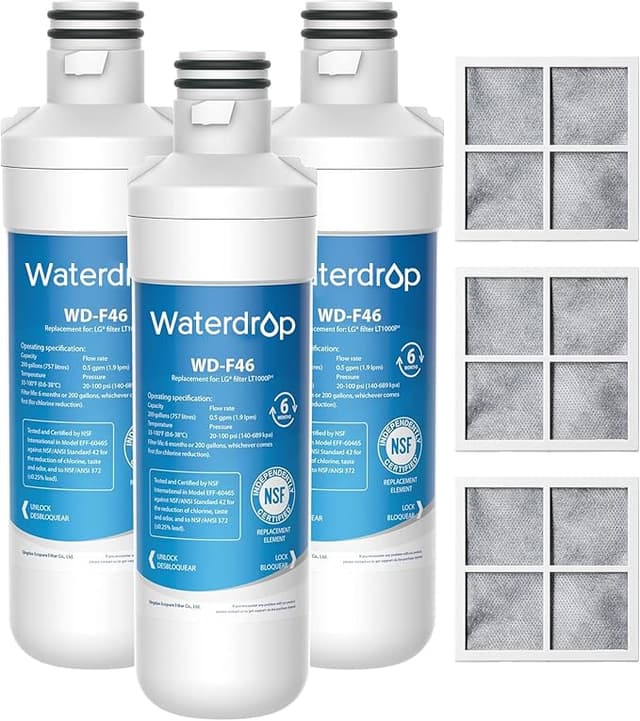
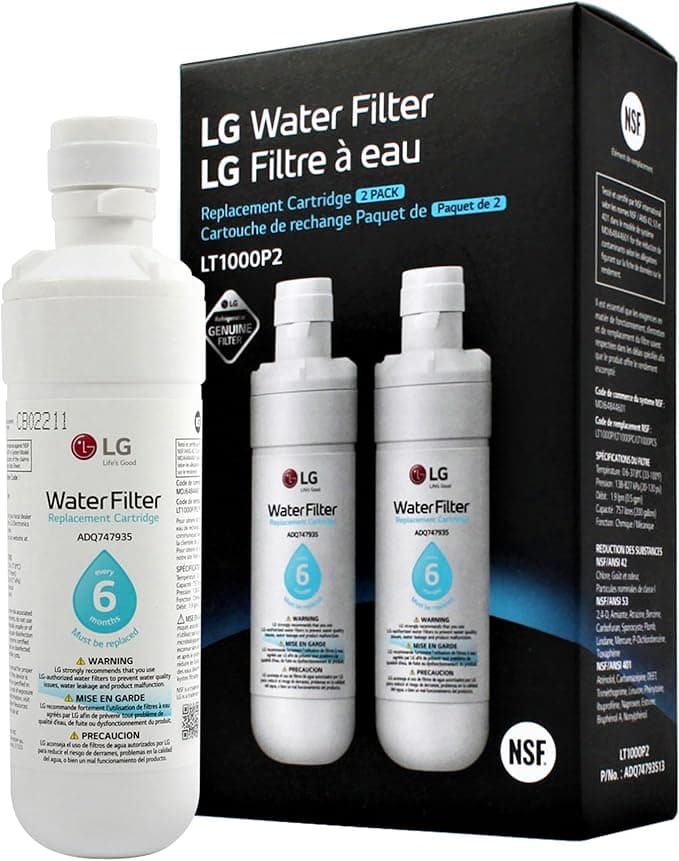
So this time I didn't reorder the LG. I grabbed a compatible LT1000P filter instead — the NSF-certified kind, because that part I won't cheap out on. Paid right around $20 for it. One filter. Same six-month job. That's the difference between roughly $100 a year and $40 a year, and over the four-or-five years I'll keep this fridge, that gap is real money, not a rounding error.
Does it actually fit, or is that the catch?
That was my worry going in — that "compatible" meant "sort of fits if you jiggle it." It didn't. The install on these LG units is genuinely a ten-second job: you twist the old one a quarter turn to drop it out, slide the new one up into the housing, and twist it back until it locks. I heard the click. Felt it seat. No adapter, no shim, no praying.
One honest note, and it's the real downside, so I'm not burying it: the compatible filter's collar sat a hair looser in my hand than the LG did before it clicked home. The molding just isn't as tight. Once it locked it held fine and hasn't leaked a drop in the months since — but if you're the type who notices that kind of thing, you'll notice it. It seats correctly. It just doesn't feel as expensively made on the way in.
The other thing nobody warns you about, OEM or not: flush it before you trust it. LG says run three gallons through after a swap and they mean it. My first glass came out cloudy white — that's trapped air, not dirty water, and it clears in seconds — and the first cup or two had a faint plastic-y edge from the brand-new carbon. I dumped about three gallons through the dispenser, let the ice maker cycle once and threw out that first batch of cubes, and after that it ran clean.
How it actually performs
Taste is the whole point, and on that it's been even with the LG. The chlorine bite that creeps into my tap water by late summer? Gone. Ice is clear, no cloudy core, no fridge-smell. Three-plus months in and the water still tastes like nothing, which is exactly what you want — you should never taste your water filter, in either direction.
Flow rate matched the LG too, which I half-expected to be the giveaway. Some cheap compatibles choke the dispenser to a sad trickle because the media's packed wrong. This one fills a glass at the same pace my LG did. Where I'll give the OEM its due: I don't have a lab, so I can't swear the compatible pulls lead or specific contaminants down to the exact same numbers over the filter's full life. The NSF cert covers the claims it's tested against, and that's enough for my tap water on a municipal line. If you're on well water with known heavy-metal issues, that's a different calculation — I'd lean OEM there, or honestly get a dedicated under-sink setup.
So who should buy which
Buy the genuine LG LT1000P if you're under warranty and paranoid about LG using a "non-genuine filter" line to wriggle out of a repair (I've never seen them actually do it over a water filter, but the fear is real), or if you're on problem water and want the exact OEM-tested contaminant claims. No shame in that.
For everyone else — most of us, on city water, just wanting cold clean water without the musty surprise I got — the compatible LT1000P is the one I keep buying. It seats right, it tastes right, it flushed clean after three gallons, and it costs less than half. The looser collar and the day-one plastic note are the price of admission, and they're minor. I've now swapped two of these into my own fridge. I'll do it again in six months — and this time I set a phone reminder so I don't end up sniffing my ice cubes wondering what died.