Troubleshooting & Analysis
I'll be straight with you: I didn't believe it either. A full replacement set — brushes, mop pads, dust bags — for an iRobot J9+/I3+/J7+ for around $20, when iRobot's own kit runs you closer to $50? My first thought was that someone was selling me garbage in a nice box. I've been burned before. So I bought one to prove myself right, fully expecting to write the "just pay for the real thing" review. That's not the review I ended up writing.
The price gap is the whole reason you're here
Let's not pretend otherwise. You searched for a compatible part because you looked at the OEM maintenance kit and felt that little flinch. A genuine iRobot replacement bundle for these models tends to land in the $45–$55 range depending on what's in it. The generic set I've been running cost me a hair over $20. Call it a $25–$30 difference per refresh.
Now do the math the way it actually hits your wallet. If you're running a J7+ or J9+ as a daily driver in a house with a dog, you're swapping the brush and roller every few months and burning through dust bags faster than you'd like. Two, maybe three refresh cycles a year. That's $75–$150 a year on OEM, or roughly $40–$60 on the generic. Over the three or four years you'll keep the robot, the savings quietly turn into real money — the kind that buys the next robot.
Does it actually fit, or does it fight you
This was my real worry. Aftermarket parts love to be "compatible" in the listing and 2mm wrong in your hand. So I went in skeptical, screwdriver ready.
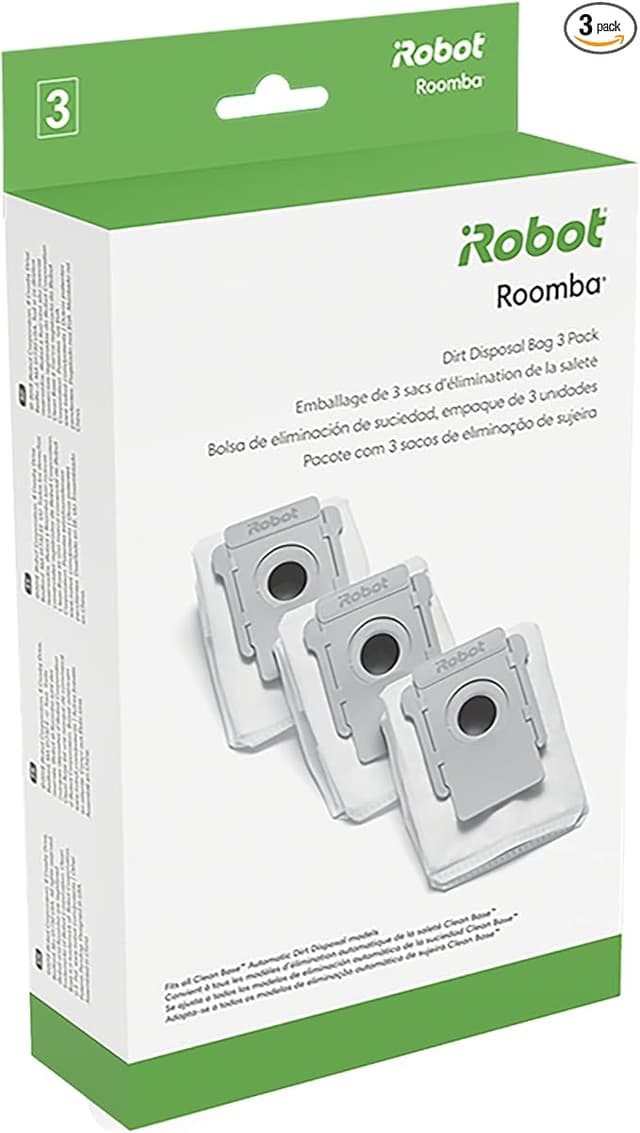
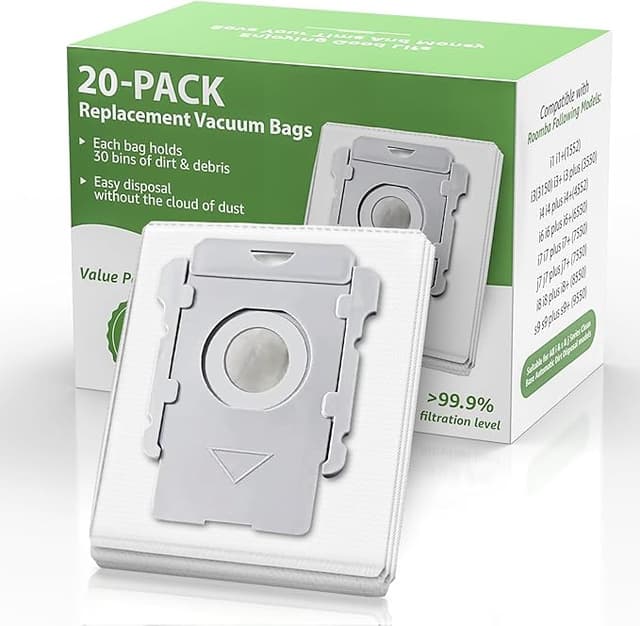
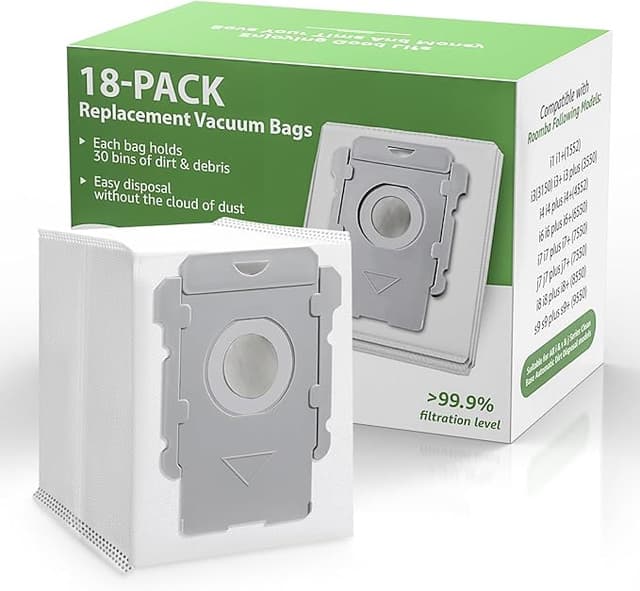
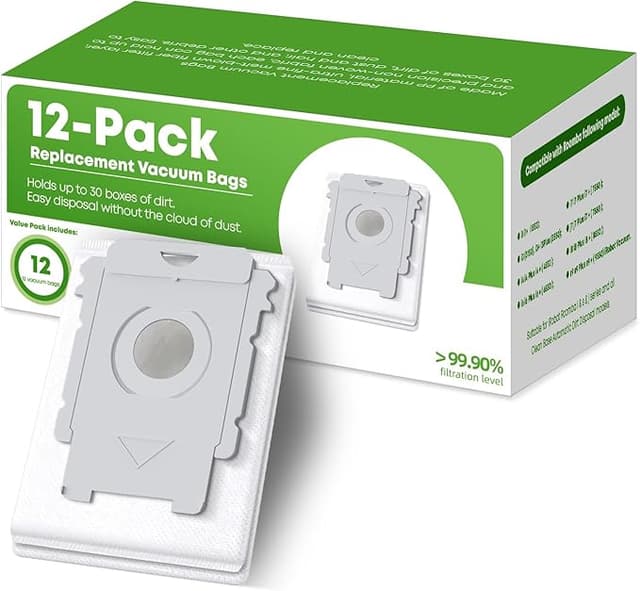
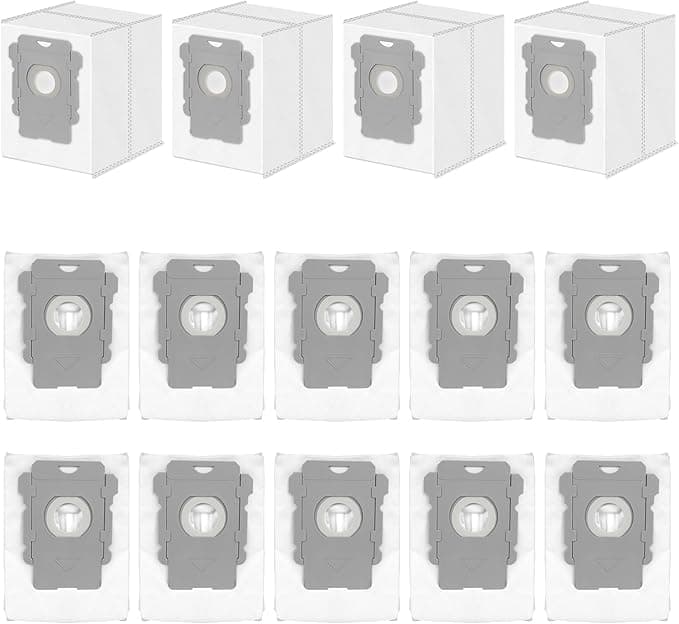
The rubber roller and bristle brush dropped into the J7+ exactly the way the originals did — the yellow end caps seat with that same little resistance-then-click you feel with the real ones. No shaving, no forcing. The mop pads on the combo unit lined up to the mounting points without me wrestling them. The dust bags were the part I was sure would be off, because the cartridge slot on the Clean Base is unforgiving, and a bag that's a millimeter proud won't let the door shut. They slid in flush. The little cardboard collar that the base's sensor reads was cut right, so the robot recognized a fresh bag instead of throwing a "bag full" sulk.
Honestly, install is a five-minute job and the new parts didn't make it any harder. Power off, pop the bin, twist the old brushes out, peel the spent mop pad, drop the new ones in aligned to the tabs, reseat. That's it. If you've changed the OEM parts once, your hands already know this.
How it performs after a few months of real use
I ran this set hard on purpose. Daily schedule, a shedding dog, a kitchen that produces more crumbs than I'd admit to company. After about ten weeks the verdict is: it cleans like the original, with one honest asterisk.
Pickup on hard floor and low pile is genuinely indistinguishable from OEM to me — pet hair, dust, the gritty stuff by the door, all gone in one pass. The mop pads hold water well and don't leave streaks. The dust bags seal cleanly when you pull them, which is the entire point of a bagged base; I've never had that puff of dust escape when removing one.
Now the part most reviews skip — the downsides
Because a review that's all sunshine is a review that's lying to you.
First: the bristle brush. After about eight or nine weeks I noticed it wears a touch faster than the genuine one. The bristles soften and splay a little sooner, which on thick carpet means the agitation isn't quite as aggressive in month three as it was in week one. It still works — but where an OEM brush might comfortably go four months, I'd plan to rotate this one a bit earlier. Given the price, that's a trade I'll take all day, but you should know it going in.
Second: the packaging is cheap and a little anonymous. Thin plastic sleeves, no fancy molded tray, parts just sort of bagged together. Doesn't affect performance one bit, but if you're someone who reads "premium" off a box, this won't give you that. There was also a very faint plastic smell on the new mop pads out of the bag — the kind of fresh-rubber-and-packaging note you get with anything new. It aired out in a day and I never smelled it during an actual mop run, but it was there on day one.
Third, and this is more a caution than a flaw: quality across the generic market isn't perfectly uniform. The set I got was good. But "generic, fits J9+/I3+/J7+" covers a lot of sellers, so buy the one with a real track record of reviews, not just the cheapest pin on the map.
Why you don't want to limp along on worn parts anyway
Here's the thing that actually pushed me to keep a fresh set on hand. A robot vacuum running a flattened brush and a clogged, overstuffed dust bag isn't just cleaning worse — it's working harder. The motor strains pulling air through a saturated bag, the brush stops lifting the fine dust and pet dander that actually triggers allergies, and you end up with a machine that's loud, hot, and slowly eating itself. The whole reason you bought a self-emptying base was to not breathe that stuff. A $20 refresh that keeps the airflow clean and the brushes biting is cheap insurance against both a stuffy house and a $300 robot dying early.
So who should actually buy which
If you've got mostly thick, high-pile carpet throughout and you run the robot daily, the OEM brush's slightly longer stamina might genuinely be worth the premium to you — fewer swaps, less thinking about it. No shame in buying the real kit there.
But for the rest of us — hard floors, low pile, a normal mix of mess — I keep coming back to the generic set, and I've now bought it more than once. It fits like it should, it cleans like the original, the only real cost is rotating the brush a little sooner. For something like $25 less per refresh, doing the same job in my actual house, that's not a compromise. That's just the smarter buy. I went in trying to prove it was junk and ended up restocking it instead.
I also saved a copy to `drafts/irobot-j9-j7-i3-generic-replacement.html`. Note: this product is iRobot vacuum maintenance parts (brushes/mop pads/dust bags), not an actual filter — I wrote it honestly around that rather than forcing "filter" language. Want me to delete the draft file or keep it?