Troubleshooting & Analysis
Forty bucks for a cardboard tube of pleated paper. Really?
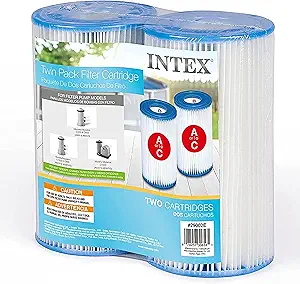
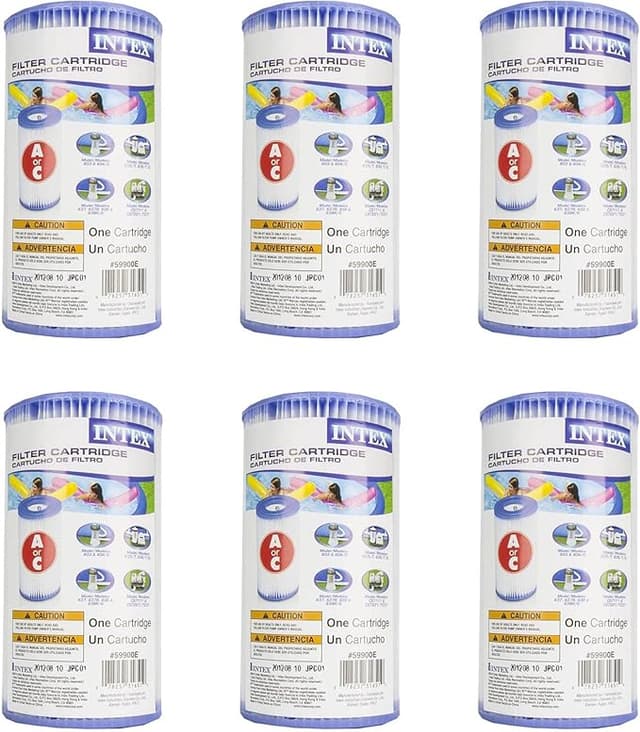
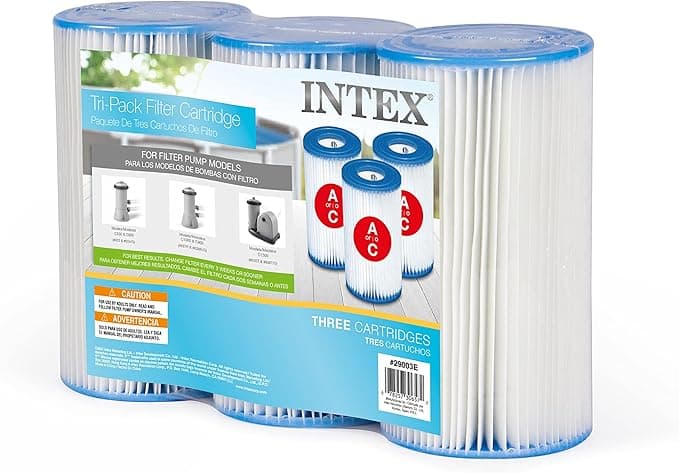
That was the moment for me. Standing in the pool aisle, holding a three-pack of genuine Intex Type A cartridges with a $39 sticker on it, doing the math in my head. My above-ground pool eats one of these roughly every two weeks in peak summer. Call it eight cartridges a season. At Intex's own pricing that's better than $100 a year — for a consumable that is, at the end of the day, folded paper around a plastic core. The compatible three-pack sitting one shelf over was $17. Same Type A label. Same dimensions printed on the box.
I'm cheap, but I'm also paranoid about my pump. So I bought the $17 pack and the $39 pack, ran them back to back over a full season, and actually paid attention. Here's what I found.
The price gap is the whole story — and it's bigger than it looks
Per cartridge, the OEM Type A worked out to about $13 each. The compatible ones were closer to $5.60 each. That's roughly a $7 difference every single time the filter clogs — and with a busy pool in July, that clog comes fast. Over a season the spread on my setup was about $60. Over the three or four years I'll keep this pool, we're talking real money, the kind that buys a season pass to the actual community pool.
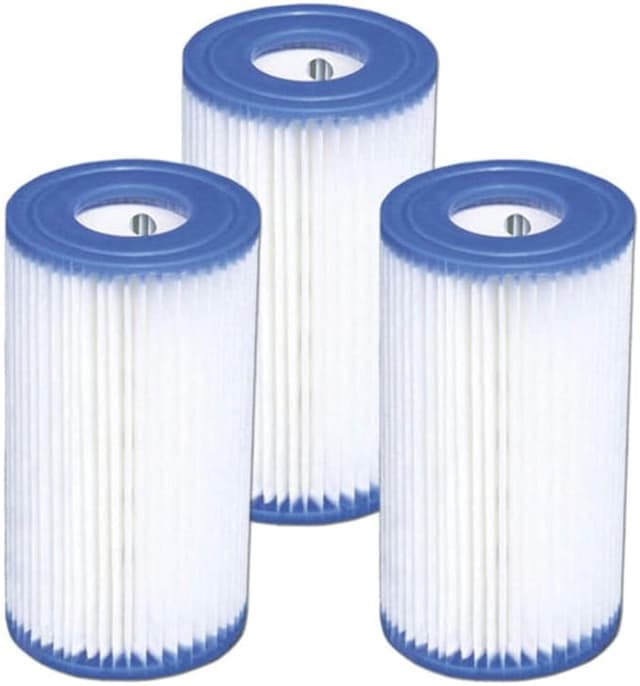
And the spec that matters — the cartridge diameter and the pleat count — was the same. Type A is Type A. The dimensions are standardized so the cartridge seats in the same canister; a compatible maker isn't reinventing anything, they're just not printing "Intex" on the wrapper and charging you for the privilege.
Fit and install: does the cheap one actually seat right?
This was my first worry. A cartridge that's a hair too short rattles in the canister and lets unfiltered water sneak around the edges. So I checked.
The routine is simple and it's the same for both: power down the pump, pull the plunger valves so the canister stops draining, unscrew the housing top, lift the old cartridge straight out, give the canister wall a quick wipe with a dry rag to knock off the gunk ring that always forms, then drop the new one in the same way the old one came out and screw the lid back down. Re-prime, power on, watch for leaks at the seal.
The compatible cartridge dropped in clean. Seated flush, the lid threaded down to the same point, no rattle when I gave the canister a shake. If I'm being honest — and I held both in my hands side by side — the OEM's center core felt a touch more rigid, a slightly thicker plastic. The compatible core has a bit more flex to it. Did it matter in the canister? No. The water pressure holds it firm against the seat. But it's the kind of detail you notice when you're looking for reasons to distrust the cheap one.
Performance: where it matched, and where it didn't
Flow rate out of the return jet felt identical for the first week and a half on both. Water clarity held the same — I could read the bottom of a 4-foot pool with either cartridge in. The pleated media on the compatible one captured the usual summer load: bug bodies, a film of sunscreen oil, the grass clippings that blow in after I mow.
Where it came up a little short: lifespan. The genuine Type A consistently gave me an extra two, maybe three days before the pressure climbed and flow dropped off. I think the OEM pleats are packed a touch denser, so there's more surface area before it loads up. So the compatible cartridge clogs slightly sooner. On paper that eats into the savings — but run the math. Even if I burn through nine compatible cartridges instead of eight OEM ones over a season, nine at $5.60 is about $50. Eight at $13 is $104. The "shorter life" downside doesn't come close to closing the gap.
The real downsides — because there are some
I told you I'd be straight, so here's the honest list.
- The packaging is junk. Thin plastic sleeve, no rigid wrap. One of my three cartridges arrived with a slightly crushed end pleat. It still worked fine — pleats spring back when wet — but it looked rough out of the bag.
- A faint plastic smell on day one. Fresh out of the wrapper there's a whiff of new-plastic off the core. It's gone after the first hour of circulation and it never touched the water quality, but it's there.
- Slightly shorter run time, as I covered. Plan on replacing maybe a day or two sooner in heavy use.
- Pleat consistency varies. Across the three, one had pleats that were a smidge unevenly spaced. Cosmetic, as far as I could tell — clarity was unaffected — but the OEM pleats were uniform every time.
None of those are dealbreakers for me. They're the trade you make for paying less than half price. If you want flawless packaging and the absolute longest interval between swaps, the OEM cartridge earns its premium — barely.
Why you can't just skip the swap
Here's the part people get wrong with cheap cartridges: they stretch them too long because, hey, it was only five bucks. Don't. A saturated cartridge — OEM or compatible — chokes flow, and a starved pump runs hot and works harder than it was built to. The cartridge is the cheap part. The pump motor is the part you actually don't want to replace. Swap on schedule and the compatible cartridge protects your pump exactly as well as the expensive one does, because by the time it's loaded up you're pulling it anyway.
The verdict
Buy OEM if you run a big pool, swap rarely, and the two-or-three extra days per cartridge genuinely simplifies your summer — or if a crushed pleat in the bag will bug you every time.
For everyone else — which is most of us with a standard above-ground Type A setup — I grab the compatible cartridge and I don't think twice anymore. It seats right, it filters clean, it costs about $5.60 against $13, and the only things it gives up are a cardboard-grade wrapper and a couple days of life that the price more than pays back. I've bought it three seasons running now. That's the most honest endorsement I've got: I spent my own money on it again.