Troubleshooting & Analysis
I genuinely didn't think a $7 cartridge could keep my pool clear
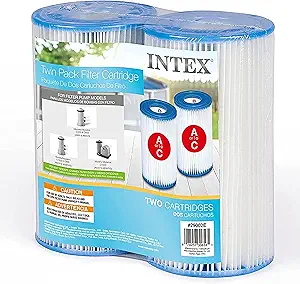
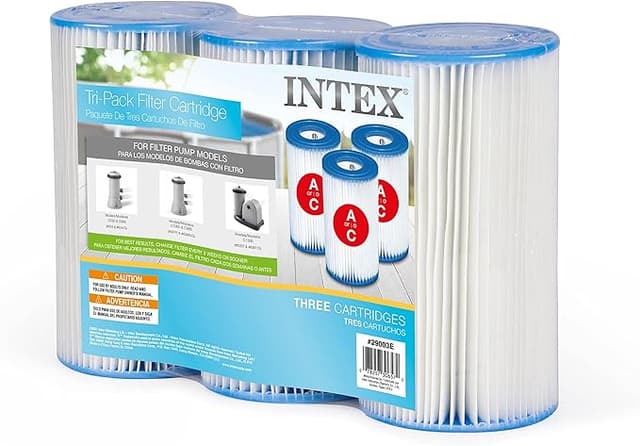
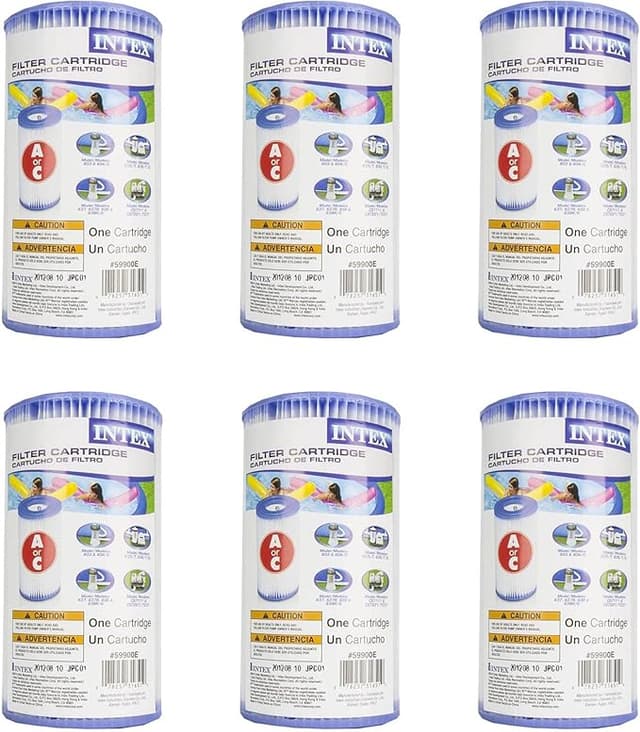
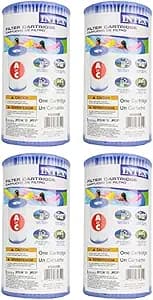
Here's where my head was at last summer. I'd been buying genuine Intex Type A cartridges for my above-ground pool — the 18-foot ring one that takes the SF model pump — and paying somewhere around $13 for a single Intex-branded cartridge, or close to $36 for a three-pack at the home center. And these things don't last. You're swapping them every two weeks in peak season if you've got swimmers and sunscreen and the occasional unlucky bug colony. So when I saw a six-pack of compatible Type A cartridges for around $24 — call it $4 a filter against $12 — my first reaction wasn't "great deal." It was "no chance. That's too cheap to actually filter water."
I bought one pack anyway, mostly to prove myself right. I was wrong. Let me walk you through it honestly, downsides and all, because I've now run these for two full seasons.
The price gap is not small, and it compounds
Do the season math, because this is the whole argument. If you're a real pool user changing the cartridge every two weeks from May through September, that's roughly ten cartridges a season. At OEM-ish pricing of about $12 each, you're looking at $120 a year just in filters. The compatible six-packs at around $24 work out to $4 a cartridge — so the same ten changes cost you $40. That's an $80 swing every single year, on a consumable you flush down the line anyway. Over two seasons I've spent on compatibles roughly what one season of genuine Intex cartridges would've run me. That's not a rounding error. That's a dinner out, every month of summer.
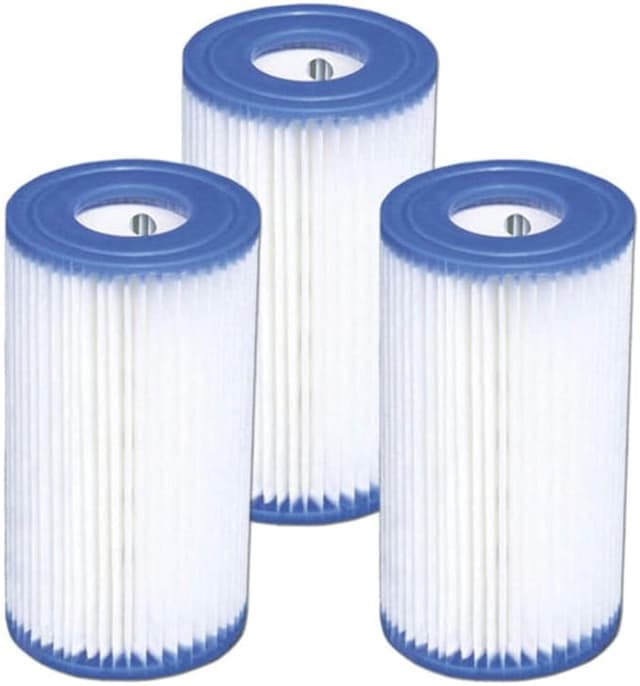
And no, I'm not being loose with the "same job" claim. The Type A is a pleated paper-style cartridge sized to drop straight into the Intex filter pump housing. There's no proprietary chip, no electronics, nothing the third-party maker has to reverse-engineer badly. It's pleated media, a top and bottom cap, and a center core. The compatible ones I've used copy that geometry closely enough that the pump doesn't know the difference.
Fit and install: better than I expected, with one fussy part
Swapping a Type A is genuinely a two-minute job, and the compatible cartridge didn't complicate it. You kill the pump first — actually unplug it, don't just flip the dial, water and electricity is not where you save time. Then you unscrew the housing cap on top of the pump, lift the old cartridge out, and have a look in the bottom of the canister. Mine usually has a little grit and a leaf fragment or two down there; I wipe it out.
The one thing I'll tell you to do, and the cheap-cartridge instructions actually get this right: rinse the new cartridge under a hose before you seat it. There's a fine paper dust on the pleats out of the bag — manufacturing residue — and if you skip the rinse you'll cloud your own water for the first hour. Twenty seconds under the tap and it's gone. Then you drop it in, and here's my one real fit gripe: the center hole on the compatible cartridge sits a hair looser over the housing post than the genuine Intex one does. It still seats, the cap still threads down and pulls it snug, and I've never had one float or bypass. But that first time you feel the slightly looser fit, your gut goes "uh oh." It's fine. It just doesn't click home with the same confidence the OEM does.
How it actually performs in the water
This is what I cared about, and it's where I expected the cheap one to fall on its face. It didn't. Water clarity over a two-week run was, to my eye, indistinguishable from the genuine cartridge. I run my pump the recommended chunk of hours a day, and the compatible held the water just as clear right up to the change day.
Where it's a touch behind: longevity at the very end of its life. The genuine Intex pleats seem to hold their shape a day or two longer when they're fully loaded with gunk. The compatible media, when it's truly saturated near the end of a two-week cycle, gets a little floppier and the flow drops off a bit sooner. So I'm not stretching a compatible cartridge to three weeks the way I'd occasionally gamble on an OEM one. I just change it on schedule. Honestly, at $4 a pop, why would you push it anyway?
The real downsides — and I mean real ones
Let me give you the actual gripes, because a review with only good news is a sales page, not a review.
- The packaging is cheap and the consistency wanders. They come shrink-wrapped in a thin plastic sleeve, six to a bag, and once or twice I've pulled one where a pleat was slightly crushed in shipping. It still worked fine after I fanned the pleats back out, but you can tell nobody inspected it.
- The end caps feel thinner. The plastic on the top and bottom caps is a little flimsier than genuine Intex. I've never had one fail, but if you're rough yanking a saturated cartridge out by the cap, be a touch gentle.
- That looser center fit I mentioned. It's never caused a bypass for me, but if your particular Intex housing post is on the worn side, double-check the cap is fully snugged so the cartridge can't shift.
None of those are dealbreakers for me. But if you're the kind of person who'll be annoyed by a crushed pleat or a thinner cap, you should hear it before you order, not after.
Why staying on schedule actually matters
One thing I won't hand-wave: a dead, saturated filter is not a neutral problem you can ignore. Once the pleats are packed and water starts pushing past instead of through, your pool stops getting turned over. That's when it goes cloudy, then green, and that warm stagnant water is exactly where bacteria and algae set up shop — the stuff that gives swimmers skin and ear irritation. A clogged cartridge also makes the little Intex pump work against resistance it wasn't built for, which is how people cook their pump motors early. The cheap cartridge is what makes staying on schedule painless. When a fresh filter costs $4 instead of $12, you stop rationalizing "eh, one more week" — and that discipline is worth more to your water than any branding on the cap.
So who should buy what
If you've got a small spa or a pool you barely use, and you change a cartridge maybe three times a season, the savings are real but small — buy whatever's convenient, genuine Intex is fine and you'll sleep easy. And if your housing post is visibly worn, the slightly looser compatible fit might nag you; the OEM's tighter seat is worth the premium there.
But for a normal above-ground pool that gets actually swum in all summer, where you're burning through eight or ten cartridges a season? I grab the compatible six-pack every time now. Same clear water, same two-minute swap, an $80-a-year difference, and the only things I gave up were a tighter click on install and prettier packaging I throw in the trash anyway. I went in trying to prove the cheap one was junk. Two seasons later it's the only Type A I buy.