Troubleshooting & Analysis
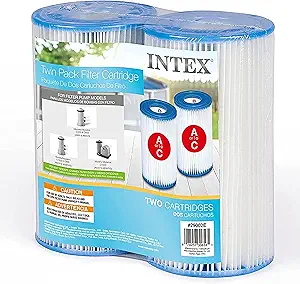
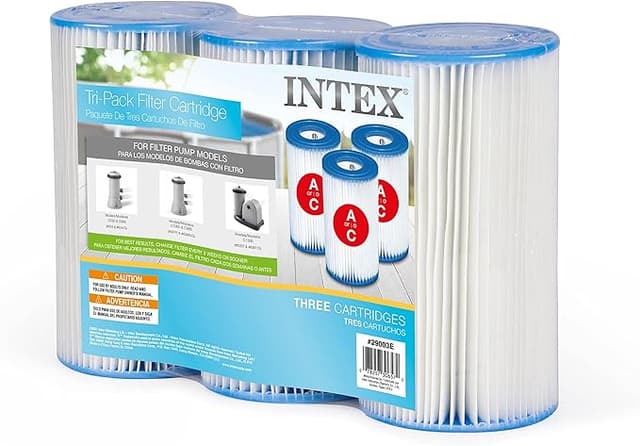
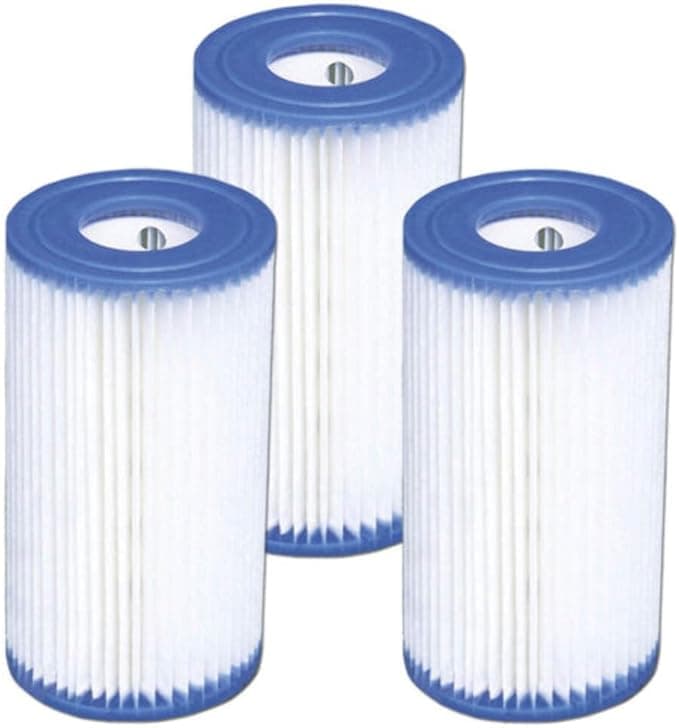
There I was, standing in the pool aisle with a genuine Intex Type A cartridge in one hand and a three-pack of compatibles in the other, doing the kind of math you do when you're slightly annoyed. The brand-name single ran about $13. The off-brand three-pack? Around $18 — call it $6 a cartridge. Same size, same pleated paper, same job. And I just stood there thinking, okay, what's the catch. Because there's always supposed to be a catch with the cheap one, right?
I'd been buying the official cartridges for two summers because I assumed the knock-offs would either not fit my pump or turn my water green by August. So I bought the cheap three-pack mostly to prove myself right. Spoiler: I didn't.
The money, plainly
Here's the actual annual picture, because this is the part nobody lays out for you. A Type A cartridge isn't a once-a-year thing. If you're running a 14-foot above-ground pool through a hot summer, you're swapping these every two weeks, and honestly closer to every week when the pollen's heavy or you've had a pool party with sunscreen and kids. Call it a real-world season of 10 to 14 cartridges.
At roughly $13 a pop for the name-brand, that's $130 to $180 over a summer just on filter media. The compatible three-packs at $18 work out to about $6 each — so the same 12 swaps land around $72. That's a hundred bucks a season, on a pool. I don't know about you, but I've got better uses for a hundred dollars than handing it to a cartridge that gets thrown out two weeks later anyway.
And that's the thing that flipped me. With a consumable you trash this often, paying a premium for the logo makes even less sense than it does on, say, a fridge filter you keep for six months. You're not living with this part. You're feeding it to the pump and tossing it.
Does it actually seat?
This was my real worry — that the compatible would be a hair off and rattle around or let water sneak past the edge. It didn't. The swap is the same drill it's always been: kill the pump and pull the plug first (do not skip the unplug, you're working around water), pop the lid off the filter housing, lift the spent cartridge straight out. The compatible Type A dropped into the housing and seated with that same little resistance you feel when the foam ring meets the wall — the cap threaded back down without me having to force or cross-thread anything.
One tip from doing this a lot: rinse the new cartridge under a hose before it goes in. Out of the bag there's always a bit of paper dust and packaging crumbs in the pleats, and a 20-second rinse keeps that gunk out of your water on day one. That's true of the name-brand too, by the way — they don't come spotless either.
Fit-wise, after a full season I had zero bypass issues. The water didn't get murkier, the pump didn't strain. If the dimensions were sloppy you'd know within a week because the water tells on you fast.
Where it's honestly a touch behind
I'm not going to pretend these are identical, because they're not, and a review that says everything's perfect is a review you shouldn't trust.
The paper is a little thinner. You can feel it if you hold a compatible pleat next to a name-brand one — the off-brand media is slightly less stiff, and the pleats don't hold their fan shape quite as crisply. In practice what that meant for me is the compatibles clogged maybe a day or two sooner near the end of their run. So instead of a clean two-week cartridge, I'd sometimes get more like eleven or twelve days before the flow noticeably dropped and it was time to swap. Given the price gap, I genuinely do not care — I'm still way ahead — but it's real and you should know it.
Second downside, and this is the one that'll bug you on day one: the packaging is cheap and a couple of cartridges in my three-pack had slightly crushed edges from shipping. Cosmetic, not functional — the pleats sprang back fine once wet and they filtered the same. But if you're the type who wants everything pristine out of the box, the name-brand presentation is nicer. You're paying for that, too.
Third, smaller thing: the plastic end caps on the compatibles felt a touch lighter. Never failed on me, never deformed in the housing, but it's the kind of detail where you can tell where they shaved a few cents.
Why a dead cartridge is the actual risk
Here's what matters more than any of that brand-vs-compatible argument: the filter you don't change at all. A saturated Type A cartridge stops pulling debris and starts just sitting there, and a pool that isn't really filtering is a pool growing things you can't see yet. Cloudy water, then that first green tinge along the waterline, then you're dumping shock and scrubbing instead of swimming. Worse, a fully clogged cartridge makes the pump work against a wall, and that's how you cook a pump motor you didn't budget to replace.
That's the real argument for going compatible, when you think about it. The single biggest mistake people make is stretching a cartridge an extra week because the replacement felt expensive. At $6 a cartridge instead of $13, you stop hesitating. You swap on schedule because it barely stings. The cheap filter you actually change beats the premium filter you guilt yourself into nursing for three weeks — every single time.
So who should buy what
If you've got a small spa or seasonal setup, you barely run the pump, and you go through maybe three or four cartridges a year — fine, buy the name-brand, the savings are pocket change at that volume and you might as well have the slightly stiffer media.
But if you're running a real pool all summer and burning through a dozen-plus cartridges, the compatible Type A is the obvious call. Looser packaging, paper that's a touch thinner, end caps that feel a little cheaper — and none of it stopped my water from staying clear from May to September for about a hundred dollars less than the logo version.
Look, I bought the cheap three-pack to catch it failing. It didn't. I'm on my third season of compatibles now, and I'd grab them again — I already have.