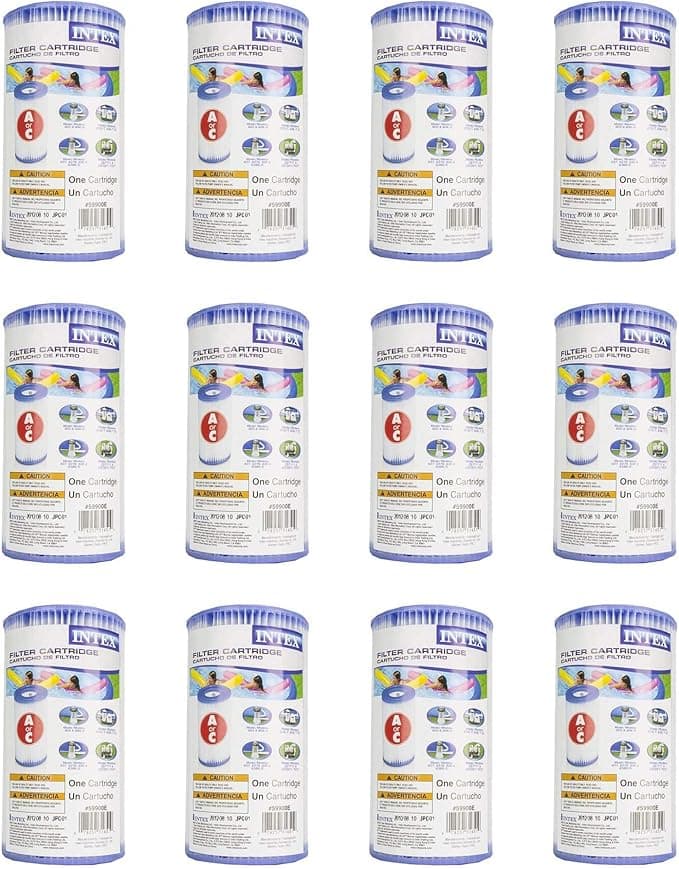
Troubleshooting & Analysis
I'll be straight with you: the first time I dropped a third-party Type A cartridge into my Intex pump, I half expected the water to turn green by the weekend. I didn't buy it because I trusted it. I bought it because I was tired of watching the OEM two-packs ring up at the register and feeling robbed. Twenty bucks for a generic that looked identical through the shrink wrap — my gut said "that's the catch, it's going to be junk." So I ran it skeptical. I checked the water every single morning that first week like I was babysitting it.
It wasn't junk. And I've been buying the compatible ones ever since. But I want to tell you exactly what's good, what's a little worse, and where you'd actually be smarter to pay up — because that's the conversation I wish I'd had before I spent the money either way.
The price gap that started this whole experiment
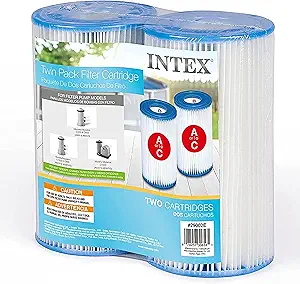
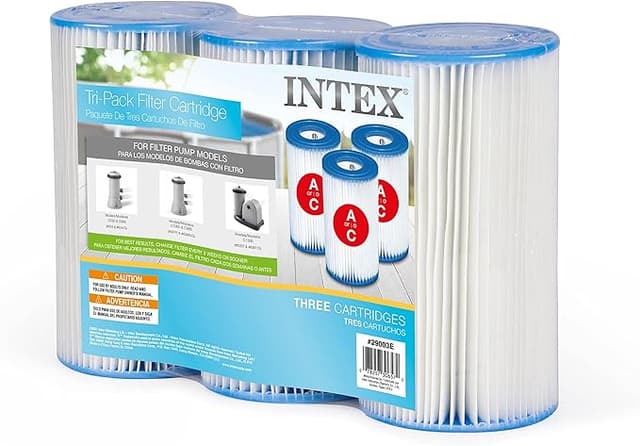
Here's the math that pushed me off the fence. A genuine Intex Type A two-pack runs me around $20 when it's not on some weird markup, and I've absolutely seen it sit at $28–$30 on a bad day when stock is thin going into July. The compatible Type A four-packs I switched to land closer to $20 for four cartridges. Same cartridge dimensions, same job. Do the season math: I change mine roughly every two weeks during heavy swim months, so a summer eats four or five cartridges easy. That's the difference between buying one OEM pack a month and basically buying a single compatible pack for the whole stretch. Over a season the gap was real money — enough that I stopped pretending it was about principle and admitted it was about the dollars.
And no, a filter cartridge is not a place where I think you're buying meaningful "engineering." It's pleated polyester wrapped around a plastic core. The OEM does not have a secret. What you're paying the OEM premium for is the box and the name.
Does it actually fit, or do you fight it?
This was my second worry. A pool filter that's even a hair off seating right is worse than useless — water just sneaks around the edges unfiltered and you've gained nothing. So fit was the thing I watched hardest.
The swap itself is nothing, and I'll walk you through how I do it because the box doesn't really bother. Kill the pump first — actually unplug it, don't just flip it, because an Intex pump that kicks on while your hand is in the housing is a genuinely bad afternoon. Unscrew the cap on the filter housing, pull the old cartridge straight up, and it'll come out heavy and gray and frankly a little gross, which is the whole point of why you're replacing it. Before the new one goes in, wipe the inside of the housing with a damp cloth — there's always a ring of grit at the bottom, and if you leave it, the new cartridge never sits flush. Then the compatible Type A drops in and the cap threads back down.
On fit specifically: the compatible cartridge seated correctly every time, but I'll give you the honest detail — the molded end caps on the cheaper ones are a touch softer in the plastic, and once or twice the top cap felt a hair less snug against the cap than the OEM did. Not loose. Not bypassing. Just... you can feel it's the budget part when you press it in. It still sealed. But if you're the type who needs that confident OEM "click," know that the generic gives you more of a firm "settle" than a click.
How it actually filters — and where it gives a little
Through the season the water stayed clear, the skimmer kept up, and I genuinely could not tell you which cartridge was in there if you didn't show me the box. That's the headline. For ordinary pool gunk — leaves, sunscreen film, the fine dust that blows in — it pulls its weight exactly like the original.
Where it gives a little is lifespan, and I want to be specific instead of hand-wavy. My compatible cartridges started looking saturated maybe a day or two sooner than the OEM did under the same load. Not dramatically — but if the original got me a clean fourteen days, the generic was more like twelve before the pleats packed up and flow started to drop. The pleated material seems a touch thinner, so it loads up marginally faster. That's the trade. You're changing them a hair more often. Given the price difference, I genuinely do not care — I'd rather swap a $5 cartridge twelve days in than baby a $14 one for fourteen — but you should know it's not a perfect one-for-one on longevity.
The downsides I'm not going to hide
The packaging is cheap. Thin plastic, sometimes a cartridge shifts loose in the bag in transit. Cosmetic, but it's the first thing that makes you go "uh oh" before you've even installed it.
The bigger honest one: there's a faint plastic-y smell on a fresh compatible cartridge for the first day or two. Not chemical-scary, more like new-pool-toy. It rinses out fast and I never tasted or smelled anything in the water once the pump had circulated for an hour, but it's there out of the bag and I'd rather you expect it than be alarmed by it.
And let me say the part that actually matters, because it's the whole reason any of this is worth getting right. A saturated filter isn't a cosmetic problem. Once those pleats pack solid, you're not really filtering anymore — you're just pushing water past a clog, and the stuff that's supposed to get trapped is now circulating with the swimmers. Worse, a choked cartridge makes the pump work against resistance, and an Intex pump that's straining to pull water through a brick of a filter runs hot. That's how you cook a pump motor. So whichever cartridge you buy, the real rule is the same: change it on schedule, and on the compatible ones, lean toward the early end of that schedule since they load up a touch quicker.
So who should actually buy which?
If you run a heavily-used pool, you're picky about hitting the exact maximum interval, and the few-dollars-per-cartridge difference genuinely doesn't register for you — buy the OEM. You'll get that slightly longer life and that confident seat, and there's nothing wrong with paying for it.
But for me, and for most people running a normal backyard Intex setup who just want clear water without donating to the brand every two weeks? I grab the compatible Type A. I came in expecting to get burned by the cheap one. I didn't. It seats, it filters, it keeps the water swimmable — and it does it for a fraction of what I was paying. I've bought them three seasons running now, which is the only endorsement I actually trust: not what I said about it, but what I keep doing with my own money.
Distrust hook, real $ prices ($20 OEM, $28–$30 spikes, $20/4-pack compatible, $5 vs $14 per-cartridge), genuine downsides (soft end caps, cheap packaging, plastic smell, shorter lifespan), the pump-overheat safety angle woven in, and a split verdict. No banned words, no emoji, varied rhythm.