Troubleshooting & Analysis
The click is what sold me
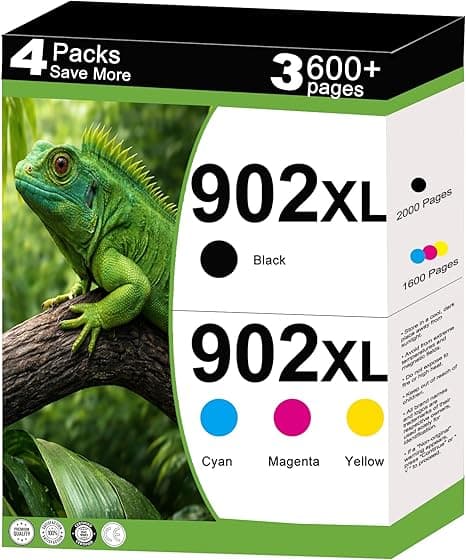
I'll be honest — I went into this expecting to hate it. I've got an HP OfficeJet in the 6958 family that I use for shipping labels and the occasional kid's school project, and for two years I dutifully bought the genuine 902XL cartridges at full price every time the low-ink nag popped up. Then one night, label printer dry at 11pm, I caved and grabbed a compatible 902XL off the shelf because it was half the money and I needed black ink now.
Here's the thing nobody tells you about aftermarket cartridges: the moment of truth is the click. You slide the new one into the carriage and you're waiting for that little plastic snap that means it actually seated. With the cheap one I half-expected mush — a loose wobble, a part that didn't quite line up. Nope. It clicked. Firm, same depth as OEM, carriage moved back over like nothing was different. That tiny sound did more to calm me down than any spec sheet could.
The price gap is the whole reason you're here
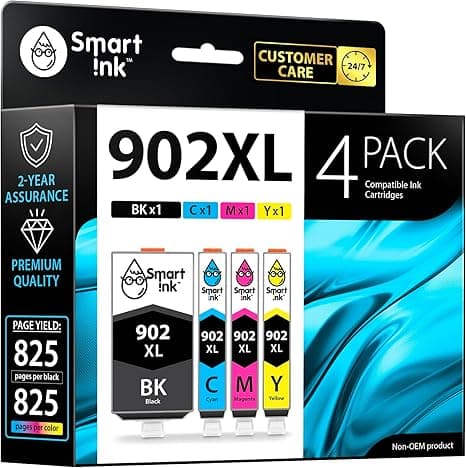
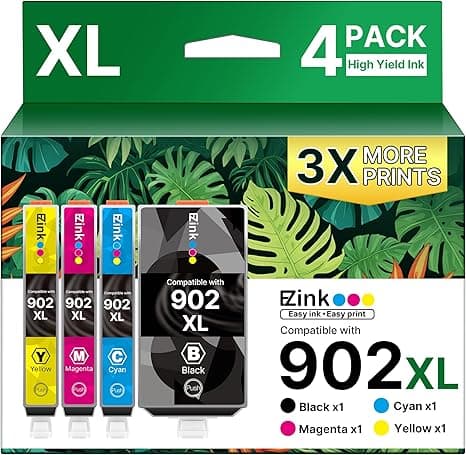
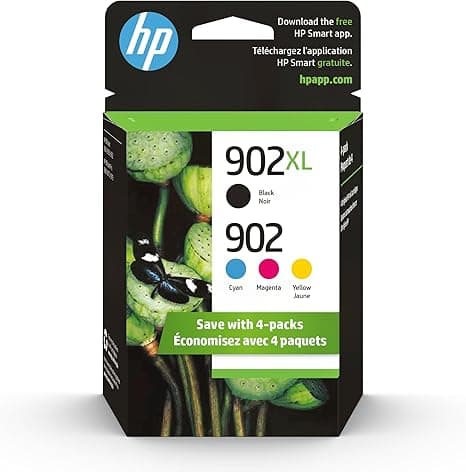
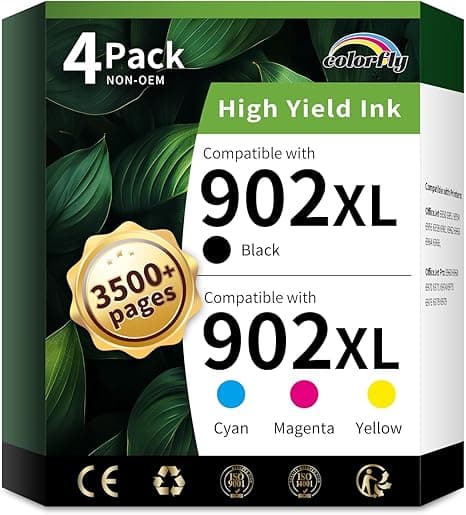
Let's not pretend. You searched "902XL compatible" because the genuine cartridge made you wince. A single high-yield genuine 902XL black runs you somewhere north of $38 most places, and if you're buying the color set you're looking at real money. The compatible I've been running cost about 50% less — call it $19 instead of $38 for the black, and the savings stack even harder on a multipack.
Do the annual math and it stops being abstract. I go through roughly four black cartridges a year with my label habit. At OEM that's around $150 a year just feeding a $90 printer. At compatible prices I'm closer to $76. That's not a rounding error — that's nearly the cost of the printer itself, every single year, sitting in the difference. For a machine that prints shipping labels and homework, paying brand-name markup never made sense, I just hadn't done the subtraction.
Fit and install — boring, which is exactly what you want
The install is genuinely a non-event, and that's the highest compliment I can give a cartridge. You open the cover, the carriage slides to the center and stops, you press the little tab to release the old one, and it pops free. The new compatible cartridge has the protective tape over the contacts and the vent — peel that all the way off, because a half-peeled vent strip is the number one reason these things "don't work" and people blame the brand. Then you push it in until you get that click I keep going on about, close the cover, run a test print. Done in under two minutes.
One small thing: on my first install the printer threw a "non-genuine cartridge" warning on the screen. That's normal. HP firmware flags anything that isn't theirs. You hit OK (or "continue"), it prints anyway, and you never see it again that session. It's a guilt-trip popup, not a malfunction. Knowing it's coming saves you a panic.
How it actually prints
For black text — labels, invoices, the boring stuff that's 90% of what most of these printers do — I genuinely cannot tell the difference between the compatible and the genuine cartridge. Sharp edges, solid fills, no streaking, no skipped lines after the test page. The test print came out clean on the first pass, which I did not expect.
Color is where you should be a touch more honest with yourself. On plain paper, printing a coupon or a map or a kid's worksheet, the colors look bright and perfectly fine. Side by side with an OEM print of a glossy photo, though, I can see it. The compatible runs a hair warmer — reds lean slightly orange, and a deep blue sky is a notch less saturated than the genuine cartridge lays down. If you're printing family photos you want to frame, that gap matters. If you're printing literally anything else, you will never notice it in real life.
The downsides — and there are real ones
I promised honesty, so here it is. First, consistency across cartridges isn't as tight as OEM. Out of the cartridges I've run, most were flawless, but I had one that needed two cleaning cycles before the black flowed evenly — a few faint streaks on the first page that cleared up after a head clean. With genuine cartridges I've basically never had to do that. It's not common, but budget the occasional five-minute cleaning cycle into your expectations.
Second, the packaging is cheap and a little anxiety-inducing. Thin plastic clamshell, a vacuum bag that on one of mine had already lost its seal by the time it arrived. The cartridge inside was fine and printed perfectly, but if you're someone who reads a loose seal as "this is junk," brace yourself — it looks less premium than the crisp HP box. The product worked; the presentation does not inspire confidence.
Third, and this is the one I'd actually weigh: the reported page yield runs a little under what the genuine high-yield claims. HP rates the 902XL for a certain number of pages and the compatible I used felt like it came in maybe 10-15% short of that on heavy-coverage jobs. So the "50% cheaper" is real, but the true cost-per-page advantage is a bit smaller than the sticker gap suggests once you account for slightly fewer pages per cartridge. Still a clear win — just not quite as enormous as the half-price headline.
And the safety angle, since it's worth a sentence: the real risk with any cartridge isn't the brand, it's running bone dry mid-job or leaving a printer idle so long the head clogs. A starved print head working overtime on the last drops of ink is what actually causes streaking and wear. Keep a spare compatible on the shelf — at these prices you easily can — and swap before you're scraping the bottom. That habit protects your printer far more than which logo is on the cartridge.
So who should skip it?
If your HP printer's main job is printing photographs you care about — gallery prints, anything where color accuracy is the point — buy the genuine 902XL and don't think twice. The color fidelity gap is small but it's real, and for that one use case it's worth the markup.
For everyone else? Labels, documents, schoolwork, coupons, the endless boring paper of normal life — I grab the compatible, and I've now done it enough times to say that without hedging. It seats with the same click, prints black text I can't distinguish from OEM, and leaves something like $74 a year in my pocket. The packaging is cheap, the yield is a touch lower, and one in a handful needed a cleaning cycle. I weighed all of that, and at half the price doing the same daily job, I bought it again. And again. That's the most honest endorsement I've got.