Troubleshooting & Analysis
Standing in the office-supply aisle, doing math I didn't want to do
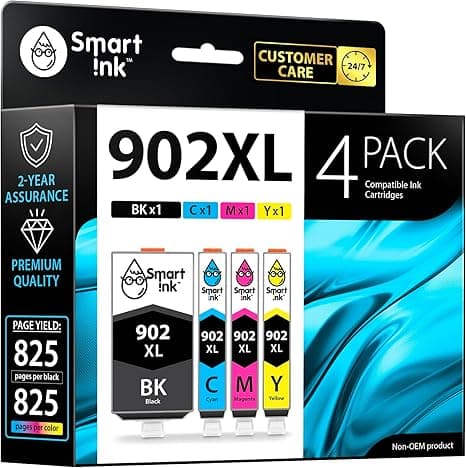
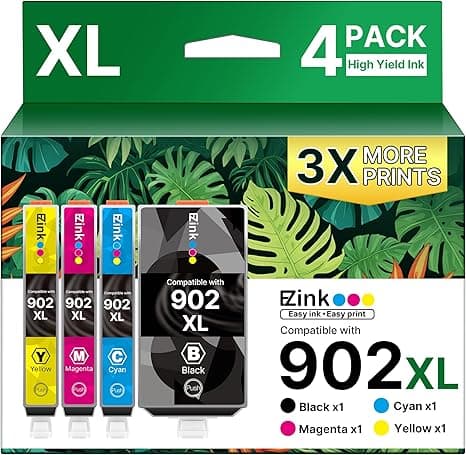
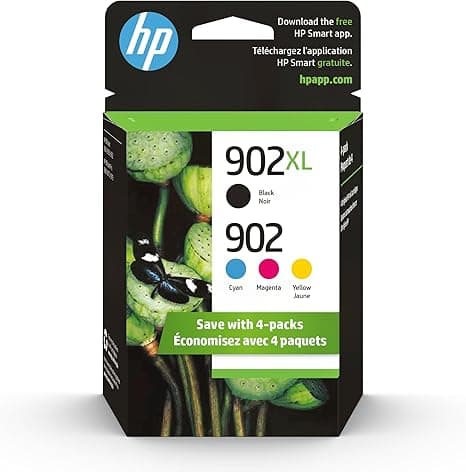
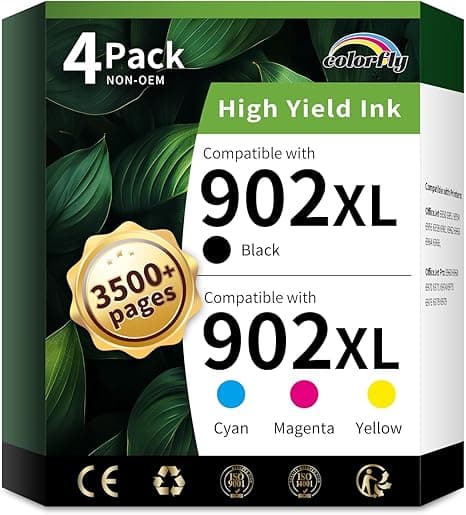
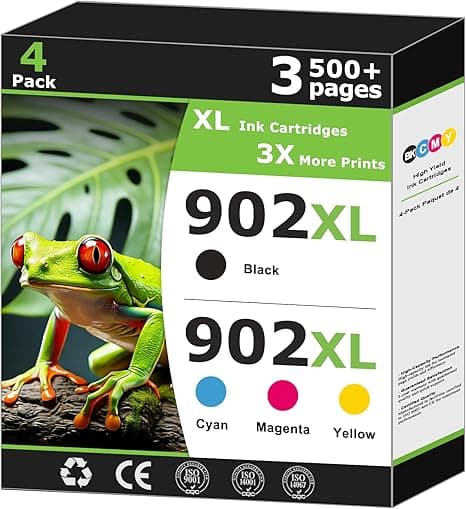
There I was, holding two boxes. Left hand: the genuine HP 902XL high-yield black, $44 with that little hologram sticker HP loves. Right hand: a compatible 902XL, same yield claim, $21. My 6970 was sitting at home flashing the low-ink warning at me, and I had a stack of shipping labels and a kid's school form that needed printing that night. Forty-four bucks. For ink. To print black text. I stood there longer than I want to admit.
I'd been burned before by a no-name cartridge in an old Canon years ago — streaky, dried out in a month — so I wasn't exactly trusting the cheap box. But the gap was $23 on one cartridge. Buy the color trio too and you're looking at a $40-plus difference per refill cycle. I print enough that I refill maybe four times a year. That's real money, and I'm not made of it. I grabbed the compatible. Here's what actually happened.
The price gap, the way it actually adds up
Let me put the annual math out plainly, because that's what tipped me. OEM 902XL black runs around $40-44. The compatible I bought was $21 — basically half, which lines up with the 50%-less claim. Stretch that across a year of my printing — four black refills plus a couple of color sets — and the OEM route was costing me close to $90 more annually for ink that, spoiler, lands on the page looking the same to my eyes. Ninety dollars. That's a tank of gas and a pizza. On ink.
The thing nobody tells you about the 6958/6966/6970 line: these are cheap-ish printers that quietly cost a fortune to feed. HP basically gives you the machine and rents you the ink for life. Going compatible is how you opt out of that arrangement without buying a whole new printer.
Fit and install — does it actually click?
This is where I expected trouble and didn't get much. I opened the cover on the 6970, waited for the carriage to slide over and stop, pressed the tab to pop the old cartridge, and pulled it. Peeled the protective tape off the new one — and a small honest note here, peel ALL of it, there's a strip over the contacts and a clear film over the print head vent that's easy to miss. I missed it the first time on a different printer once and got a "cartridge not recognized" scare for about ten seconds of panic before I realized my own mistake.
The compatible 902XL seated with a clean click. Same click as OEM. The frame felt a hair lighter in the hand, the plastic a touch thinner, but it dropped into the slot square and snug — no wiggling, no forcing, no shimming it with my thumbnail like some knockoffs make you do. Closed the cover, the printer chewed on it for a few seconds, recognized it, and I ran a test print. Sharp. First try.
Performance — where it matches, where it's a step behind
Black text? I genuinely cannot tell the difference. Shipping labels, invoices, my kid's permission slips, a 40-page PDF I printed for a meeting — crisp edges, solid fill, no fading at the bottom of the page. For the 90% of my printing that's just words on white paper, this cartridge is doing the exact same job as the $44 one.
Color is where I'll be straight with you. I printed a few photos and a color chart to compare side by side. The compatible color cartridges are good — but if you put an OEM print and the compatible print next to each other under a bright lamp, the OEM reds are a touch deeper and the skin tones in a photo are slightly more accurate. We're talking maybe 5-10% off on saturated photo work, the kind of difference you only notice when they're touching. For graphs, colored headers, a flyer, a coupon? Indistinguishable. If you're printing gallery photos to frame, that's a different conversation and I'll get to it.
The real downsides — and there are a couple
I promised honest, so here's the stuff the product page won't volunteer. First: the packaging is cheap. Thin cardboard, a baggie inside, none of HP's molded plastic. Doesn't affect the ink, but it doesn't inspire confidence when it lands on your porch, and one of mine arrived with a slightly crushed corner. The cartridge inside was fine, but it's a vibe thing.
Second, and this matters more: the printer's ink-level monitor doesn't always read these accurately. You'll sometimes get a "non-genuine cartridge" pop-up — you click through it once and it goes away, but it's annoying — and the little ink gauge can jump around or read empty before the cartridge actually is. I've learned to ignore the gauge and just go by print quality. When text starts looking faint, swap it. Don't trust the bar graph. That's a genuine inconvenience compared to OEM, where the gauge is dead accurate.
Third, the first cartridge I tried from one batch had a slightly slow start — the first two prints had a faint streak until the head primed itself. By print three it was perfect and stayed perfect. But that break-in moment made my stomach drop for a second. Run a cleaning cycle or a couple of test pages right after install and you'll skip the worry.
Why a dead or dying cartridge is more than an annoyance
Running bone-dry isn't just inconvenient — it's actually bad for the 6970's print head. Letting a cartridge run completely empty and then printing anyway can pull air through the head and cause clogs that take repeated cleaning cycles (and more ink) to clear. So the move is to keep a spare compatible on the shelf. At $21 a pop, keeping a backup is painless. At $44, people tend to run it into the ground and risk the clog. That's the quiet case for going compatible: cheap enough that you replace it on time instead of limping along.
The verdict — who should buy what
Buy OEM if you're a photographer or a designer printing color work you're selling or framing, where that last 10% of color accuracy is the whole point. There, the $40+ premium per cycle is just a cost of doing business. Also buy OEM if a single misprint on important color output would genuinely ruin your day.
For everyone else with a 6958, 6966, or 6970 — the home office, the small business, the family that prints homework and labels and the occasional flyer — I grab the compatible 902XL and I have, repeatedly. It clicks in right, the black text is identical, the color is more than good enough for everyday work, and it costs roughly half. The ink-gauge quirk is real and the packaging is flimsy, but for $21 instead of $44, doing the same job four times a year, I'd buy it again. I keep one on the shelf right now.