Troubleshooting & Analysis
I almost paid $58 for ink. For a printer that cost me $79.
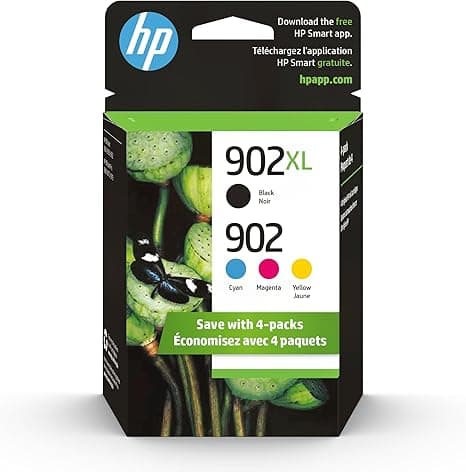
That was the moment it broke for me. Standing in the office-supply aisle, holding a single HP 902XL high-yield black cartridge with a $48 sticker on it — and the color multipack right next to it pushing the whole thing past fifty bucks. My HP OfficeJet 6970 had set me back maybe $79 on sale two years earlier. I was about to spend nearly the price of the machine to feed it once. Honestly, that math is insulting.
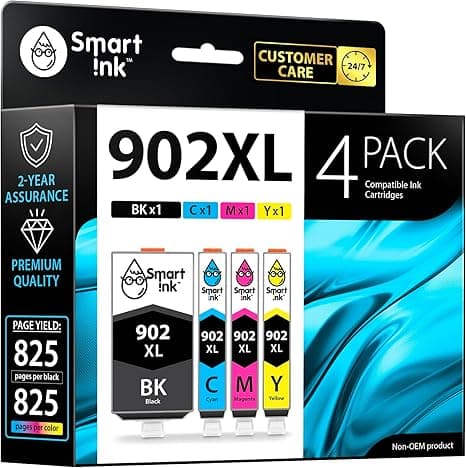
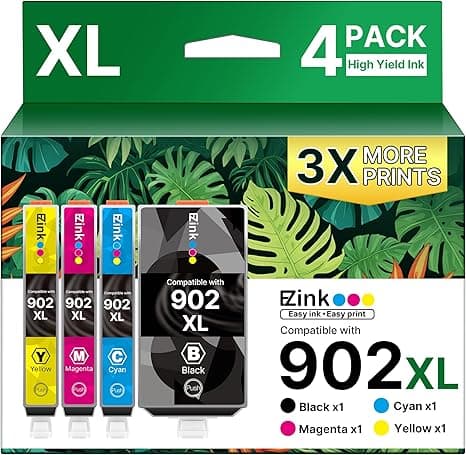
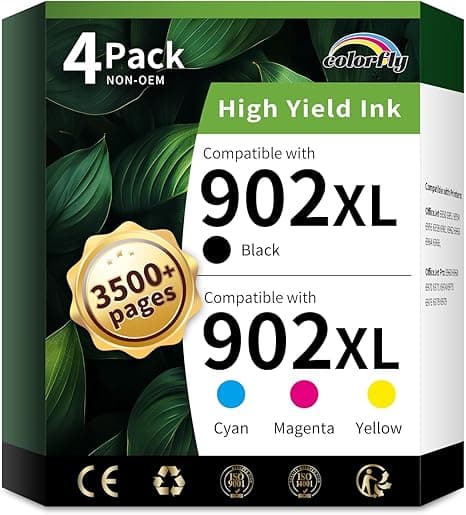
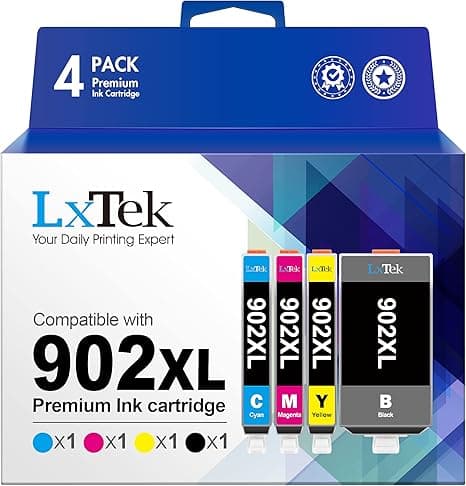
So I did what a lot of nervous people do at that exact second: I pulled out my phone, searched "902XL compatible," and found a third-party pack for around $22. Half the OEM price. And then the doubt hit — the same doubt you're probably feeling right now. Will the cheap ink clog the heads? Will the printer throw a fit and refuse to recognize it? Will my black text come out gray and streaky? I didn't trust it either. I bought it anyway, mostly out of spite, and I've now run these compatible 902XL cartridges through my 6970 for the better part of a year. Here's what actually happened.
The price gap is the whole story
Let me put real numbers on it, because the savings are the entire reason you're here. A genuine HP 902XL high-yield black runs me about $40–$48 on a normal day. The compatible equivalent I keep buying is roughly $22 for a comparable yield — and the color sets stretch even further, since OEM tri-color XL pricing is where HP really gets you.
Do the yearly math. I print maybe a couple hundred pages a month — kid's homework, shipping labels, the occasional tax form I swear I'll file on time. On OEM, I was burning through black and color often enough to spend somewhere north of $180 a year just on ink. On the compatibles, that same printing habit costs me closer to $90. That's not a coupon. That's almost a hundred dollars a year I get to keep, for a machine doing the identical job. Over the life of a 6958, 6966, or 6970, the ink will quietly cost you more than the printer did — so the cartridge you choose matters more than the printer you bought.
Does it actually fit and work?
Yes. And the install is genuinely a non-event, which is what you want. You lift the cover, the carriage slides over and parks itself, and you wait for it to stop moving — don't rush it. Press the little tab on the old cartridge, it pops loose, you pull it out. The new one comes wrapped in tape; peel off the protective strip (don't touch the gold contacts or the print nozzles — fingerprints there are the one thing that genuinely causes trouble), then push it into the slot until you feel that small, definite click. Run a test print and you're done. Whole thing takes me under two minutes now.
The fit on these is tight and correct. The cartridge seats with the same reassuring snap as the genuine one — no wiggle, no gap, no jiggling it three times to get the printer to see it. First time I installed one I braced for the dreaded "cartridge problem" error. Didn't come. The 6970 read it, ran its little calibration, and spat out a clean test page on the first try.
Performance — where it matches, and where it doesn't
Black text? I genuinely cannot tell the difference. Sharp, dark, no banding, no fading at the edges of letters. For documents — invoices, forms, homework, anything that's mostly words — this ink is indistinguishable from HP's, and that's the bulk of what most of us print.
Color photos are where I'll be straight with you. On plain paper, color graphics look great — vivid, well-saturated, nothing washed out. But if you're printing a glossy photo to frame, look closely at deep skin tones and dark blues and you can spot a very slight shift versus OEM. A hair warmer, a touch less precise in the shadows. For 95% of what people own a 6970 to do, you will never notice. If you're a serious photo printer, you'll notice. That's the honest line.
The real downsides — and there are a couple
First: the page-count estimator gets confused. The 6970 was built to talk to HP chips, so on a compatible cartridge the ink-level gauge is more of a vague suggestion than a reading. Mine sometimes shows "low" when there's clearly plenty left, or jumps from half to empty. You learn to ignore the meter and just print until quality drops. Slightly annoying. Not a dealbreaker — but if you're someone who needs that little fuel gauge to be accurate, this will bug you.
Second: you'll likely get a one-time pop-up warning that a non-HP cartridge is installed, asking you to confirm. You click through it once and it goes away. It's HP nudging you, not a malfunction. A firmware update can occasionally make the printer pickier about third-party chips, so I keep my 6970's auto-update set to off — that's the single best tip I can give you for living with compatibles long-term.
Third, the small stuff: the packaging is cheap. Thin plastic clamshell, no fancy box, a stray drop of ink smudged on one cartridge's label once. Cosmetic. The cartridge inside was fine. And I'd say one in maybe ten cartridges has needed an extra head-cleaning cycle out of the gate to clear a faint streak — two minutes and a few drops of ink, then perfect. OEM does this too, just slightly less often.
Why a dead cartridge is more than an annoyance
Here's the thing nobody mentions until it bites them: running a cartridge bone-dry isn't free. Print heads on these OfficeJets don't love being run empty — the ink helps keep things flowing — and a cartridge that quits mid-job at 11pm before a deadline is its own special misery. The upside of ink this cheap is that I actually keep a spare in the drawer now. At OEM prices I'd ration it and run things to the bitter end. At $22 a pop, I swap early and keep a backup, which is genuinely better for the machine.
So who should buy what?
If you're a professional photographer printing portfolio work where exact color is the product — buy OEM. Same if you absolutely need an accurate ink gauge and can't tolerate one warning pop-up. For those folks, the premium buys peace of, well, predictability.
For everyone else — the 6958, 6966, and 6970 owners printing documents, labels, school stuff, and the occasional family photo — I grab the compatible 902XL every single time. It fits with a clean click, the black text is identical, the color is more than good enough, and it costs roughly half. I've reordered these three times now. That's the most honest endorsement I've got: I keep spending my own money on them.