Troubleshooting & Analysis
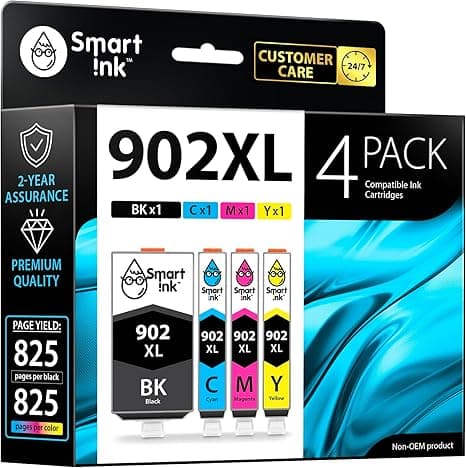
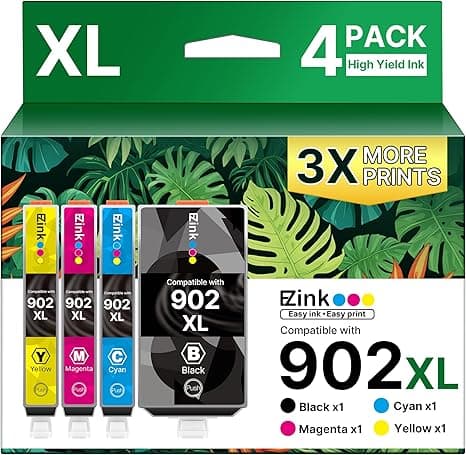
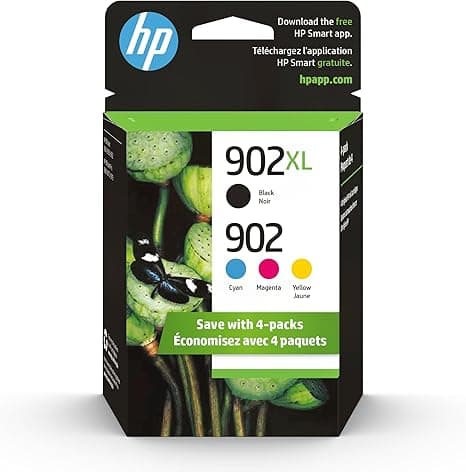
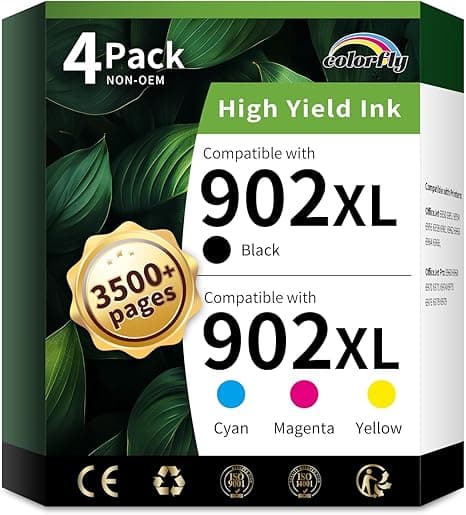
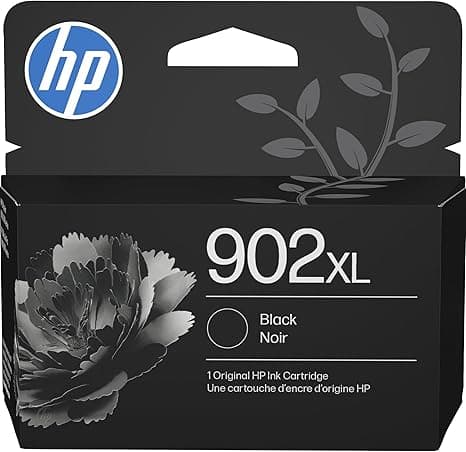
I didn't believe a $20 cartridge could be fine either. For years I was the guy who rolled his eyes at compatible ink — figured it was watered-down dye in a knockoff shell that would clog the heads on my HP and turn a $90 printer into a doorstop. So I paid the brand-name tax. Every. Single. Time. Then I priced out a genuine HP 902XL against the compatible version that fits the same 300/2471/14AN family, did the math on what I was bleeding per year, and finally got annoyed enough to just buy the cheap one and see if it wrecked anything.
It didn't. Four months and a stack of shipping labels, school forms, and one panicked tax-season print job later, it's still running. So here's the honest version — including the parts the cheap one does worse, because there are a couple.
The number that pushed me over
A genuine HP 902XL high-yield black runs around $40 the last time I bought one, and that's before you add the color cartridges. The compatible 902XL I'm using cost me right around $20 for the same high-yield capacity — call it half price, and that gap only widens when you buy the multi-packs. If you print even a couple hundred pages a month, you're swapping cartridges a few times a year, and that $20-per-cartridge difference stacks up fast. Over a year of normal home use I figure I'm saving somewhere in the fifty-to-sixty-dollar range, and that's the conservative read. That's not nothing. That's a dinner out, or honestly, the difference between printing freely and rationing pages like ink is gold leaf.
And that rationing thing is real. When OEM ink costs what it costs, you start avoiding printing. You email the form instead. You squint at the screen instead of printing the recipe. Cheaper ink quietly gave me my printer back.
Does it actually fit and seat right?
This was my first worry — that a third-party shell would be a hair off and rattle in the carriage. It isn't. Install is the same boring four-step dance as OEM: pop the cover, wait for the carriage to slide over and stop, press the little tab to release the old cartridge, and pull the protective tape off the new one before you drop it in. That tape step matters more than people think — leave even a corner of it stuck over the contacts or the vent and the printer throws a fit. Pull it clean.
The new cartridge slid into the slot and clicked — that same positive little snap you get from a genuine one, where you feel it seat rather than just hoping it did. I ran a test print immediately, which you should always do, and it came out clean on the first pass. No alignment dance, no streaking, no "non-genuine cartridge" tantrum beyond the one harmless pop-up I'll get to. Fit is the part I was most braced for and it's the part I worry about least now.
How it prints — the honest comparison
Black text? I genuinely cannot tell it apart from OEM. Sharp edges, solid fill, no gray ghosting on plain copy paper. For documents — which is 90% of what a home printer actually does — it is a dead heat. Color is strong too. Photos and color charts come out vibrant, a touch punchier than I expected, and for anything that isn't a gallery print you'd never know the difference.
Where is it a touch behind? On glossy photo paper, under good light, side by side with a genuine print, the compatible color is very slightly less precise in the subtle skin-tone gradients — a hair warmer, a little less nuanced in the shadows. You have to be looking for it. For a fridge photo of the kids, nobody on earth will notice. For a portfolio print you're framing, I'd still reach for OEM. Be honest with yourself about which one you actually do.
The real downsides — and there are a few
Let me not pretend this is flawless, because that's how you can tell a review is fake.
First: the page-count estimate. My HP showed an ink-level reading that's basically guesswork with a compatible cartridge — the gauge jumps and stalls and sometimes reads near-empty while the thing keeps printing for another fifty pages. So you can't trust the little ink-drop icon. You print until quality actually drops, then swap. Annoying if you're the type who likes a tidy gauge.
Second: the "non-genuine cartridge" pop-up. You'll get a one-time warning the first time you install it. Click through it, check the little "don't show again" box if it offers one, and you're done — but yeah, HP wants you to feel a flash of guilt. Ignore it.
Third: consistency between units. The cartridge I'm running has been perfect, but compatible ink is a bigger lottery than OEM — quality varies more between individual cartridges and between sellers. Buy from a listing with a real volume of reviews and a return policy, prime a new one with a test print the moment it's in, and don't stockpile six of them before you've confirmed the first runs clean.
Fourth, smaller: the packaging is cheap. Thin blister plastic, a sticker that peels crooked. Doesn't touch performance, but it's a reminder you bought the budget option. I'm fine with that. I'm not framing the box.
Why a dead cartridge is more than an annoyance
The thing nobody warns you about: ink doesn't fail politely. It fails at the worst possible second — the boarding pass you needed in ten minutes, the signed form due at the school office, the shipping label for a sale that has to go out today. A low-ink warning mid-job isn't just inconvenient, it stalls real work. The whole argument for affordable compatible ink is that you can actually keep a spare on the shelf without flinching at the cost, so "out of ink" stops being an emergency and becomes a thirty-second swap.
The verdict
Buy OEM if you're printing photos you'll frame, or if your printer is under a warranty you're genuinely worried about voiding — some people just don't want the asterisk, and that's a legitimate call.
For everyone else — the home office, the family that prints forms and homework and the occasional photo — I grab the compatible 902XL and I don't lose sleep. It seats with the same click, prints text I can't distinguish from genuine, and costs about half. The ink gauge lies and the box is flimsy, and I genuinely do not care, because it does the one job a printer has at twenty bucks a cartridge instead of forty. I didn't trust it going in. I've now bought it twice on purpose. That's the most honest thing I can tell you.