Troubleshooting & Analysis
The first sign of trouble was a printout of my kid's field trip permission slip that came out looking like it had survived a flood. Ghosted text. Faded blacks. A streak of nothing running down the right third of the page, like the cartridge had just given up halfway through the job. I'd been babying that original HP 67 in my 4122E for months — shaking it, pulling it out, wiping the contacts with a coffee filter, all the little rituals you do when a cartridge is dying and you're in denial about it. The thing was done. Clogged, dried out, finished. And of course it died at 7:40 in the morning with a deadline taped to the fridge.
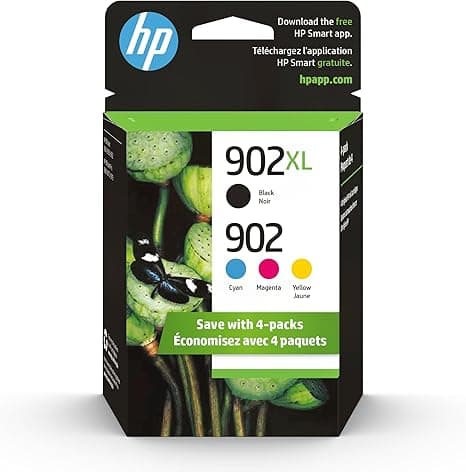
So I did the math right there at the kitchen table, which is a dangerous thing to do before coffee. A genuine HP 67XL high-yield black runs me somewhere around $40 depending on the day. I print maybe a couple hundred pages a month — school stuff, shipping labels, the occasional recipe my wife refuses to read off a screen — so I'm replacing cartridges three, four times a year. That's $120 to $160 a year just to keep a $79 printer breathing. The printer itself costs less than a year of feeding it. That's the part that finally broke me.
What I actually bought instead
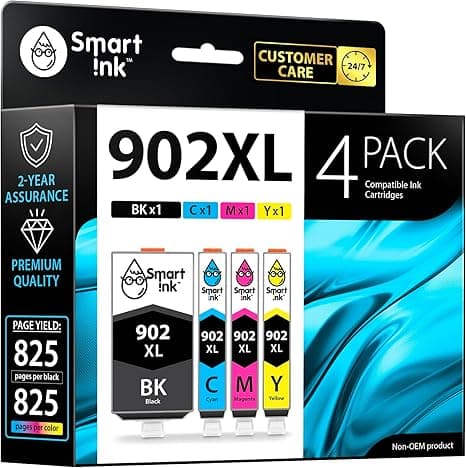
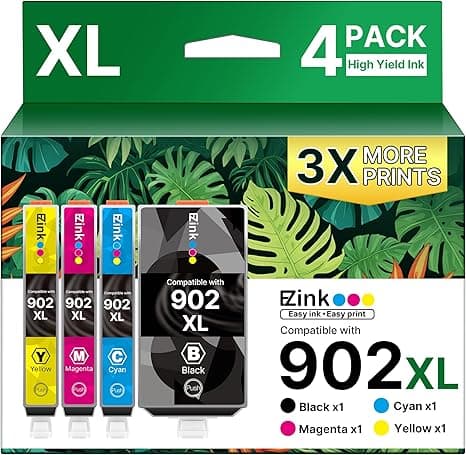
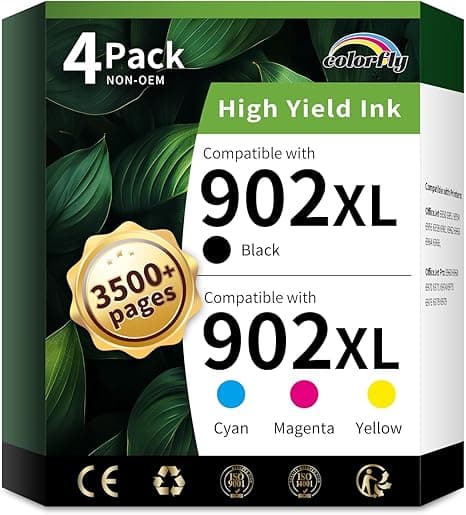
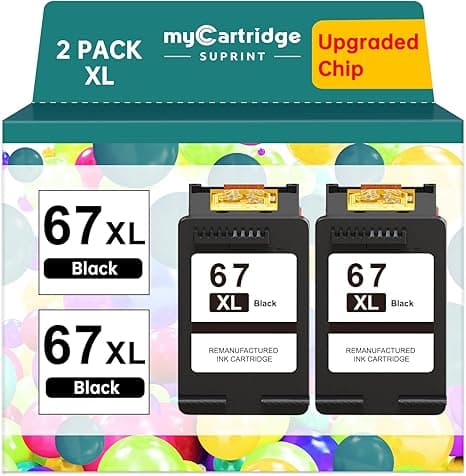
The compatible 67XL for the 2722E/4122E/6022E series ran me right around $20 for the high-yield black — roughly half of OEM. Same XL designation, same page-yield claim, same little cartridge that snaps into the same carriage. I'd held off on third-party ink for years because I'd heard the horror stories: the printer that refuses to recognize the chip, the heads that clog, the warranty you supposedly torch the second you go off-brand. So I bought one to test, fully expecting to write it off as a $20 lesson.
That was four months and a few hundred pages ago. I'm on my second one now, voluntarily.
Does it actually fit and work?
Install was boring, which is exactly what you want. Popped the cover, waited for the carriage to slide over and stop, pressed the tab to release the dead OEM cartridge — it let go with that familiar little click. The new one came with the protective tape over the contacts and nozzle. Peel that off. Don't skip it. That strip is the number one reason somebody swears "the new cartridge doesn't work." Slid it in until it clicked, closed the cover, ran a test print. The printer thought about it for a second, then spat out a clean alignment page. No error. No "non-genuine cartridge" tantrum that kills the job. It just printed.
Text quality? Honestly, I can't tell it apart from OEM on a normal document. Sharp black text, no feathering on regular copy paper. I ran the field-trip slip, a stack of shipping labels, a forty-page PDF — all crisp. The tri-color version I tried later does vibrant, punchy color. Photos come out a hair warmer than genuine HP, slightly less neutral in the grays, but for anything that isn't a gallery print you'd never catch it.
The downsides — because there are some
Here's where I earn your trust instead of selling you. This cartridge is not a perfect clone, and pretending otherwise would be a lie.
First, the ink-level reporting is dumb. The HP software will often flag the cartridge as "low" almost immediately, or throw up a question mark, or just refuse to give you a real percentage at all. That's the chip — it's a workaround, not the genuine handshake, so the gas gauge is basically broken. You learn to ignore it and judge by the actual print instead. The first time it happened I was sure I'd gotten a half-empty cartridge. I hadn't. It printed for months. But you can't trust the warning light, and if you're the type who panics at a low-ink alert, that's going to grate on you.
Second, there was a faint plastic-and-ink smell off the cartridge the first day out of the package, and the packaging itself is cheap — a thin clamshell, none of the foil-bag presentation HP uses. Cosmetic, but it tells you exactly where the savings went.
Third, and this is the real one: cartridge-to-cartridge consistency isn't OEM-tight. My first one was flawless. My second needed two cleaning cycles out of the gate before the black ran solid — faint banding on the first couple of pages, like an air bubble in the line that needed working out. Five minutes and a few test sheets and it cleared up completely. But look, if you'd opened a brand-new $40 HP and seen banding you'd be annoyed, and you'd have every right to be. With these you sort of accept that one in a handful might need a little coaxing on day one. That's the trade for the price.
Why a dead cartridge is worth taking seriously
It's not just an inconvenience. A truly clogged or dried cartridge that you keep fighting can leave you stranded at the worst possible moment — the boarding pass, the legal form, the return label the night before pickup. And there's a quieter cost. People leave a dying cartridge in for weeks because a fresh OEM hurts to buy, and the print heads on these HP units don't love running half-dry. Keeping a cheap spare in the drawer means you swap the second quality drops, instead of nursing a bad cartridge and risking the head. At $20 a pop, I keep two in the drawer now. I never did that at $40.
So who should skip it?
If you print professional photography, marketing materials where exact color fidelity matters, or anything client-facing where a slightly warm gray is a problem — buy the genuine HP 67XL. The color neutrality is measurably better, and you're paying for that consistency. Same goes if you're still inside your printer's warranty window and the idea of off-brand ink makes you nervous; technically third-party cartridges shouldn't void it, but if not worrying about it is worth the extra $20 to you, stay OEM until the warranty's up.
For everyone else — the school-run, shipping-label, print-the-recipe crowd, which is most of us — this is an easy call. Same job, sharp text, half the price. The broken ink gauge is annoying and the odd cartridge needs a cleaning cycle to wake up. But for fifty percent less money doing the exact same work in my 4122E, I'd buy it again. I already have, twice, and there's a spare in the drawer waiting for the next 7:40 a.m. disaster.