Troubleshooting & Analysis
I didn't believe a $20 cartridge could be fine either
Look, I'll be straight with you. The first time I saw a compatible 67XL cartridge sitting next to the genuine HP one — same shape, same little gold contacts, half the price — I assumed it was junk. I'd read the horror stories. Faded prints, "cartridge not recognized" errors, ink that smears if you breathe on the page. So I did what I tell everyone not to do: I bought the real one anyway, paid full HP price, and felt smart about it.
Then it ran dry three weeks later, mid-print, on a form I needed that morning. And I thought: okay, I'm done funding this.
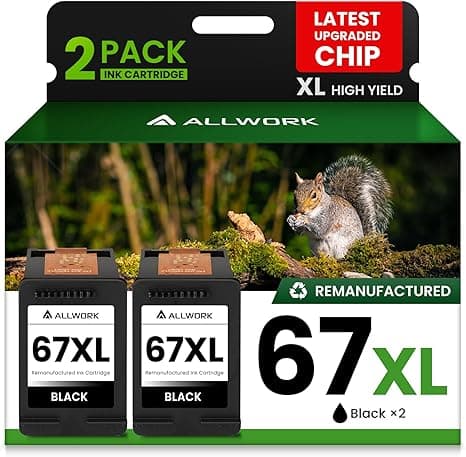
I bought the compatible 67XL for my 2722E that same day. I've now run it through that printer, plus a 4122E my sister handed down to me, for months. This is the honest version of how it went — the fit, the prints, and the one thing that genuinely annoyed me.
The price gap is the whole reason you're here
Let's not pretend otherwise. A genuine HP 67XL high-yield runs you what, around $40 at the counter? The compatible one I grabbed was right around $20. That's roughly 50% off for a cartridge that's supposed to do the exact same job — sharp black text, decent color — in the same three machines: the 2722E, the 4122E, and the 292.
Run the math over a year. If you print enough to swap a high-yield cartridge three or four times — and a lot of home offices do — you're staring at maybe $80 saved annually, just on the black side. Add the tri-color and the gap gets sillier. I'm not optimizing a spreadsheet here. I'm telling you that's a tank of gas and a couple of lunches for ink that prints the same school permission slip.
Does it actually seat right?
This was my real worry. A cartridge that fits loose is a cartridge that throws errors. So here's exactly what happened. I opened the printer cover, waited for the carriage to slide over and stop — the 2722E takes a second, be patient. Pressed the tab on the old one, it popped free. Then the new compatible cartridge: I peeled the protective tape off the contacts and the little vent (don't skip the vent, the print head needs to breathe), and pushed it in.
It clicked. Honestly, it clicked a touch firmer than I expected. Seated flush, cover closed, ran a test print, and the page came out clean on the first try. No "non-genuine cartridge" panic, no recognition error. The 4122E was the same story a few weeks later.
Now — small thing, but I said I'd be honest. The plastic housing on the compatible one feels a hair cheaper. The molding isn't quite as crisp as HP's, and on one cartridge the frame was a whisker looser in the slot than the genuine one had been. Did it affect printing? No. Did I notice it when I held it? Yeah. If you're the type who's bothered by that, you're warned.
How the prints actually look
Black text: I genuinely can't tell the difference. Crisp, dark, no fading down the page. I print a lot of documents and shipping labels and it's been dead reliable.
Color is where I'll split hairs. Side by side, on glossy photo paper, the genuine HP color was a touch richer — reds a little deeper, skin tones slightly more natural. On plain paper for everyday stuff? You will not see it. Charts, kids' homework, a coupon — all totally fine. If your whole reason for owning this printer is printing gallery photos, buy OEM for those and use the compatible for everything else. That's what I do, honestly.
The downside I keep coming back to
Here's the real one, and it's not the print quality. It's the ink-level reporting. With a compatible cartridge, the printer's gas gauge gets unreliable. Mine would flash a low-ink warning when there was clearly plenty left, and a couple of times it just refused to display a level at all. You learn to ignore the warning and judge by the actual prints — when the text starts going pale, you swap.
That trips people up, so let me say it plainly: don't trust the on-screen percentage with these. Trust your eyes on the page. It's a minor adjustment once you know, but the first time that warning popped with a near-full cartridge, I thought I'd been ripped off. I hadn't.
The packaging's also cheap — a thin plastic clamshell instead of HP's nice sealed box. Cosmetic. Cartridge inside was sealed and fine. And the first page or two after install, I got one tiny streak that cleared itself after a quick head-clean cycle. Normal break-in, but worth knowing.
Why a dead cartridge is more than an annoyance
People underrate this. Running a cartridge bone-dry isn't just inconvenient — letting the print head sit there pulling at an empty cartridge can dry out and clog the head, and on these all-in-one HP units the head is built in. A clog can mean a printer you have to fight with or replace. So the practical upside of cheap ink isn't only the money. It's that at $20 a pop, I actually swap on time instead of squeezing every last faded page out of a $40 cartridge to justify the cost. Cheaper ink made me a better printer-owner, weirdly.
So who should skip it?
If you print professional photos for clients, or you need the ink-level gauge to be precise for some reason, get the genuine HP 67XL. No argument. That's the right call for you.
For everyone else — the home office, the family printer, the person who just needs documents and labels and the occasional color chart out of a 2722E, 4122E, or 292 — I grab the compatible 67XL. I was the guy who didn't believe it. Now it's the only thing in my cart. Same prints, the head stays happy, and I'm not handing HP $40 every few weeks for the privilege. For twenty bucks, doing the job, I'd buy it again. And I have — twice this year already.