Troubleshooting & Analysis
The morning my printer quit on a deadline
I had a contract to sign and scan back in twenty minutes. Hit print, and the page came out with these pale gray streaks running through the signature line — the kind where the ink is technically there but you wouldn't trust it on anything legal. My HP OfficeJet 6958 had been flashing a low-ink warning for two days and I'd been ignoring it. Classic. The black cartridge had basically dried into a half-clogged mess, throwing banding across every page. I ended up driving to a print shop. Forty minutes of my morning, gone, because I'd been too cheap to keep a spare on hand — and, honestly, too annoyed at HP's prices to buy one.
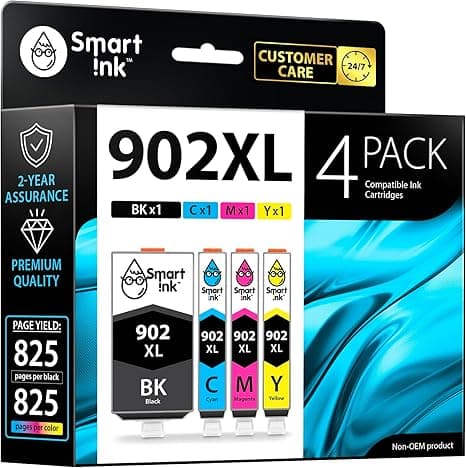
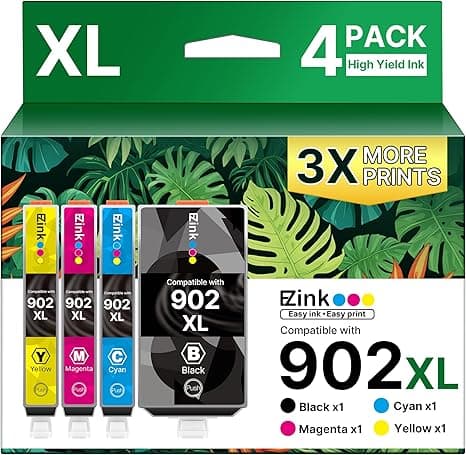
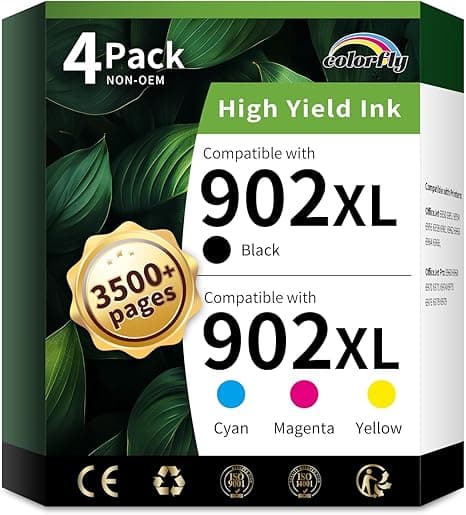
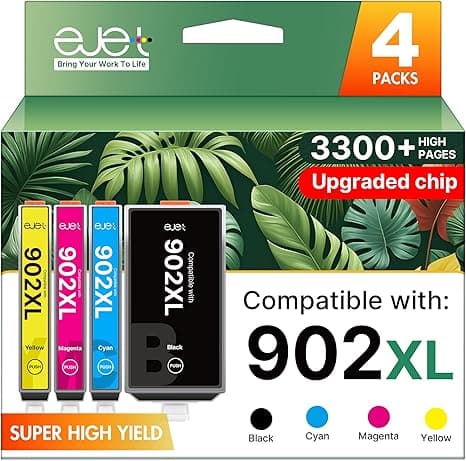
That's the thing nobody tells you. A starved or half-empty cartridge doesn't just stop. It limps. It lays down patchy, faded output that looks fine on screen and terrible on paper, and it can leave you re-printing the same document four times — burning the ink you do have left. So after that morning I finally did what I'd been putting off: I bought the compatible 902XL instead of the HP one, and I've been running them in this printer ever since.
The price gap is the whole story
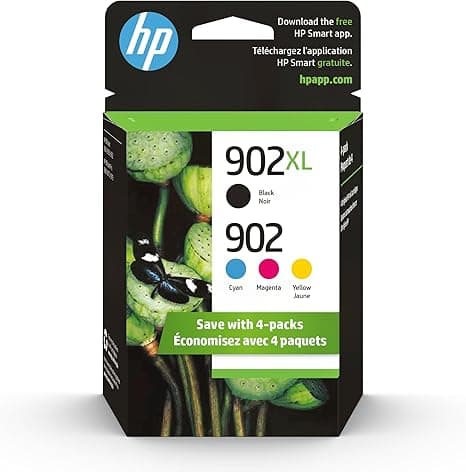
Here's why I switched, plainly. A genuine HP 902XL high-yield black runs me about $40 at full retail. The compatible 902XL I buy lands around $20. That's roughly 50% off for the same XL page yield — somewhere near 800 pages on the black, give or take how much color-heavy stuff you push through it. If you do a color set too, the OEM multipacks climb fast; you can be staring at $65 or more for a combo that the aftermarket version covers for half.
Do the annual math on that. I go through maybe four black cartridges a year between shipping labels, school forms, and the occasional 30-page document I refuse to read on a screen. Four OEM cartridges is $160. Four compatibles is $80. That's $80 a year I'm keeping, on a printer that cost me a little over a hundred bucks to begin with. The cartridges literally outspend the machine if you buy brand-name. That math is what flipped me.
Does it actually seat right?
This was my worry going in — that some no-name cartridge would rattle around or not register. It doesn't. Install is the same four-step dance as the genuine one: pop the cover, wait for the carriage to slide over and stop, press the little release tab to eject the old cartridge, pull the orange protective tape and the clear strip off the new one, and push it in until you feel the click. That click matters. If you don't feel it seat, it'll throw a "cartridge missing" error, so press until it's positively home.
One thing I'll flag: peel all the tape. The compatible ones sometimes have an extra strip over the contacts that the OEM doesn't bother with, and if you leave it on, the printer won't read the chip. Took me one confused minute the first time. After that, run a test print and maybe a quick alignment from the printer menu — and you're done. Mine read full ink levels immediately and printed clean on the first pass.
The honest downsides
I'm not going to pretend these are identical to HP's. They're close, but a few real things:
The ink-level reporting is hit or miss. On a couple of these compatibles, my 6966 threw a "non-genuine cartridge" warning the first time, and once it just showed a question mark instead of a fill bar for the first day. You click through the warning, it prints fine, and the estimate sorts itself out — but if you're someone who likes a precise gas gauge, the aftermarket chip is more of a rough guess than a measurement. I've learned to just keep a spare in the drawer and watch the actual print quality instead of trusting the meter.
Second, the blacks on heavy graphics are a hair less dense than OEM. For text — which is 90% of what I print — I genuinely cannot tell the difference. Crisp, dark, no feathering. But if you print a lot of solid black fills or photo-grade documents, you'll notice the compatible lays it down maybe a touch lighter, and you may go through it a little faster on those jobs. For a photographer this would matter. For shipping labels and tax forms, it does not.
Third, the packaging is cheap and the plastic has a faint chemical smell out of the wrapper for the first minute. Cosmetic. The cartridge body itself is solid and the print head contacts looked clean every time. But it's not the tidy HP box, and if presentation matters to you, fair warning.
Why a dead cartridge is worth taking seriously
Back to that bad morning. The real cost of running a printer down to fumes isn't the cartridge — it's the moment it fails on you. A clogged or empty black means streaky contracts, a boarding pass you can't scan, a return label that won't take. Worse, repeatedly firing a near-empty cartridge can let air into the head and leave you with clogs that a fresh cartridge has to flush out. Keeping a cheap spare on the shelf isn't about being fancy. It's so a low-ink warning at 8 a.m. is a thirty-second swap, not a drive across town. At $20 a pop, there's no reason not to have one waiting.
So who should still buy OEM?
I'll be straight: if you print professional photos, color-critical proofs, or anything where a slightly lighter black or an off ink estimate would actually hurt you, buy the genuine HP 902XL and don't think twice. Same if you hate clicking through a "non-genuine" prompt — that little nag is the tax you pay for the savings.
But for the rest of us — text, forms, labels, the everyday paper churn of a home or small office — the compatible 902XL does the same job for about half the money. I've run a dozen of them through my 6958 and 6966 now without a single cartridge that didn't fit, didn't print, or quit early. The first one I bought out of pure frustration after that ruined morning. Every one since, I've bought on purpose. For $20 less each time, doing the work I actually need done, I'd grab it again — and I keep two in the drawer now so I'm never caught streaking through a deadline again.