Troubleshooting & Analysis
The click is what sold me, honestly
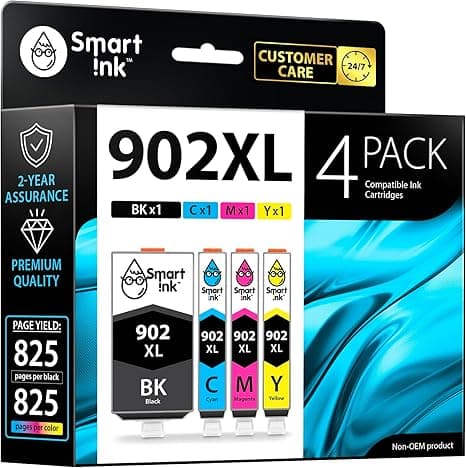
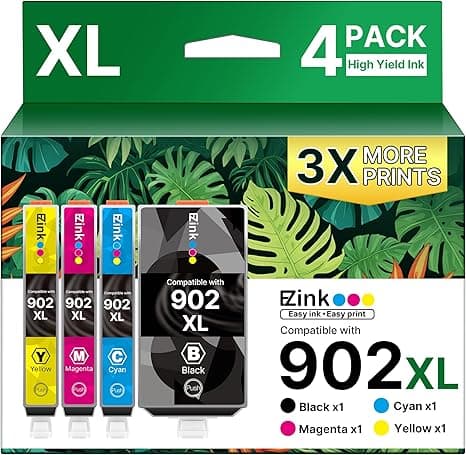
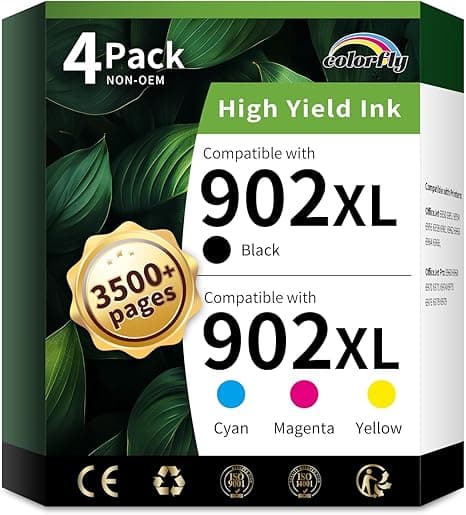
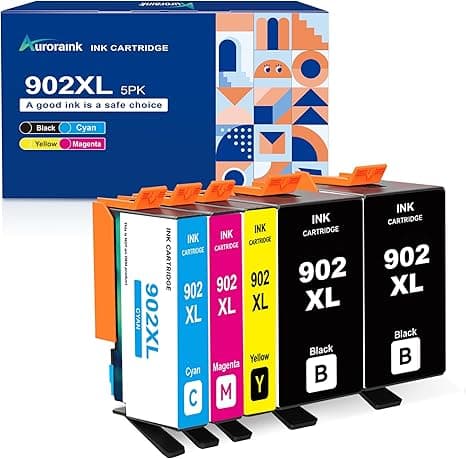
First thing I noticed pulling the compatible 902XL out of its bag — it didn't smell like anything. I'd half expected that sharp chemical tang you get with the really bottom-shelf cartridges. Nothing. Just a faint plasticky note off the wrapper, gone in a minute. I peeled the orange protective tape off the print head, dropped it into my OfficeJet 6958, and it seated with this solid little clack — same exact sound the HP-branded one makes. That click matters more than you'd think. It's the difference between "this thing is going to leak ink all over my carriage" and "okay, this is going to be fine."
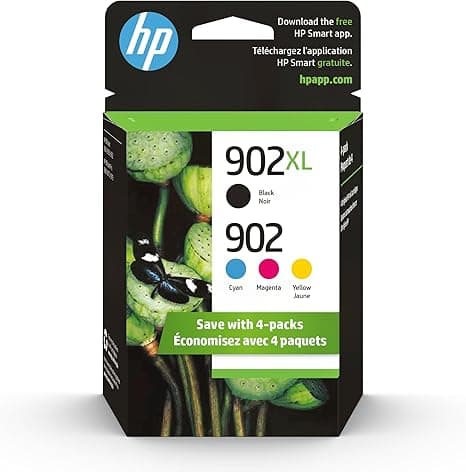
Let me back up. I bought this printer years ago, and like everybody who owns one, I got slowly robbed by the ink. A genuine HP 902XL black runs around $40 at most stores. The tri-color situation is worse. You do that math twice a year and you start to resent a machine that cost you sixty bucks total. So when I needed a refill and saw the compatible 902XL sitting there at roughly half the price — call it $20 against the $40 OEM — I figured I'd test it myself instead of guessing.
The price gap is the whole story
Here's the part nobody at HP wants you doing on a napkin. If you print like I do — a few hundred pages a year, shipping labels, kids' homework, the occasional photo — you're replacing the high-yield black maybe twice annually. At $40 a pop on the genuine cartridge, that's $80 a year just feeding the black. Swap in the compatible at around $20 each and you're at $40. You just saved forty dollars without changing a single thing about how you print. Over the life of a printer you barely paid a hundred bucks for, that's not a rounding error — that's real money you keep.
And the savings aren't theoretical-quality either. The "high-yield" label on the 902XL is what you're paying up for, and this compatible version actually held its page count. I didn't get a low-ink warning until I was deep into a long stretch of label printing, weeks after install. So you're not buying half the ink at half the price. You're buying comparable ink at half the price. That distinction is everything.
Install is genuinely a non-event
If you've never swapped one of these, don't sweat it. You pop the front cover, the carriage slides over and parks itself in the middle, and you wait for it to actually stop moving — don't fight it while it's still gliding. Press the little tab on the old cartridge, it tilts up and out. Pull the orange tape off the new one (the part people forget — leave that tape on and you'll get a blank page and a panic), and push the new cartridge in at a slight angle until you feel that click I keep going on about. Lid down, run a test print, done. Took me under two minutes, and I'm not handy.
One thing the OEM does slightly better here: the alignment. After dropping in the compatible cartridge, my printer threw an alignment routine and my first test sheet had the faintest banding on a solid black fill. I ran the built-in cleaning cycle once, printed again, and it was crisp. With a genuine HP cartridge I usually skip that step entirely. So budget yourself one extra cleaning cycle on day one. Small tax. Worth it.
Where it's a touch behind — and I'm not going to pretend otherwise
The text is sharp. Dead sharp — I printed a dense two-page contract and you could not tell it from an OEM page if I laid them side by side. Colors come out vibrant on plain paper, more than good enough for school projects and the shipping labels that are 90% of what I do.
But I'll give you the honest downside, because a review with zero flaws is a review you shouldn't trust. On glossy photo paper, side by side with a genuine HP print, the compatible's color is a hair less deep in the dark shadow areas. Skin tones leaned very slightly warm. If you're printing family photos to frame, or you do client-facing photo work where color has to be exact, this is where I'd tell you to spend the extra twenty and buy OEM. Be honest with yourself about what you actually print.
Second real gripe: the packaging is cheap, and the chip occasionally gets dramatic. About a week in, my printer flashed a "non-genuine cartridge" message — which, no kidding, it's not genuine. It kept printing fine; I just clicked through the warning and it never nagged me again. But if you're the type who panics at a yellow exclamation point on the screen, know that it's coming and it means nothing. The cartridge works. HP just wants you to feel bad about it.
Why a dead cartridge is a bigger deal than it sounds
People underrate this until it bites them. Running bone-dry mid-job isn't just annoying — on inkjets, letting a cartridge sit empty and then printing anyway can pull air into the head and leave you cleaning clogs for an hour. The fix is dumb-simple: keep a spare on the shelf and swap before the tank's fully starved. At $20 a cartridge instead of $40, keeping that backup on hand doesn't sting. That, quietly, is the best argument for the compatible one — it's cheap enough that you actually keep a spare, which is the thing that saves you from a 9 p.m. printing emergency the night before something's due.
So would I buy it again?
I already did. Twice now. Look — if you're a photographer or you print color-critical work for clients, buy the genuine HP 902XL and don't think twice; the shadow depth is worth it to you. For everybody else feeding a 6958 or 6966 — homework, labels, contracts, the random boarding pass — the compatible 902XL does the same job, holds the same high-yield page count, and leaves a twenty in your pocket every single time. One extra cleaning cycle on day one, ignore one harmless warning, and you're printing. I keep two on the shelf. That tells you what I think.