Troubleshooting & Analysis
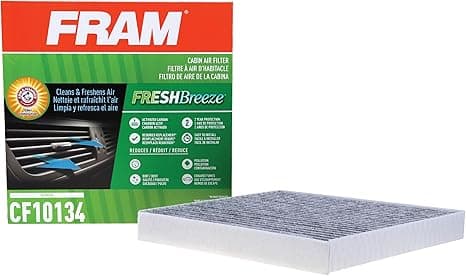
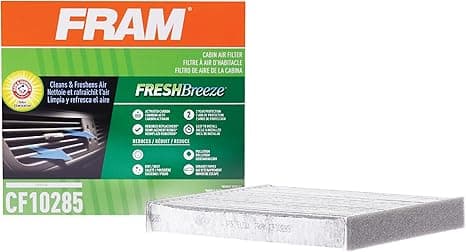
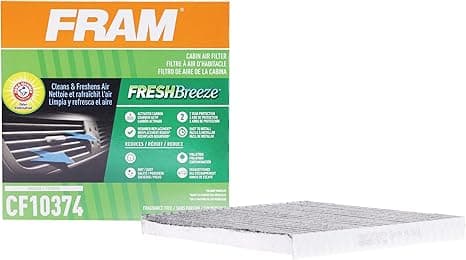
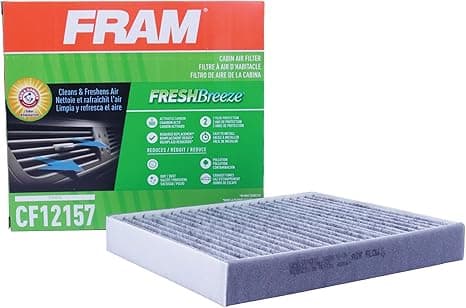
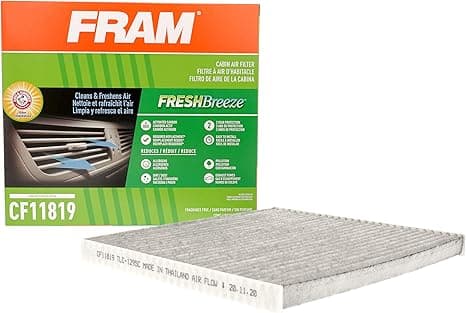
The dealer wanted $89 for a cabin air filter. Eighty-nine dollars. For a folded rectangle of pleated paper the size of a paperback. And that was before the $50 "labor" line item the service writer slid across the counter, like it takes a trained technician to open a glove box. So I'm standing there doing the math: call it $139 to swap a part I could hold in one hand. The Fram CF11819 compatible filter that fits the VF2016/AQ000/CF177 ran me a fraction of that, and the install took me almost exactly five minutes in my own driveway. That gap — the dealer's number versus this one — is the whole reason this article exists, and honestly it's the reason I started buying aftermarket filters in the first place.
Let me back up, because I didn't trust the cheap one either. The first time I bought a compatible cabin filter I half-expected it to be a flimsy knockoff that wouldn't seat right and would whistle every time the blower kicked up. So I've gone in skeptical on every one since, including this Fram.
Why I even bothered replacing it
My AC had started smelling faintly musty — that gym-bag-left-in-the-trunk smell that creeps in when warm air pushes through a filter that's been packed with road grime for two years. And the airflow on the lower fan settings had gone weak. That's the tell. A clogged cabin filter doesn't just make the cabin smell off; it chokes the blower motor, makes the AC work harder than it should, and lets dust and exhaust particulates ride straight into the air you're breathing in stop-and-go traffic. When I finally pulled the old one it was gray-brown and matted, with a dead leaf and what I'm pretty sure was a former insect pressed into one corner. You don't realize how bad it's gotten until it's in your hand.
The actual money math
Here's the part the service department doesn't want you to sit with too long. A cabin filter on most cars wants replacing every 12 to 15 thousand miles, or roughly once a year if you drive normal mileage. If you pay the dealer's $50 install fee plus their marked-up part every single year, you're bleeding well over a hundred dollars annually on a job that is — and I cannot stress this enough — opening a plastic flap. Do it yourself with the CF11819 and you skip the labor entirely. The part itself is a small fraction of the OEM markup. Even if you replaced it twice as often as recommended just to keep the air fresh, you'd still come out way ahead. Over the life of the car that's real money, not a rounding error.
Fit and install — does it actually seat right?
This is where compatible filters earn their reputation or lose it, so I paid attention. The process itself is dead simple: open the glove box, squeeze in the sides to release the stops so the box drops down all the way, and you'll see the filter housing cover behind it. Pop that off, slide the old dirty filter out, and slot the new one in with the little airflow arrows printed on the frame pointing down. Close it up. That's it.
The CF11819 went in clean. The pleats lined up with the housing, the frame slid into the track without me having to bend or force anything, and it seated with a soft, definite stop when it bottomed out. Now — full honesty — the frame is a hair less rigid than the OEM piece I pulled out. The OEM filter felt a touch more substantial in the hand, a little stiffer in the cardboard surround. The Fram is fine, it holds its shape and it sits flush, but if you squeeze the edges you can feel it's built a little lighter. In the housing, sealed against the gasket surface, it makes zero difference to performance. Out of the housing, you notice. That's the kind of thing nobody tells you and then you panic that you bought junk. You didn't. It's just built to a price.
How it performs once it's in
The musty smell was gone the same day — that's mostly the act of removing a saturated filter, but the fresh media doesn't fight you on it. Airflow on the low fan settings came back noticeably; settings one and two actually move air again instead of wheezing. After a few months of daily driving, including a dusty gravel-road stretch I take a couple times a week, it's still pulling its weight. The filtration on fine dust feels right on par with what the OEM did. Where I'd give the factory part a slight edge is over the very long haul — premium OEM media sometimes holds structure a little longer before it starts to load up. But "a little longer" doesn't justify paying triple, especially when you're swapping it annually anyway.
The downsides, said plainly
Two real ones. First, the packaging is cheap — it showed up in a thin box that had taken a corner ding in shipping, and while the filter inside was perfectly fine, it does not arrive feeling like a premium product. If you're the type who equates nice packaging with quality, brace yourself; the value is in the part, not the cardboard. Second — and this is the one to actually plan around — there's a faint plastic-and-fresh-media smell for the first two or three days. It's mild, it's the new filter off-gassing slightly, and it clears on its own once air has run through it for a while. Run your AC on fresh-air mode for the first couple of drives and you'll barely catch it. By day four mine was completely neutral. It's not a defect. It's just what new filters do, OEM included, though I'll grant the OEM I pulled smelled a touch more neutral out of the wrapper.
So who should buy what
If your car is under warranty and you're the kind of person who needs a dealer stamp on every service record for resale or your own reassurance, fine — pay the OEM premium and the install fee, that's a legitimate choice and I won't argue you out of it. Same if you simply will never open your own glove box; no shame in it.
But for everyone else — and that's most of us — this is an easy call. The CF11819 fits the VF2016/AQ000/CF177 right, it filters the air it's supposed to filter, the install is genuinely a five-minute driveway job, and it saves you the entire dealer markup plus that insulting $50 labor charge. The frame's a little lighter and it needs a couple days to lose its new smell. That's the whole list of complaints. For the money I'd buy it again — and I already have, twice, on two different cars in my driveway. The mechanic can keep his fifty bucks.