Troubleshooting & Analysis
The smell told me before the dashboard did
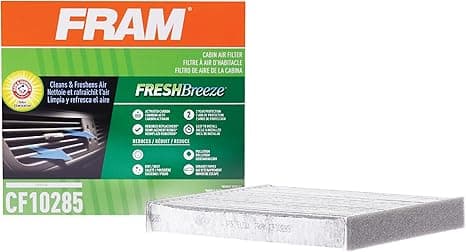
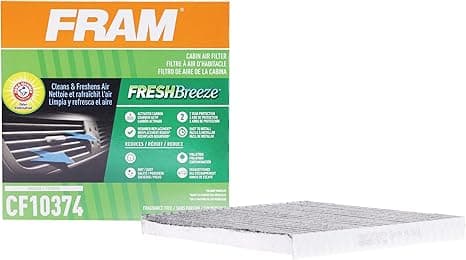
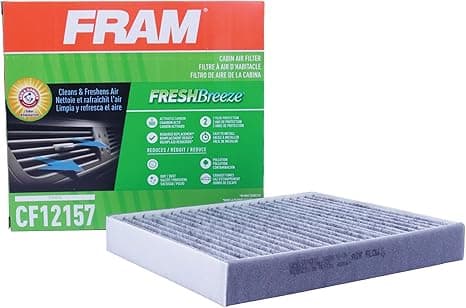
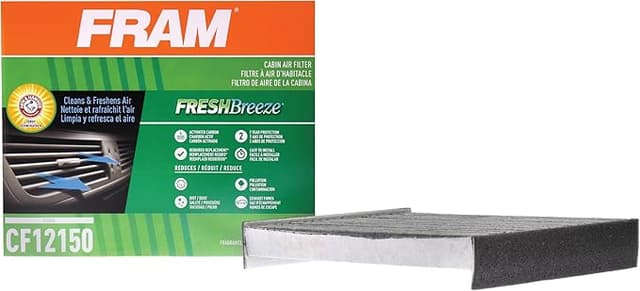
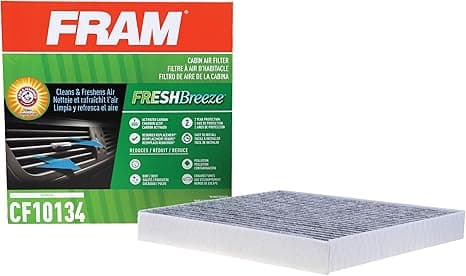
I knew my cabin filter was shot the day I got in after work and the car smelled like a wet dog that had been napping in the vents. Not dramatic. Just... off. A little musty, a little stale, the kind of thing you stop noticing until you've been out of the car for an hour and climb back in. That's the cabin air filter dying — the CF10134 in my case, the Fram unit that sits behind the glovebox and catches everything the road throws at the air you breathe.
The dealer wanted real money for the genuine part. The Fram-branded OEM-equivalent runs higher than it should for a folded sheet of pleated media in a plastic frame. I'd been quoted around $35 for the name on the box, and I'd already done the shop-markup version once (don't ask). So when I found this compatible CF10134 replacement for closer to $15, I did what I always do: bought it half-expecting to be annoyed, ready to write it off as a cheap lesson.
The click is the tell
Here's the thing people who haven't done this don't know — the whole job lives or dies on the frame. A cabin filter slides into a slot behind the glovebox, and a good one seats with a soft click and sits flush. A bad one either won't go in straight or rattles around with a gap on one edge, and that gap is unfiltered air sneaking past everything you paid for.
This one clicked. First try. I dropped the glovebox (pinched the sides in, swung it down — your manual will show the exact tabs, but on most of these it's a two-second squeeze), pulled the old filter out and got a genuine "oh, gross" moment looking at it. Leaves. A pine needle. A gray fur of dust packed so deep into the pleats they'd basically stopped being pleats. I noted which way the airflow arrow pointed on the old one, wiped the empty housing with a dry cloth, and fed the new CF10134 in the same orientation.
The frame is a hair softer than the genuine Fram. I'll be honest about that — when you flex it in your hands before installing, it's a touch more flexible, a little less rigid at the corners. I noticed it. But in the slot? It sat flush, no gap, the glovebox snapped back up and the indicator-free, no-fuss install was done in under five minutes. Power was never an issue here since it's just airflow, but if you're doing a filter on a device with a reset indicator, that's the one extra step — this one needed none.
What $15 actually buys you
Let me do the math the way I actually think about it. OEM-ish: about $35, and you swap a cabin filter roughly once a year or every 12,000-15,000 miles. Compatible: around $15. That's a $20 gap, every single year, for a part that gets thrown in the trash when it's done its job. Over five years of owning a car that's a hundred bucks saved on a consumable nobody sees. I'd rather put that toward an oil change.
And performance-wise, the first thing I wanted to know: did the musty smell go away? Yes. Within a day. The next morning the cabin smelled like nothing, which is exactly what you want — a cabin filter doing its job is invisible. Airflow on the highest fan setting came back to full force; the old clogged one had been quietly strangling my AC and I hadn't clocked how weak the blower had gotten until I had the strong version back. Defrost cleared the windshield faster too. That's not me being generous; that's just what a fresh, unclogged filter does versus a packed one.
Where it's a touch behind — and the downside I won't hide
Two honest things.
First, the break-in smell. For the first two or three days there was a faint new-plastic, slightly chemical note when the fan first kicked on cold. Not strong, but I've got a sensitive nose and I caught it. It faded completely by about day four and hasn't come back. If you're the type who's bothered by a new-car-mat smell, run the fan on fresh-air mode for ten minutes after install and you'll blow most of it through.
Second — and this is the real one — the media doesn't feel quite as dense as the genuine article. The pleats are there, the count looks right, but holding the two side by side, the OEM has a little more heft to the paper. Does it matter? For straight dust, pollen, and road grime, I genuinely can't tell a difference in how my air feels four months in. But if you specifically bought a carbon/activated cabin filter to kill exhaust and odor in heavy traffic, know that the cheaper compatibles sometimes skimp on the carbon layer. Check the listing. If it says it has the carbon, you're fine; if you live on a smoggy commute and odor control is the whole reason you're replacing it, that's the one case I'd think twice.
And the packaging is nothing to write home about — a thin plastic sleeve, a little bend in one corner of the frame from shipping that popped right back. Cheap presentation. The filter itself was fine.
Why you don't want to skip this
A saturated cabin filter isn't just a comfort thing. Once it's packed solid, your blower motor has to work harder to pull air through it, and that's a part that costs a genuinely painful amount to replace when it burns out early. You're also growing whatever's living in that damp, debris-packed media and then breathing it. A $15 filter once a year is the cheapest insurance on the whole car. Letting it go a third year to save the swap is the kind of false economy that eventually costs you the blower.
The verdict
Buy OEM if you've got a carbon-filter commute through real pollution and odor control is the entire point — spend the extra for the guaranteed carbon layer. For everybody else with a CF10134/VF2001-fit car who just wants clean air, full airflow, and a glovebox that smells like nothing again: this compatible one seated right, killed the mustiness, restored my fan, and cost me twenty bucks less. Four months in, no regrets. I've already got the next one in the garage for when this one's done — same compatible, not the brand-name box. That's the most honest endorsement I can give: I voted with my own wallet, twice.