Troubleshooting & Analysis
The first thing I noticed was the smell — or rather, what replaced it
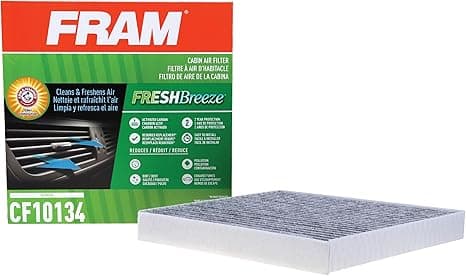
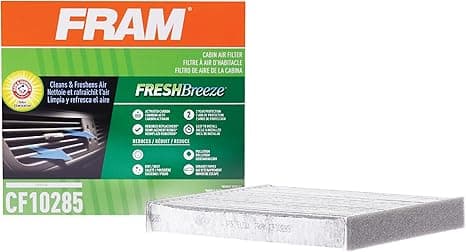
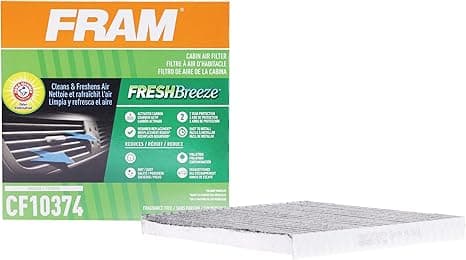
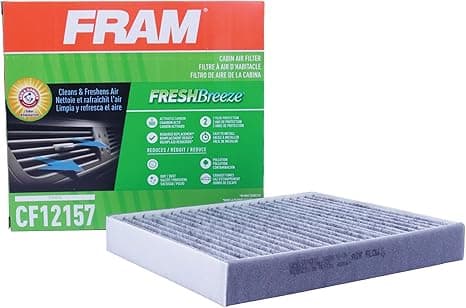
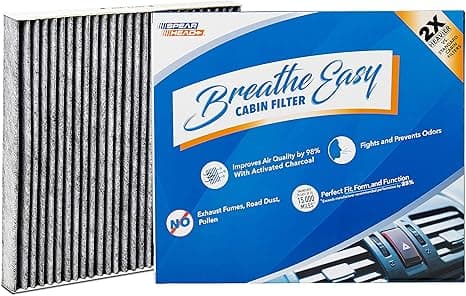
I'll never forget the moment I pulled the old cabin filter out of my car. It came out gray, fuzzy, with a leaf stem wedged in one corner and this stale, mildewy funk baked into the pleats. I actually held it at arm's length walking it to the trash. Then I slid the new Fram Spearhead Odor Defense Breathe in, heard that soft plastic-on-plastic click as the frame seated against the housing tabs, snapped the glove box back up, and ran the AC on high for a minute. The musty note that had been riding shotgun with me for two summers? Gone. Replaced by a faint, almost charcoal-clean smell for the first day, then just... nothing. Neutral air. Which is exactly what you want.
That sensory before-and-after is the whole reason I keep buying these instead of letting a shop handle it.
The price gap is dumber than you think
Here's what got me started on doing this myself. The last time I let a quick-lube place "take care of" my cabin filter, they charged me right around $50 in labor on top of a marked-up filter — call it close to $80 out the door for ten minutes of someone opening my glove box. The Fram Spearhead I install myself runs in the low $20s. So even if you only count the labor you're skipping, you're keeping roughly $50 in your pocket every single time. Do this once a year — which is about the right interval for most people, more often if you're driving dusty roads or stuck in stop-and-go exhaust all day — and over the life of the car that's a few hundred bucks that stayed yours.
And the actual job is so easy it's almost insulting that I ever paid for it.
Install: five minutes, and that's me going slow
You open the glove box, then you squeeze in the sides and release the little stops so the whole box swings down further than it normally does. Behind it there's a rectangular plastic cover for the filter housing — pop that off. The old filter slides straight out toward you, and trust me, you'll know it's the right part the second you see how filthy it is. The new Fram goes in the same slot, and here's the one thing people mess up: there are airflow arrows printed on the frame, and they need to point down. Down, toward the floor of the car. Get that right, snap the cover back, click the glove box stops back into place, done.
The fit on mine was honest-to-goodness snug. The pleats are dense, the frame held its shape going in, and it didn't sag or buckle the way some bargain filters do when you try to seat them. That mattered to me because a filter that fits loose lets unfiltered air sneak around the edges, and then what's the point.
The downside — and there's a real one
Okay, look, I'm not going to pretend this thing is flawless, because that's how you know a review is garbage. Two things bugged me.
First, that day-one smell. The "odor defense" layer has some kind of activated-charcoal treatment, and fresh out of the bag there's a distinct new-filter scent — not chemical-harsh, but noticeable, a little like the inside of a brand-new shoe box mixed with carbon. It rode along for about the first full day of driving before it faded completely. If you're scent-sensitive, run your AC on fresh-air mode (not recirculate) for the first couple of trips and it clears out faster. By day two I'd stopped noticing it entirely.
Second — and this is the one I'd actually warn you about — the frame material feels a touch lighter than a dealer OEM piece. The cardboard-and-plastic border doesn't have quite the same rigidity. It seated fine and sealed fine in my car, but I'll be honest, I took a few extra seconds to make sure all four edges were flush in the housing instead of just shoving it in and trusting it. On a genuine OEM filter the frame is stiff enough that it basically aligns itself. With this one, you're the quality control for those last ten seconds. Not a dealbreaker. Just don't install it half-asleep and assume it dropped in perfectly.
The packaging is also nothing to write home about — a thin plastic sleeve, no fancy box. But I'm buying a thing that's going to live in the dark behind my glove box catching dust. I genuinely do not care what it shipped in.
How it actually performs once it's in
Two real things I can tell you from living with it. One: the airflow came back. Before I swapped it, my fan on setting three felt like it was setting one — the old saturated filter was choking the whole system, and the blower was working hard for barely a breeze. Right after the new Fram went in, three felt like three again, strong and steady out of the vents. That's not just comfort; a clogged filter makes your blower motor and AC strain to push air through gunk, and that strain is wear you don't want to pay for later.
Two: the odor knockdown is the part that genuinely surprised me. I drive past a stretch of road with a wastewater plant, and there's a spot where the smell used to leak into the cabin every single morning. Since putting this in, that's been knocked down to where I barely catch it. The charcoal layer is doing real work on smells, not just dust. I didn't expect a sub-$25 filter to handle odor noticeably better than the plain white pleated one the shop used to install.
Who should skip this — and why I keep buying it
If your car's still under a bumper-to-bumper warranty and you're the type who needs the dealer to log every service, or if the idea of pointing an airflow arrow the wrong way genuinely stresses you out, pay the shop and buy OEM. No shame in that. That's the honest "buy the expensive one" case.
But for me? A filter that fits snug, clears out a musty cabin in one drive, actually fights odors, and costs me around $50 less every time because I'm not paying someone to open my glove box — I'd buy it again. And I have, twice now, on two different cars. The day-one smell and the slightly flimsier frame are the price of admission, and it's a price I'll keep paying.