Troubleshooting & Analysis
The first thing I noticed was the smell — or rather, the lack of one
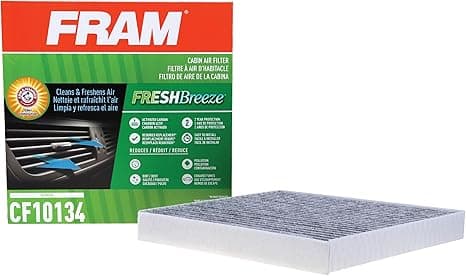
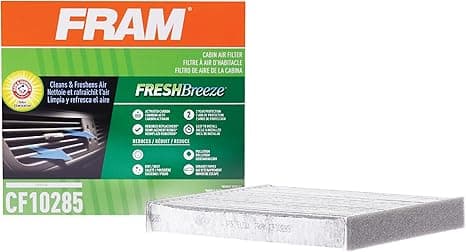
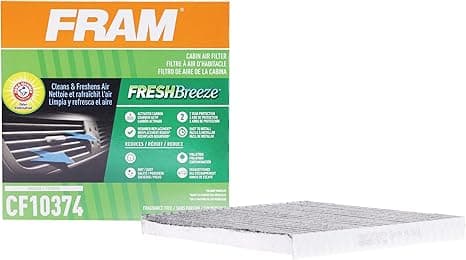
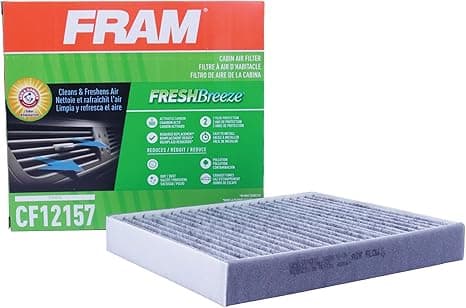
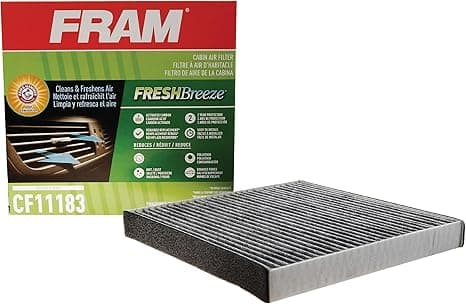
I'd been driving around with the heater on for two weeks before I admitted it: my car smelled like a damp gym bag. Not strong, just there. Every time the AC kicked on, this faint mildew thing would drift up from the vents. So I finally pulled the old cabin filter out of my dash, and — yeah. It was gray-brown, packed with leaf bits and what I'm pretty sure was a dead bug or two. Disgusting. I dropped the Fram CF11183 in to replace it, heard that little snug click as it seated against the housing, and the next morning the first blast of air was just... neutral. Clean. No gym bag.
That's the whole pitch, honestly. But let me actually walk you through it, because I know you're standing there comparing the part numbers PC5156, VF3012, and CF11183 — they all cross-reference to the same filter — and wondering if the cheaper aftermarket one is going to cost you down the road.
The money part, because that's why you're here
Here's what nobody at the dealership wants you to do the math on. A shop will charge you around $50 in labor to swap a cabin air filter. Fifty bucks. For a job that — and I mean this — takes five minutes and zero tools. The filter itself runs roughly $15 to $20 depending on where you grab it. So you're looking at a $65-ish total at the mechanic versus under twenty if you do it yourself with this one.
I track this stuff because it adds up. Cabin filters want replacing about once a year, or every 12,000–15,000 miles. If you let the shop handle it every single time, that's $50 in labor disappearing annually for a part you can install during a podcast ad break. Over the life of a car you keep eight or ten years? That's hundreds of dollars in pure convenience tax. I'd rather keep it.
Installing it: the glove box thing scares people for no reason
I get why people pay someone. Popping open the dash feels like you're about to break something expensive. You're not. Here's how it actually went for me.
- Open the glove box all the way and release the little stops on each side so it drops down further than normal. That's the part that feels wrong — like you're forcing it. You're not, it's designed to do that.
- Behind it there's the filter housing cover. Pop it off.
- Slide the old filthy filter straight out. (Brace yourself, mine rained crumbs.)
- Push the Fram in with the airflow arrows printed on the frame pointing down. This matters — backwards and it won't filter right.
Five minutes, start to finish, and most of that was me staring at the dead-bug situation in horror. No tools. No YouTube rabbit hole. The arrows are printed clearly on the CF11183, which I appreciated — some off-brands I've used barely mark them and you're squinting trying to figure out orientation.
How it actually performs — and where it's a hair behind OEM
Airflow came back immediately. That was the big one for me. The old saturated filter had been quietly choking my AC — I didn't even register how weak the vents had gotten until the new one was in and suddenly the fan on setting 2 was doing what setting 3 used to. A clogged cabin filter strains the blower motor and makes your AC work harder for less, so this isn't just a comfort thing, it's load off the system.
The filtration on road dust, pollen, and that exhaust-fume smell when you're stuck behind a diesel? Genuinely as good as the OEM Fram filter that came out. I've run it through a full spring of pollen season and the cabin stayed clean.
Now — where it's a touch behind. The frame on the CF11183 is a slightly softer, thinner plastic than the original equipment piece. It seated fine and sealed fine, but when I was handling it I could feel it flex a little more than the OEM. It didn't cause any rattle or gap once installed, but if you're rough sliding it into the housing you could tweak the edge. Go gentle on the insertion and it's a non-issue. I'm two of these in now and neither has warped or sagged.
The real downside, said plainly
For the first two or three days, there's a faint new-filter smell. Not chemical-strong, but you'll catch a whiff of clean cardboard-and-plastic when the AC first runs each morning. It fully aired out by about day three for me and I haven't noticed it since. If you're sensitive to that, run the fan on high with the windows cracked for the first drive and you'll blow most of it through.
The other thing: the packaging is cheap. Mine showed up in a thin box that had clearly been knocked around in shipping, with one slightly creased corner on the box (not the filter). The filter itself was fine, pleats intact, but it doesn't have that shrink-wrapped, premium-unboxing feel of the dealer part. If a crushed box bugs you, fair warning. It has zero effect on how it works.
Who should skip this — and who shouldn't
If your car's still under a bumper-to-bumper warranty where you're worried about a dealer giving you grief over non-OEM parts, or you genuinely just want the exact original-equipment piece and the labor doesn't bother you — go OEM, no judgment. Some people want factory and nothing else, and that's a real preference.
But for the rest of us? A musty-smelling car, a strained AC, and a $50 labor quote for a five-minute job is exactly the situation this filter solves. It fits, it seals, it kills the smell, it restores the airflow, and it does it for a fraction of what the shop wants. The slightly softer frame and the brief break-in smell are the honest trade-offs, and they're small ones. I dropped one in my own car, watched it work through a full pollen season, and bought a second to keep on the shelf for next year. That's the most honest endorsement I've got — I spent my own money on the repeat.