Troubleshooting & Analysis
Forty bucks. For a pleated rectangle of paper.
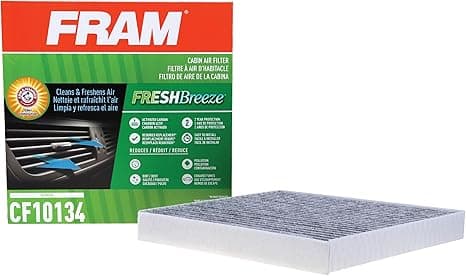
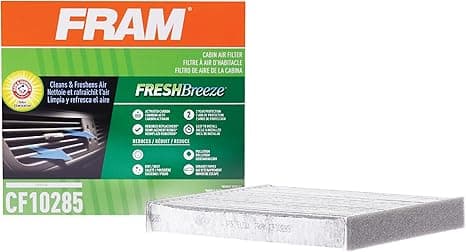
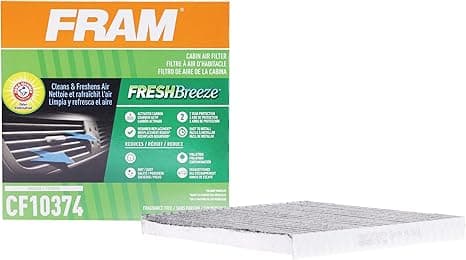
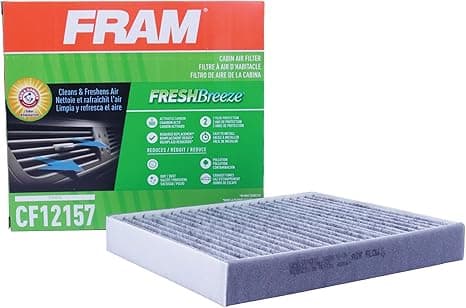
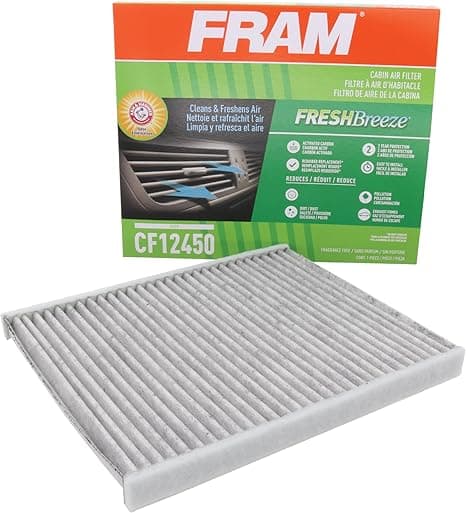
That's what the dealer wanted to charge me for a cabin air filter on my last visit — and that's before the "shop labor" line item, another $50 to have a tech pop open my glove box and slide it in. Ninety dollars, all in, for a job that took me longer to find a YouTube video for than to actually do. I sat in the service waiting room doing the math and almost laughed. The compatible Fram CF12450 (it's the same part as the CAF1502 listing you'll see floating around) runs about $14. Same shape, same fit, same job. The price gap isn't a discount — it's a markup on your not knowing any better.
So I bought the Fram, did it myself, and I've now run it through a full year in my daily driver. Here's the honest version.
The money, laid out flat
Cabin filters aren't a once-a-decade thing. Most owner's manuals want them swapped every 12,000 to 15,000 miles, which for me is roughly once a year. If I'd kept going the dealer route — say $40 for the part and $50 labor — that's $90 a year, basically forever, for the rest of the time I own this car. Ten years of ownership, that's $900 just to breathe.
The Fram CF12450 at around $14, installed by me in about five minutes, turns that $90 into $14. Over those same ten years you're talking $140 versus $900. I'm not exaggerating the savings to sell you — that's just multiplication. And the part that got me was realizing the filter itself was never the expensive part. The labor was. You're paying a skilled mechanic shop rate to do something that's genuinely glove-box-and-done.
Does it actually fit?
This is the real nervous question, so let me be specific. On my car the housing lives right behind the glove box. You open the box, squeeze in on the sides to release the little stops so the whole thing drops down further than its normal stop, and there's the filter cover. Pop it, slide the old one out — and honestly, mine came out looking like the floor of a parking garage. Gray, fuzzy, a leaf wedged in one corner. Then the new Fram slides in, airflow arrows pointing down, and the cover clicks back.
The fit was good. Not OEM-glove-tight, I'll be straight with you — the frame on the Fram is a hair less rigid than the factory one, and on first insert it flexed a little more than the original did going out. But it seated. It clicked. The cover closed flush with no bulging, no gap, no rattle when I went over the train tracks by my place the next morning. If it had been loose enough to whistle or shift, I'd tell you. It wasn't.
The performance, after a year
The thing I actually wanted was the musty smell gone. My AC had developed that gym-bag-left-in-the-trunk funk, the classic sign of a saturated, gunked-up filter choking the airflow. Within a day of the swap it was gone. Airflow on the fan came back too — I'd gotten so used to cranking it to 3 just to feel anything that I forgot 2 used to be plenty. That's not me being poetic; a clogged filter genuinely strains your blower motor and AC system, and you feel it return when you clear the restriction.
Filtration-wise, through a full year including a dusty stretch of gravel-road driving at a campsite, the cabin stayed noticeably cleaner. Less dust film on the dash. No pollen-season sneeze-fest like I used to get. Does it filter as finely as the absolute top-tier OEM activated-carbon version? Probably a touch behind on the very fine odor-molecule stuff — if you're parked in bumper-to-bumper exhaust every single day, the premium carbon OEM might edge it. For normal commuting and keeping road dust and fumes out of my lungs, I genuinely couldn't tell a difference in daily use.
The downsides — and there are real ones
I said I'd be honest, so. First: the smell. The first two or three days there was a faint new-plastic, papery odor when the fan first kicked on cold. Not chemical-harsh, but present. It aired out completely by day four and never came back, but if you swap it and immediately think "wait, did I make it worse?" — that's the break-in, give it a few days before you judge.
Second: the packaging is cheap. It showed up in a thin box that had clearly been knocked around, and one corner of the filter frame had a slight ding. It didn't affect the fit or the seal, but it doesn't arrive feeling premium. If you need a thing to feel expensive to trust it, this'll bug you.
Third, and this is the frame thing again: because it's a touch less rigid than factory, you want to actually pay attention sliding it in. Get the orientation right — airflow arrows down — and don't force it crooked. If you jam it in at an angle the softer frame can bow. Take the extra ten seconds. Done right it sits perfectly; done carelessly you could create a small bypass gap where unfiltered air sneaks past. That's on the installer, not the part, but it's worth saying out loud.
Why this isn't just about a stink
It's easy to treat a cabin filter as a comfort item, but a dead one is genuinely working against you. Saturated, it restricts airflow and makes your AC compressor and blower work harder — that's real wear on real expensive parts. And the whole point of the thing is keeping road dust, pollen, and exhaust particulate out of the air you and your kids are breathing inch-from-the-tailpipe in traffic. A clogged filter stops doing that job. Replacing it on schedule is one of the cheapest pieces of car maintenance there is — which is exactly why paying $90 for it stings so much.
The verdict
Who should buy OEM? If your car's still under a warranty that gets fussy about non-original parts, or you do heavy stop-and-go commuting in genuinely bad air and want the premium activated-carbon odor filtration, pay up — that's a legit reason.
Everybody else? I ran the $14 Fram CF12450 for a year, in a real car I actually drive, and it killed the musty smell, restored my airflow, kept the cabin clean, and saved me something like seventy-five bucks over the dealer route — most of which was labor for a five-minute job. The frame's a little softer and it smells faintly of new plastic for a couple of days. That's the whole list of complaints. For the money, doing the same job, I'd buy it again. And I have.