Troubleshooting & Analysis
Two filters on the counter, and me being cheap about it
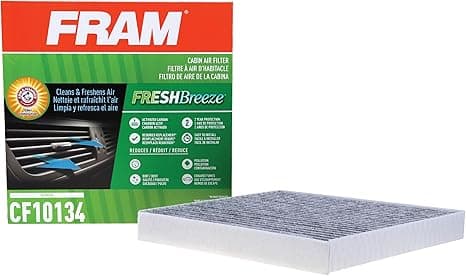
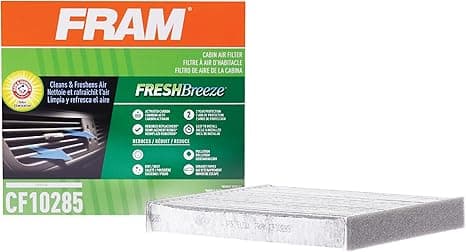
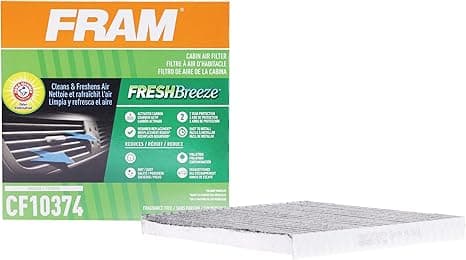
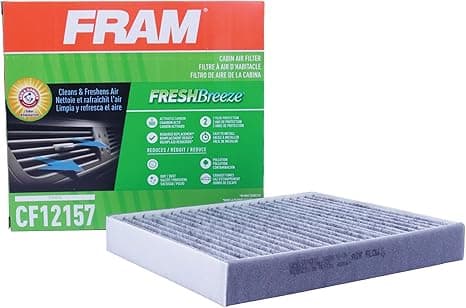
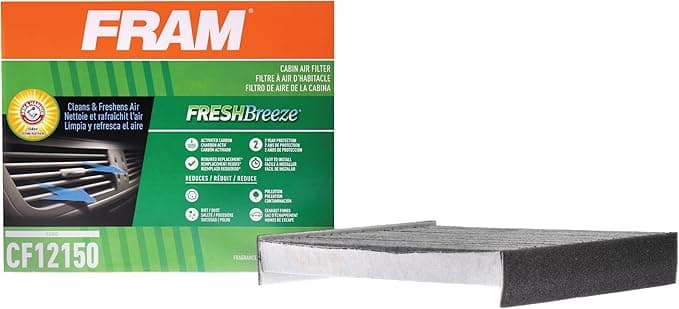
I had both boxes sitting on my kitchen counter for about a week before I actually did anything. One was the dealer-branded cabin filter the service writer quoted me for — call it $35 for the part, plus the $50 they wanted to "install" it, which is a polite way of saying open my glove box. The other was the Fram CF12150, twelve bucks and change, shipped to my door. Same dimensions. Same pleated media doing the same job. And I stood there going back and forth like an idiot, because the cheap one always feels like a trap until you've actually run one.
So I ran one. Here's what four months in my daily driver actually taught me.
The math that made me stop overthinking it
Let's just do the honest accounting. If I'd let the shop handle it, I'm out somewhere around $85 once you stack the part and the labor. The Fram CF12150 was a little over $12. Even if you assume the dealer filter is somehow a touch nicer — and I'll get to whether it is — you're paying roughly seven times the price for the privilege, and most of that gap is a guy spending five minutes behind your glove box while you sit in a waiting room drinking burnt coffee.
Cabin filters aren't a once-a-decade thing either. I swap mine about once a year, sometimes a bit sooner because I drive a lot of dusty backroad. So that price gap isn't a one-time decision. Over the life of the car you're either spending close to a hundred bucks a pop or you're spending twelve and ten minutes of your own time. That framing is what finally got me to crack the Fram box open.
Does it actually fit? Mostly yes — with one honest caveat
Install is genuinely easy, and the steps are exactly what you'd guess. Open the glove box, squeeze the sides so the stops clear and the whole box drops down. Behind it there's the rectangular housing cover. Pop that off, slide the old filter out — and brace yourself, because mine came out looking like the bottom of a vacuum bag, gray with a leaf fragment and what I'm pretty sure was half a dead moth. Then the new Fram goes in, airflow arrows pointing down toward the floor, cover back on, glove box snapped back into its stops. Five minutes, no tools, no skinned knuckles.
Now the caveat, because I promised honest. The frame on the Fram is a hair softer than the OEM unit. The dealer filter had this rigid plastic perimeter that practically clicked into the housing. The Fram's frame flexed a little as I seated it, and for a second I thought it wasn't going to sit flush. It did — it tucked into the channel fine and the cover closed without forcing — but it's not the same confidence-inspiring snap. If you're the kind of person who needs a part to feel like a precision component, this'll bug you. Functionally it sealed. Emotionally, it asked me to trust it. I did, and four months later it hasn't shifted or rattled, so the trust was earned.
How it actually performs once it's in
The first real test was a muggy week right after install. My car had developed that faint musty, gym-bag smell that creeps in when a filter's saturated and the AC is just blowing air through a damp mat of trapped gunk. New filter in, two days later, gone. Not masked, gone. The airflow out of the vents on max also got noticeably stronger — which makes sense, because the old one was so clogged it was choking the blower. That's the part people forget: a dead cabin filter doesn't just smell, it makes your AC work harder pushing air through a wall of dirt, and you feel it as weak vents on a hot day.
Filtration-wise, through a full spring of pollen and a summer of construction dust on my commute, the cabin stayed clean and my allergies were no worse than any other year. I'm not going to pretend I ran particle-count lab tests in my driveway — I didn't. But the lived experience matched what the dealer filter did the year before. Same fresh air, same clean vents, a fraction of the cost.
Where it's a touch behind OEM — the real downsides
I said I'd give you at least one real downside, and there are two worth naming.
First, the smell out of the box. For the first two or three days there was a faint plastic-and-cardboard odor when the AC first kicked on each morning. Not strong, not chemical-burn bad, but present. It aired out completely by day four and never came back. If you're sensitive to that, run the fan on fresh-air mode for the first couple drives and you'll barely notice it.
Second, the packaging and the media density. The box is cheap — thin cardboard, a little crushed on arrival, the kind of thing that makes you side-eye what's inside. And if you hold the Fram pleats up next to a premium OEM filter, the OEM media feels a touch denser and more tightly packed. Does that translate to meaningfully better filtration in normal driving? In my four months, I couldn't feel a difference. But I'll be straight with you: if you've got serious respiratory issues and you want the absolute densest media money can buy regardless of price, the top-tier OEM or a HEPA-grade cabin filter is a defensible call. For a normal person who just wants clean air and a working AC, the gap is theoretical.
Who should buy OEM instead — and why I grab this one anyway
Buy the dealer filter if you lease and you're paranoid about a service writer claiming a non-OEM part voided something (it doesn't, but I get the anxiety), or if you have a genuine medical reason to chase maximum-density media and the cost truly doesn't matter to you. For those folks, fine, pay up.
For everyone else — for me — the Fram CF12150 does the same job. It dropped my musty smell in two days, restored my vent airflow, kept the cabin clean through pollen season, and cost me twelve dollars and five minutes instead of eighty-five and an afternoon at the dealer. The slightly soft frame and the three-day break-in smell are real, and I'm telling you about them so you're not surprised. But knowing all of that, when this one wears out next year? I'm buying another Fram. I already have, actually — there's a spare in my trunk right now.