Troubleshooting & Analysis
The first one I slid in went thunk against the frame and stopped half an inch short
That's the sound I remember. Not a smooth glide — a soft cardboard thunk, because I'd shoved the compatible MERV 11 in the wrong way the first time and the airflow arrow was pointing at me instead of toward the blower. Took it back out, flipped it, and the second try it slid home flat against the back lip with that little settling give you feel when a filter actually fits the slot. Honestly that's the whole anxiety with these aftermarket ones, isn't it. You don't know until it's in your hands whether the cheap one is going to fight you.
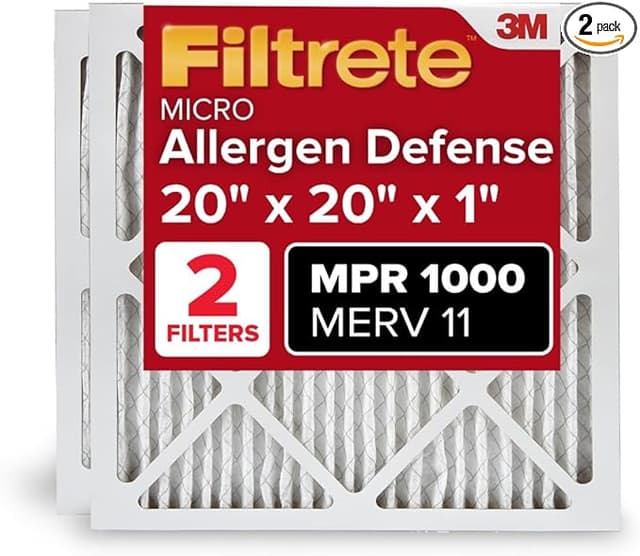
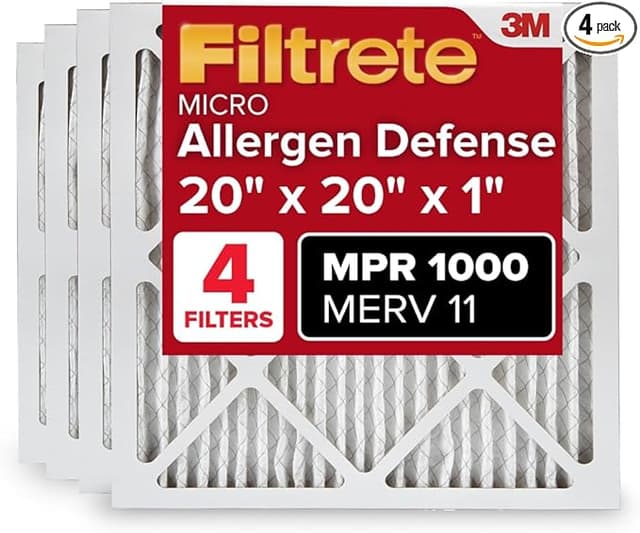
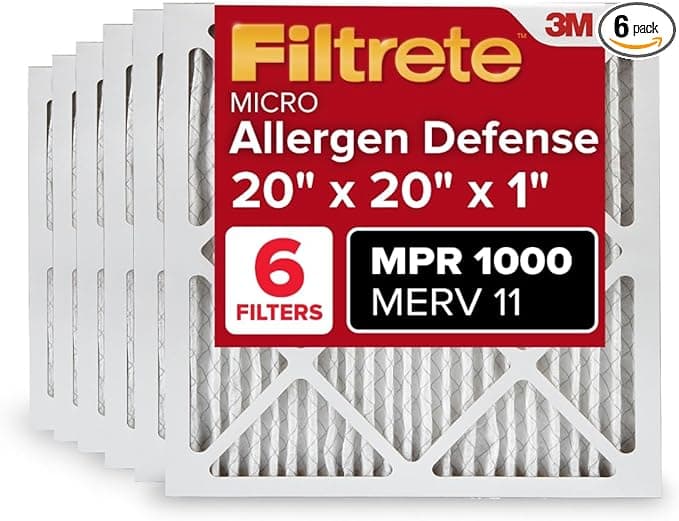
I'd been buying the name-brand Filtrete MERV 11 for years. The 20x25x1 in my return runs about $26 a filter at the big-box store, sometimes $24 on a good week, and I go through four a year — so call it a hundred bucks annually just to keep dust off my evaporator coil. The compatible pack I switched to landed at roughly $13 a filter shipped, and in a four-pack it works out closer to $11 each. That's a $13–15 gap per filter. Over a year, on one return, that's about fifty dollars I was handing over for the red box and the brand name. I have two returns. You can do that math.
What you're actually paying for with the OEM
Here's the thing I had to make peace with: MERV 11 is a rating, not a secret recipe. It means the media captures a defined chunk of particles in the 1-to-3 micron range — pollen, fine dust, mold spores, the stuff that makes my allergy spring miserable. A compatible filter that holds that rating is doing the same filtration job. The Filtrete premium is mostly the marketing, the pleat-count bragging on the sleeve, and the shelf space. For a consumable part you throw away every 90 days, paying a brand tax stings more than it does on something you keep.
So the swap itself is the easy part. Furnace off at the thermostat — I kill the breaker too, just a habit. Pull the old filter out of the return grille or the slot by the blower cabinet, and before you toss it, look at the airflow arrow printed on the side. That arrow points toward the furnace, away from the room. Wipe the slot with a dry rag because there's always a gray fuzz line where the old frame sat. New one in, same orientation, panel back on, power up. Two minutes if you're slow like me.
Where it's honestly a touch behind
Now the part a sales page won't tell you. The cardboard frame on the compatible ones is thinner. Noticeably. The OEM Filtrete frame has a beadboard stiffness to it — you can hold it by one corner and it stays rigid. These bend a little if you grab them wrong, and on the first install I creased a corner just sliding it out of the plastic wrap. It still sealed fine once it was seated, but you've got to handle them with a bit more care getting them into the slot. If your filter sits vertically in a tight blower-cabinet rack, that flex can make seating it slightly fiddlier than the stiff red one.
There was also a faint papery, glue-ish smell off the fresh media for the first day — not chemical exactly, just that boxed-warehouse smell. With the fan running it was gone by the next morning. I sniffed the supply vent in my bedroom on day two and got nothing but normal air. But if you're sensitive to that, run the fan a few hours before you decide it's fine.
And the pleats — if you count them against a side-by-side OEM, the compatible has a couple fewer folds packed in. Does it matter at the MERV 11 level? In four months of running it through a brutal pollen season and a dusty summer, I didn't measure a difference at the vents and my static pressure didn't climb early. The filter loaded up gray and even, right on the 90-day schedule, exactly like the name brand did.
Why I don't let it ride past three months
This is the one place I'd tell you not to cheap out on behavior, even if you cheap out on the filter. A MERV 11 that's caked solid doesn't just stop catching dust — it chokes the airflow your blower needs. The motor pulls harder against a clogged filter, the coil can ice over in cooling season, and now you're not looking at a $13 part, you're looking at a service call or a fried blower motor. The filter is the cheapest insurance in the whole HVAC system. Whichever one you buy, change it on time. A loose reminder on my phone every 90 days does the job.
So who should still buy the red box?
If you've got someone in the house with serious respiratory issues and your doctor told you to run a specific brand-validated media, stick with OEM — that's not a corner to cut for fifty bucks. And if your filter rack is the kind that needs a rigid frame to seat and seal properly, the stiffer name-brand body is worth the extra. Fair's fair.
Everybody else? Look — I've now run the compatible MERV 11 through a full year, two returns, four changes each. Same dust on the media, same clean vents, same allergy relief in spring. The frame's flimsier and there's a day of new-filter smell, and I genuinely don't care, because it filtered my air for about half the price. I bought another four-pack last month without thinking twice. That's the most honest verdict I can give you: it does the job, and I keep buying it.