Troubleshooting & Analysis
The whistling told me before the bill did
My furnace started making this thin whistling sound back in February — like it was sucking air through a straw. I ignored it for a week because, honestly, I ignore most house noises until they cost money. Then I pulled the 20x20x1 out of the return slot and it was gray. Not dusty-gray. Felt-gray. The kind of clog where you can press your hand flat against it and barely feel air move through. I'd left a Filtrete 20x20x1 in there for something like five months when it should've come out at three, and the blower had been straining the whole time to pull air through a wall of trapped dander and drywall dust.
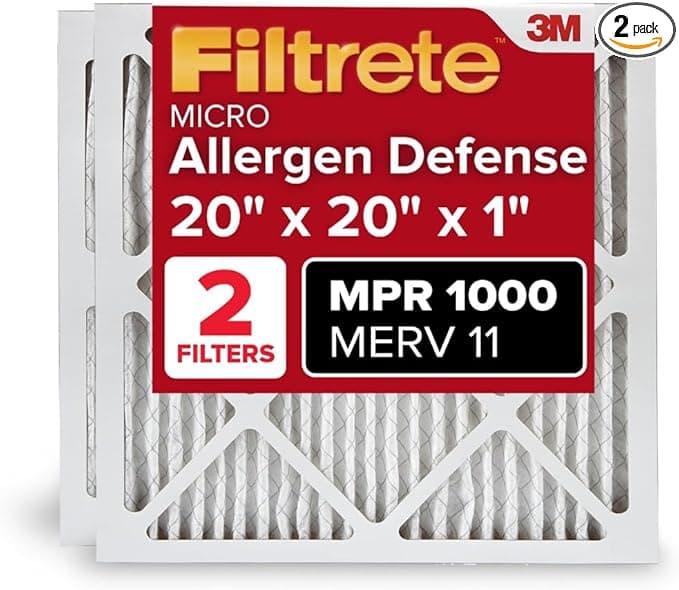
That's the moment that got me off the brand-name treadmill. Because when I went to replace it, the genuine Filtrete on the shelf was about $28 for a two-pack at the big-box store. And I burn through these things four, sometimes five times a year in a house with two shedding dogs. That math was bugging me.
What I was actually paying vs. what I pay now
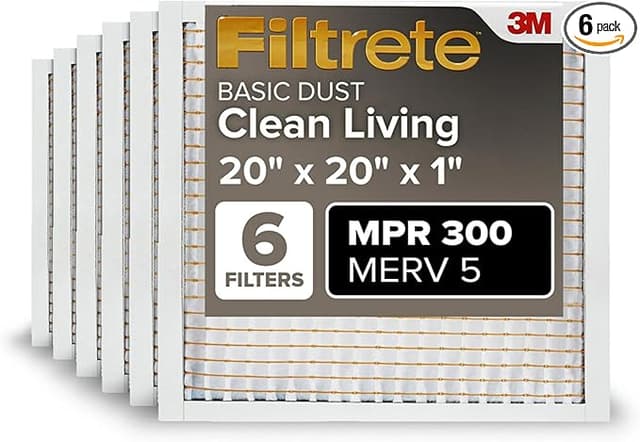
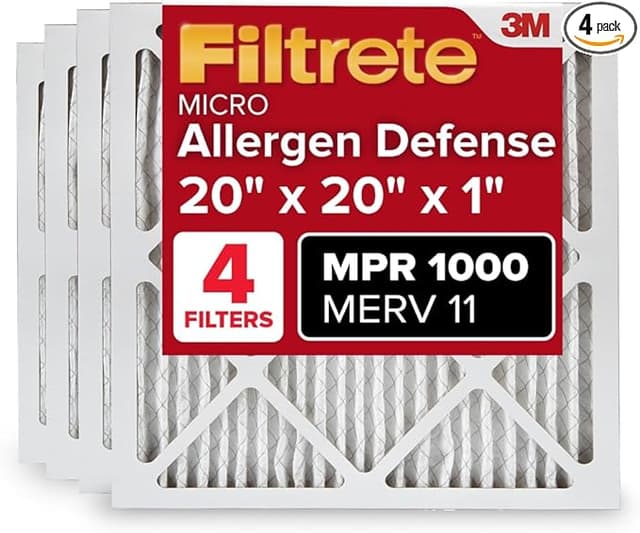
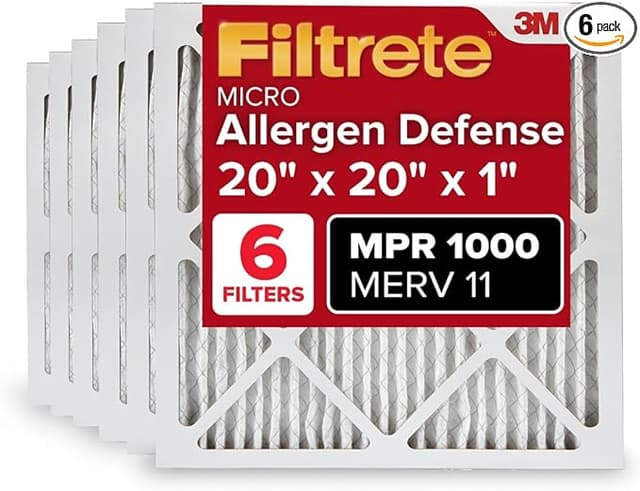
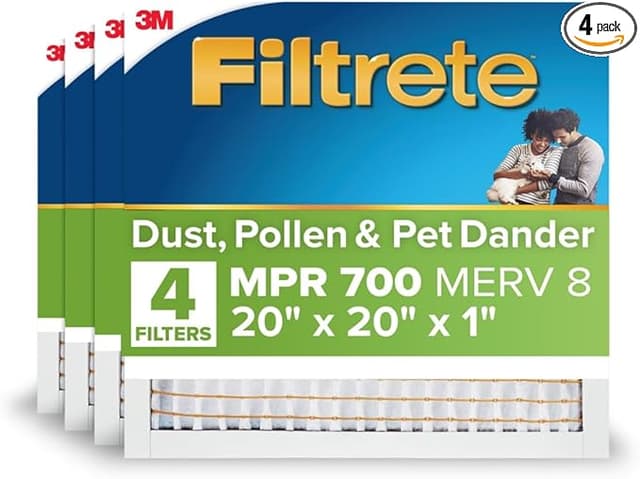
Here's the part nobody tells you: a 20x20x1 is a consumable. It's pleated polyester and a cardboard frame. The branded version isn't using some secret material — you're paying for the name printed on the edge. The compatible 20x20x1 I switched to runs around $13–16 for the same count, depending on the MERV rating I grab. On four changes a year, that's roughly $50–60 back in my pocket annually, on a part that ends up in the trash either way.
I'll be honest about why I hesitated, though. My first thought was the cheap one would shed fibers, or the pleats would collapse under suction the way a flimsy filter does. So I didn't just trust it — I ran it and watched.
Fit and install: does it actually seat?
The install itself is nothing. Cut the furnace at the switch, pull the old panel, slide the spent filter out — and pay attention to the little airflow arrow printed on the frame, because that's the one mistake people make. The arrow points toward the blower, toward the furnace, not out toward the room. Slide the new one in the same orientation, snap the panel back, flip the power. Two minutes if you're slow.
The compatible 20x20x1 seated cleanly in my return slot. Now — a real note on fit. The nominal size is 20x20x1, but actual cut is closer to 19.5 x 19.5 x 0.75, same as the branded ones; that's industry standard, not a defect. The compatible frame on mine was a hair less rigid out of the sleeve, so I gave the cardboard edges a light press to true them up before sliding it in. Took five seconds. Once it's in the slot and the panel's holding it, you can't tell the difference.
The honest performance take
Over four months in my actual furnace: airflow was strong, no whistling, no collapse, no fiber shedding that I could see on the downstream side. I pulled it at the three-month mark to check and it had loaded up evenly — gray across the whole face, not channeling air through one weak spot. That's the real test of a pleated filter, and it passed.
Where's it a touch behind the branded one? Two things, and I won't pretend otherwise:
- The pleats on mine weren't quite as deep or as tightly packed as a premium-MPR Filtrete. More pleat surface means more dust capacity before it clogs, so a genuine high-MPR filter might stretch a couple extra weeks between changes. For me that gap doesn't come close to justifying double the price, but if you change yours late anyway, the deeper pleat buys you a margin.
- The first day, there was a faint cardboard-and-plastic smell when the heat first kicked on. Mild. Gone by the second cycle. New branded filters do this too, but I noticed it slightly more here.
Why the gray-felt moment matters more than the price
The reason I won't let one of these run long anymore isn't really about the filter. A saturated 20x20x1 doesn't just stop cleaning your air — it starves the blower motor. That motor pulls harder, runs hotter, and in a bad case the heat exchanger doesn't get the airflow it's designed for. You're trading a $14 part for stress on a system that costs four figures to repair. The whistling I heard in February was the sound of my furnace working too hard. A clean filter, swapped on time, is the cheapest insurance in the house — which is exactly the argument for using one that's cheap enough that you'll never be tempted to stretch it.
Who should skip the compatible one
If someone in your house has serious asthma or allergies and you're running a high-MPR branded filter specifically for that finer capture, stay with the OEM-spec rating you trust — match the MERV/MPR number exactly and don't gamble on it. Same if you genuinely forget to change filters for half a year; the deeper-pleat branded version forgives you a little longer.
But for a normal house with normal dust and an owner who'll actually swap it on schedule? I've run the compatible 20x20x1 through a full winter now. It seated right, it loaded evenly, it didn't shed, and it saved me real money on a part that's going in the bin in three months regardless. I bought it again the next cycle — and the one after that. Look, it's a cardboard frame and some pleated cloth doing one job. This one does the job. I'd rather keep the fifty bucks.