Troubleshooting & Analysis
The night the furnace started screaming
It was a Tuesday in February, maybe 11 p.m., and the furnace in my basement made a sound I'd never heard it make — a kind of low straining whine, like it was working twice as hard to pull air. I went down in socks, popped the filter slot, and slid out a 20x20x1 that had gone from white to the color of a coffee filter someone had used for a week. Gray-brown, fuzzy, sagging in the middle. I held it up to the basement light and could barely see the bulb through it. That filter had been in there since — honestly, I'd lost track. October? The blower had been fighting that clog for months, and I'd been wondering why the upstairs bedrooms never quite got warm.
That's the thing nobody tells you about a 20x20x1 going bad. It doesn't fail loud at first. It just slowly chokes your system, and your furnace pulls harder and harder against a wall of trapped dust until something gives. In my case I got lucky — a whine and a power bill that had crept up about eleven bucks a month without me noticing. Other people get a cracked heat exchanger or a blower motor that burns out. A new blower motor runs four to six hundred dollars installed. A filter is supposed to prevent exactly that, and mine had quietly become the problem instead.
So I stopped buying them one at a time
Here's what changed how I do this. I used to grab a single name-brand 20x20x1 at the hardware store for around fourteen, fifteen dollars whenever I remembered — which, see above, wasn't often. The reason I forgot is the same reason it cost me: buying one filter at a time means there's never a spare sitting on the shelf reminding you. Out of sight, dead furnace.
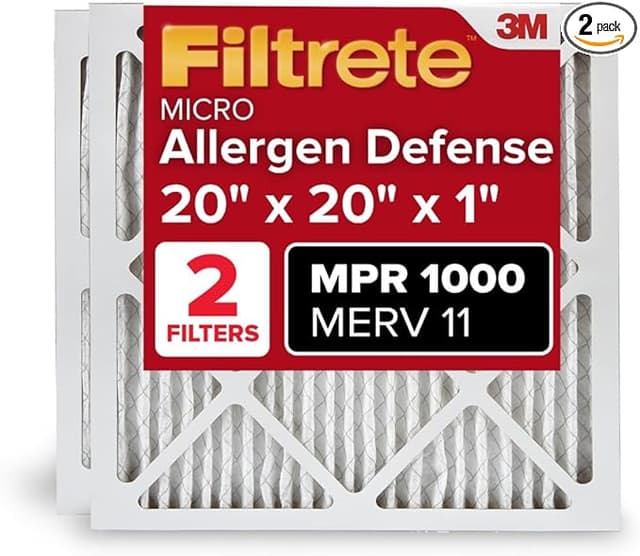
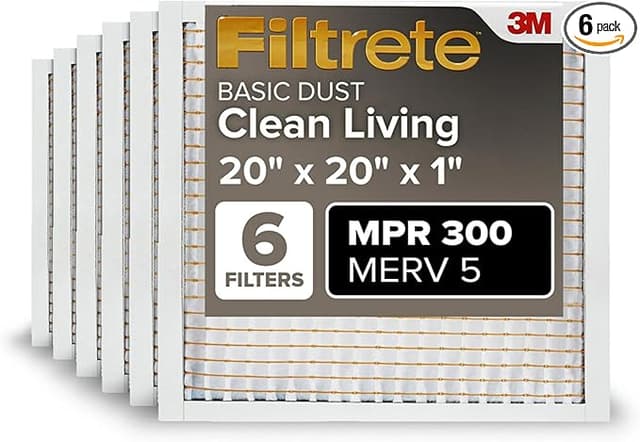
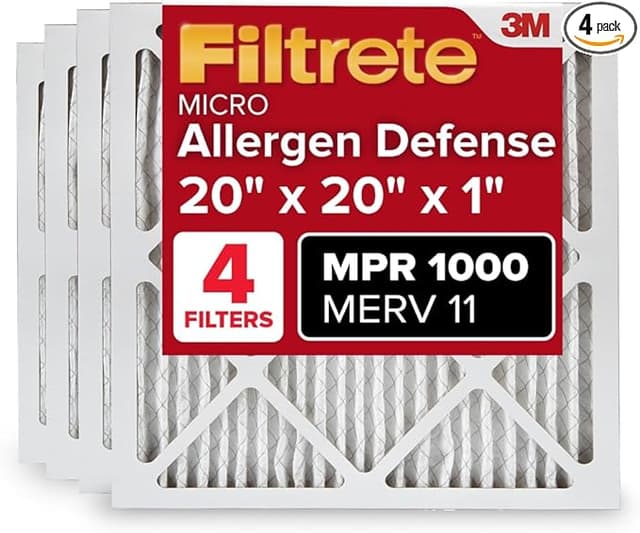
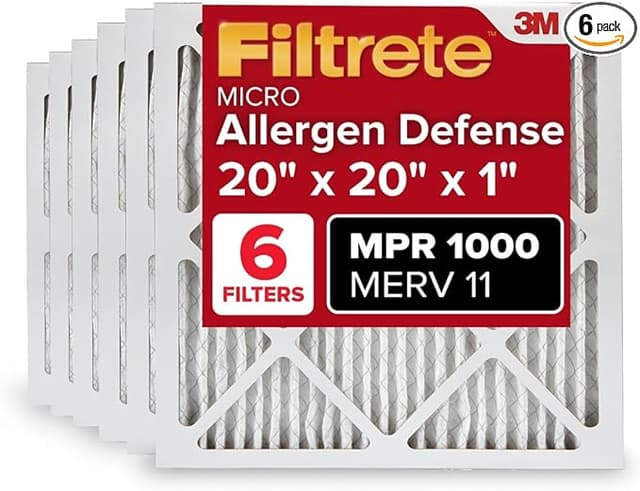
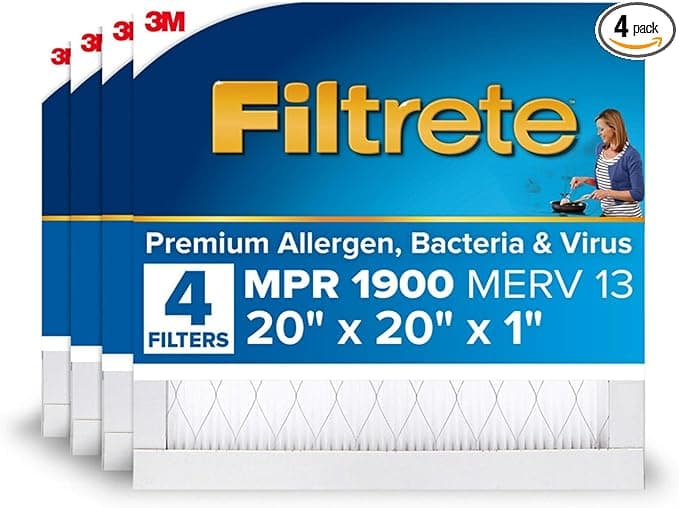
The Filtrete 20x20x1 multipack fixed the forgetting more than anything. I bought a six-pack and the per-filter price dropped to somewhere around nine dollars each depending on the MERV rating — versus the fourteen-plus I was paying for singles, and versus the genuinely silly $18-20 some big-box stores want for one premium filter at the end of an aisle. On six filters that's a real gap. Call it thirty, forty dollars a year back in my pocket, and I'm a guy who notices forty dollars.
The standard size helps too. 20x20x1 is one of the most common returns-grille sizes in American homes, so you're not hunting for some oddball cut. Measure the old one first, though — and measure the actual filter, not the printed size, because nominal "20x20" filters usually come out closer to 19.75 inches on each side. Mine slid into the slot with about the right amount of play. Snug, not jammed.
Installing it — there's basically nothing to it, but do the arrow thing
I shut the system off at the thermostat first. Always. You don't want the blower yanking on a half-seated filter. Then I pulled the old gray horror out, and slid the new one in with the airflow arrows printed on the cardboard frame pointing toward the furnace — toward the blower, the direction the air travels. People get this backwards constantly and then wonder why it doesn't last. The arrow goes the way the air goes. Took me maybe forty seconds, no tools, and the cardboard edge was stiff enough that it didn't fold on me going in, which the really cheap off-brands sometimes do.
The honest part: where it's a little behind, and the downside
I'll be straight with you. The pleats on these compress a touch faster than the heaviest-duty premium filter I've tried — if you've got three shedding dogs and a contractor sanding drywall, you might find yourself swapping a touch sooner than the box's optimistic 90-day claim. In my house I get a comfortable two to three months out of one before it's visibly loaded. Not the full three on the higher-MERV ones.
And here's the real downside, the one I'd want a friend to tell me: a higher-MERV filter is denser, and a dense filter in an older, weaker furnace can actually restrict airflow more than that tired system likes. If your unit is on the geriatric side, jumping to a high-MERV pleat can make it strain — which is the exact problem I started this whole story complaining about. For most modern systems it's a non-issue. For an old one, step down a MERV grade rather than buying the densest filter on the shelf. The multipack lets you do that cheaply without committing to a whole expensive box you might regret.
The packaging, by the way, is nothing to write home about — a shrink-wrapped brick of cardboard frames, no frills. Fine by me. I'm not framing it.
Who should skip it, and why I keep buying it anyway
If you run a hospital-grade allergy household, or someone in the house has serious respiratory issues and your HVAC pro spec'd a particular high-end media filter, listen to them, not me. There are situations where the top-shelf option earns its price.
For everyone else — a normal house, a normal furnace, a normal amount of dust and pet hair — I've run the Filtrete 20x20x1 multipack through a full winter and a summer of AC, and it did the job the expensive singles did for noticeably less money, with the bonus that having five spares on the shelf means I actually change it on time now. That's the part that saved my furnace, more than any spec on the box. I keep a marker by the slot and write the date on the cardboard edge when I swap it. Cheap insurance.
Would I buy it again? I already did. There's a fresh six-pack sitting on the basement shelf right now, and the date's written on the one in the furnace.