Troubleshooting & Analysis
The first sign was the smell. Not a strong one — just this faint, swampy mustiness that crept in every time I cranked the AC at a red light. I ignored it for a week, blamed it on a gym bag I'd left in the back. Then on a humid morning the defroster fogged the windshield slower than it should have, and the air coming out of the vents felt... weak. Like the fan was trying but something was choking it. That's when I pulled the cabin filter out of my Lexus and got the answer. The thing was gray-brown, packed with leaf bits and a film of road grime, and one corner had gone slightly damp. It had basically turned into a sponge for everything I'd been breathing for the last 18 months.
So I needed a new one. And here's where the annoyance started.
The OEM markup is real, and the dealer wants more on top
I called the dealer first, out of habit. They quoted me for the genuine cabin filter plus the labor to install it. The filter alone was already painful, and then there's the mechanic's fee — figure around $50 just to have someone open the glove box and swap a rectangle of pleated paper. Fifty dollars. For a job that, as I'd later find out, takes five minutes and zero tools.
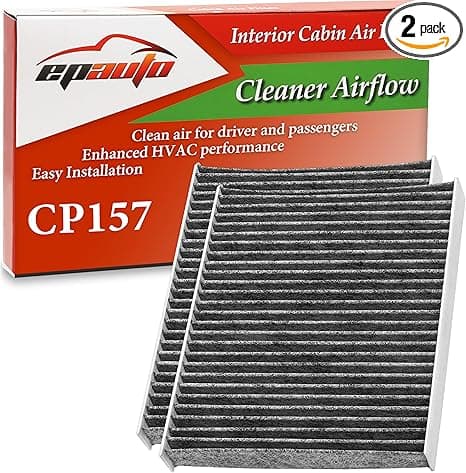
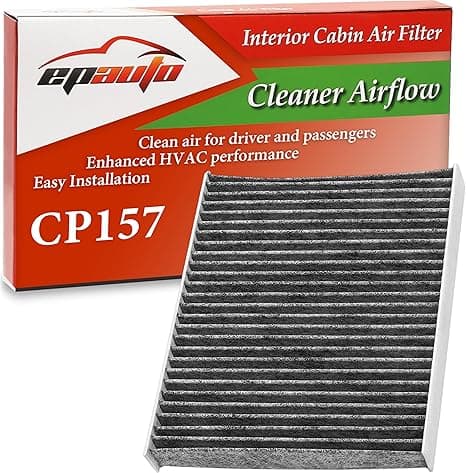
I'd already pulled the old filter, so I knew exactly what I was dealing with: a CF12436-type cabin air filter for the UX250/UX300. I went looking for a compatible one and landed on the EPAuto CP157. It cross-references to the same fitment, and it ran a fraction of what the genuine part-plus-labor route was going to cost me. The honest math: over the life of the car, swapping this yourself once a year instead of paying the shop is the kind of thing that quietly adds up to a few hundred bucks you just... keep.
I'll be straight — "compatible cabin filter" is exactly the category where I'm most skeptical. A water filter that's a little off worries me about my health. A cabin filter that's a little off, I figured, would either not fit or whistle or let dust through. So I went in expecting to be disappointed.
Does the CP157 actually fit? Yes — annoyingly well
The install is genuinely a five-minute job and you don't need anything but your hands. Open the glove box, then squeeze the sides in to release the stops so the box drops all the way down. Behind it you'll see the filter housing cover. Pop that off, slide the old filthy filter straight out, and slide the new one in — and pay attention to this part — with the airflow arrows pointing down. EPAuto prints the arrows right on the frame, which I appreciated, because getting it backward kills the whole point.
The CP157 seated cleanly the first time. No forcing, no shaving foam edges, no fighting the cover back on. If I'm nit-picking — and I always am — the plastic frame felt a hair less rigid than the genuine one I pulled out. The OEM frame has this dense, almost over-engineered stiffness. The EPAuto flexes a tiny bit more when you hold it by one end. In the housing, though? Couldn't tell the difference. It locked in, the cover snapped shut, the glove box went back up, done.
The performance, honestly
The musty smell was gone by the next drive. Not masked — gone. The airflow came back to full strength too; that choked, weak-fan feeling I'd gotten used to disappeared, and I hadn't even realized how much it had degraded until it was fixed. Driving past the usual diesel truck on my commute, the cabin stayed noticeably cleaner-feeling. For pollen season and general road dust and exhaust, this filter does the job I needed it to do, full stop.
Where's it a touch behind OEM? If I'm being a skeptic about it — the genuine Lexus filter has a slightly denser carbon-and-media layer, and I'd believe it holds up marginally longer at the very end of its life and knocks down the harshest odors a touch better on day one. We're talking small margins. For 95% of driving, you will not perceive a difference. But I'm not going to pretend the media is identical, because it isn't quite.
The real downsides — and there's more than one
First: the break-in smell. For the first two or three days there was a faint plastic-and-new-cardboard odor when the AC first kicked on cold. Not chemical, not headache-inducing, just... new. It aired out completely by day four and I haven't smelled it since. But if you swap this and immediately think "wait, did I make a mistake," give it 72 hours before you judge.
Second: the packaging is cheap. It showed up in a thin plastic sleeve, and one corner of the pleating had a slight crease from shipping. It didn't affect the fit or the seal at all — pleats flex back — but next to the genuine part's boxed, foam-cornered presentation, it looks like what it is: a budget product. If you need the unboxing to feel premium, this isn't that.
Third — and this is more a "manage your expectations" than a flaw — don't expect it to last forever just because it's cheaper. I'd rather you swap a cheap filter every 12 months than stretch an OEM one to two years to justify the price. The whole advantage here is that it's cheap enough to replace on schedule without flinching.
Why a dead cabin filter is worth caring about
It's easy to treat this as a comfort thing — bad smell, swap it, whatever. But a clogged cabin filter doesn't just stink. It restricts airflow, which means your blower motor and AC system are working harder to push air through a brick of compacted dust. That's extra strain on parts that cost real money. And in the meantime, every weak puff coming out of your vents is dragging road dust and exhaust particulates straight into the space where you breathe for an hour a day. Mine had quietly gotten bad over 18 months and I'd just... adapted to it. Don't do that.
So who should buy what
If your UX is leased, you're meticulous about genuine-only parts for resale, or you simply want the marginally denser OEM media and the nicer box — buy the Lexus filter and don't think twice. That's a legitimate choice.
For everyone else? I put the EPAuto CP157 in my own car. It fit right, it killed the smell, it restored the airflow, and it cost me a fraction of the dealer's filter-plus-$50-labor quote — for a job I did myself in the driveway in five minutes. The frame's a touch less stiff and the packaging's cheap and it smells new for three days. None of that mattered a week later. I'll buy it again next year, and I'll do it without calling the dealer at all.