Troubleshooting & Analysis
The exact second I almost handed over fifty bucks
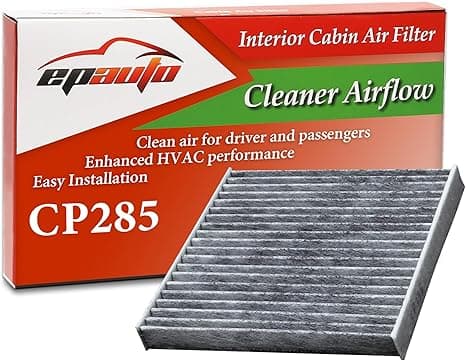
I was standing at the parts counter with my phone out, comparing two listings side by side. The dealer cabin filter for my LS600 — the AJ000/GS460 housing, same part across all three — wanted right around $58 once you counted shipping. The EPAuto CP285 sitting in my cart was $19. Same fold count, near enough, same activated carbon claim, fits the same slot. And I just stood there. Because that gap felt too big to be real. A forty-dollar spread on a folded sheet of pleated paper? Somebody's lying, and I figured it was the cheap one.
I bought the EPAuto anyway. I've now run two of them through that car — call it fourteen months total — and I want to tell you exactly what I got for saving that money, including the parts that annoyed me.
The math that actually matters
Cabin filters aren't a once-and-done thing. You're swapping them every 12,000 to 15,000 miles, or once a year if you drive less, sooner if you sit in traffic or live somewhere dusty. So the real comparison isn't $19 versus $58 one time. It's that number repeating for as long as you own the car.
I drive enough to do this yearly. Over five years that's the difference between roughly $95 and roughly $290 — call it a two-hundred-dollar swing on a single small part you forget exists most of the time. And that's before the part I find most irritating about the OEM route: a lot of shops will "remind" you about your cabin filter during an oil change and tack a $50 labor fee onto a job that takes five minutes. I've watched a service writer quote me that with a straight face. The filter swap is genuinely one of the easiest things you can do to your own car, and paying someone fifty dollars to open your glove box is how you end up resenting your mechanic.
Does it actually fit, though
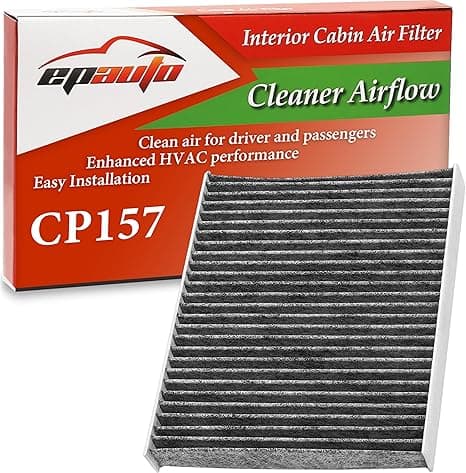
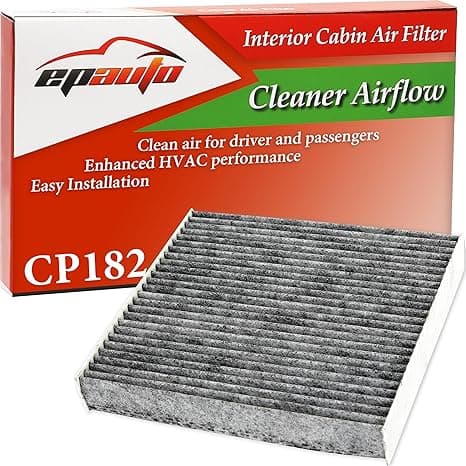
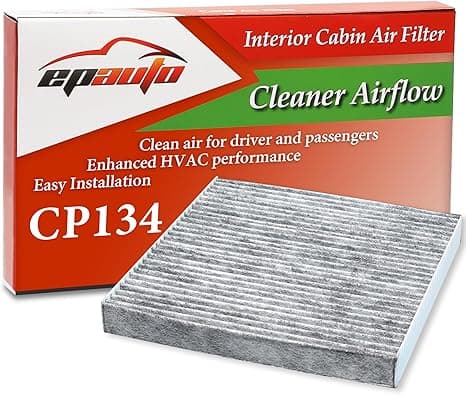
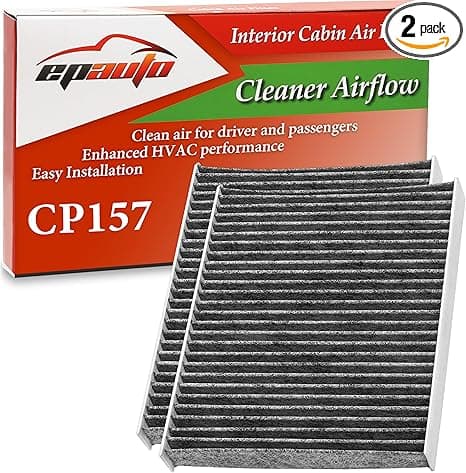
This is the part I was nervous about, because a filter that's a couple millimeters off is worse than useless — it lets unfiltered air sneak around the edges. Here's the honest version. You drop the glove box, squeeze the side stops so it swings all the way down, and there's the filter cover behind it. Pop that, slide the old gray-brown filter out, and slide the CP285 in with the airflow arrows pointing down. That's it. Maybe five minutes the first time, three once you've done it.
The CP285 seated correctly. The arrows are printed clearly on the frame, which matters more than it sounds, because installing one of these upside down is the single most common mistake and it quietly tanks your airflow. It clicked into the channel and the cover snapped back over it without me fighting anything.
But — and here's my first real gripe — the frame is a touch softer than the dealer part. The OEM filter has a rigid, almost stiff cardboard-and-plastic edge that holds its shape when you handle it. The EPAuto frame flexes a little more in your hand. It does not affect the fit once it's in the housing; the slot holds it square. It just means you should slide it in flat and not bend it, because if you get sloppy and crease a corner, that's on you, not the filter.
How it actually performs
The reason I went looking in the first place was the smell. My car had picked up that damp, slightly sour gym-bag odor that means the old filter is loaded and probably holding moisture. A clogged cabin filter doesn't just stink — it chokes the airflow, so your fan works harder, your defrost gets lazy, and on a humid morning your windshield takes forever to clear because the system can't move enough air.
The CP285 fixed the airflow part immediately. First drive after the swap, fan on the same setting, noticeably more push out of the vents. That musty smell was gone within a day. The activated carbon layer does what it's supposed to with traffic funk too — I commute behind diesel pickups and the cabin doesn't fill with exhaust the way it did on the worn-out filter.
Where is it a touch behind the dealer part? Honestly, on longevity at the very end of its life. My read, watching two of them, is that the EPAuto loads up and starts losing airflow maybe a thousand miles sooner than the OEM did at the tail end of its interval. It's marginal. But if you're the kind of person who pushes a filter to 16,000 miles, you'll feel the cheaper one give up a little earlier. The fix is just swapping it on schedule — which, at this price, you can afford to do without flinching.
The downsides, said plainly
So you know what you're getting. One: there's a faint plastic-and-glue smell from the new filter for the first two or three days. Run your fan on fresh-air, not recirculate, for a couple of drives and it clears out. It's the off-gassing of a brand-new part, not a defect, but it's there and I'd rather you not panic about it.
Two: the packaging is cheap. It shows up in a thin plastic sleeve, sometimes with a slightly bent corner from shipping. The filter inside was fine every time, but it doesn't have that boxed, official feel the dealer part does. If a pristine box matters to you, this'll bug you.
Three, the one I already mentioned: softer frame. Handle it flat, don't crease it, and it's a non-issue.
Who should skip this — and what I actually do
If your car is under warranty and you're worried about a dealer giving you grief over a non-OEM part during a climate-system claim, just buy the dealer filter and keep the receipt. The peace of a clean warranty record is worth $58 to some people. Same if you keep a car ten years and want every single part factory — that's a legitimate way to own a car.
For everyone else? I've stood at that counter twice now and made the same call both times. The CP285 fits right, kills the musty smell, moves air like it should, and costs about a third of the dealer part. The frame's a little soft and it smells like new plastic for a couple days. Those are the trade-offs. For roughly forty dollars saved every single time I do this — a job I do myself in five minutes — I grab the EPAuto. And I will again the next time my vents start smelling like a gym bag.