Troubleshooting & Analysis
I didn't believe a $20 cabin filter could be fine. I bought one to prove myself right.
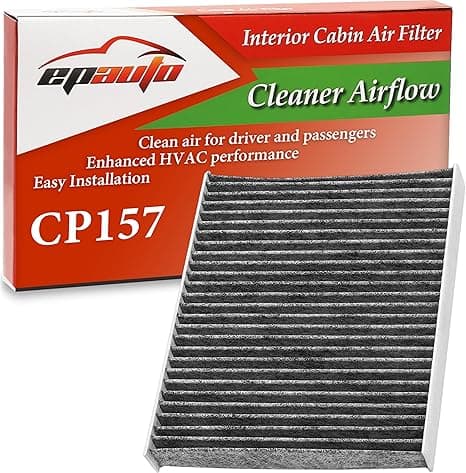
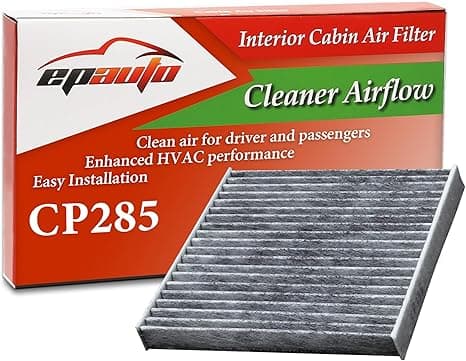
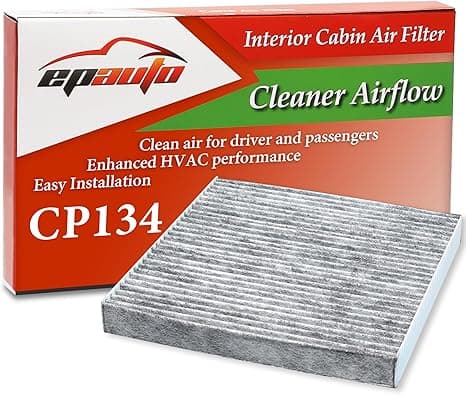
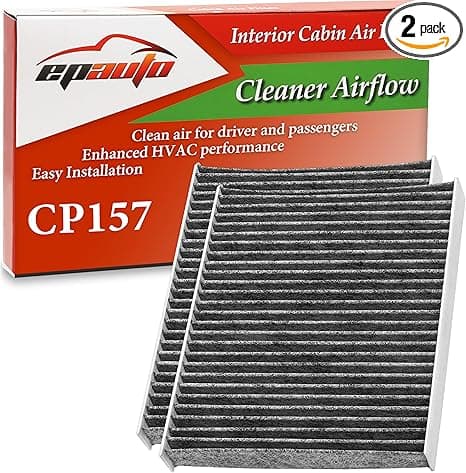
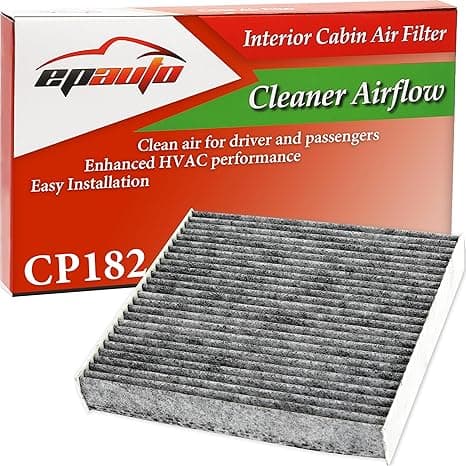
Here's the thing — I'd been buying the dealer-branded cabin filter for years, paying whatever they asked, half because I assumed the cheap ones on the internet were garbage. Thin foam, wrong size, would let dust straight through. That was my mental model. So when my AC started smelling like a damp gym bag and the airflow felt weak on max, I figured I'd settle it once and for all. I ordered the EPAuto CP182 — the compatible one for the CP135/CP182/CF11182 fit — specifically expecting to write it off as a lesson in why you don't buy the $20 filter.
I was wrong. And it kind of annoyed me how wrong I was.
The price gap that started the whole thing
Let me give you the real math, because that's what actually matters when you're standing there deciding. The OEM-style cabin filter at a shop, with the mechanic doing it, runs you the part plus roughly a $50 labor fee just for them to open your glove box and swap it. Fifty dollars. For a five-minute job. The EPAuto CP182 is around $20 and you do it yourself with no tools. So you're not comparing a $20 filter to a $40 filter — you're comparing $20-out-the-door to a part-plus-$50-fee, every single time you replace it.
And you replace it more than you'd think. Most people should swap a cabin filter every 12,000 to 15,000 miles, or once a year if you drive in dusty areas or sit in a lot of traffic eating other cars' exhaust. So that "$50 mechanic fee" isn't a one-time thing. It's a yearly tax on something you can do during a podcast episode in your driveway.
Does it actually fit? (This was my real worry)
This is where I expected the cheap one to fall apart. It didn't. The job is genuinely simple: open the glove box, squeeze the sides to release the stops so the box drops all the way down, and you'll see the rectangular filter housing cover behind it. Pop that, slide the old filter out — and honestly, looking at what came out of mine was the gross-but-satisfying part. Mine was gray-brown, packed with leaf bits and a dead something I'd rather not identify. That's what I'd been breathing.
The EPAuto slides into the same slot. There are little airflow arrows printed on the frame, and they point down on this install — get that right, it matters for how the filter seats and flows. The frame snapped into the housing with a real click. No forcing, no trimming, no "well it's close enough." It sat flush, the cover clipped back, the glove box went back up on its stops. Five minutes, no tools, no $50.
Where it's honestly a notch behind OEM
Okay, here's the part the fake reviews skip. It's not identical to the dealer filter, and I'd be lying if I said it was.
First: the smell. For the first two or three days there's a faint plastic-and-cardboard odor when the fan's on high. Not chemical, not alarming — more like a new shower curtain. It aired out completely by about day four and I haven't noticed it since, but if you're sensitive to that, run your vents on fresh air for the first couple drives and it clears faster.
Second: the frame. Look closely and the molded plastic edge is a hair less rigid than the OEM frame. It's the kind of thing you only notice if you're holding both side by side, which I was, because I'm exactly that petty. In the housing it makes zero functional difference — it seated tight and didn't rattle over speed bumps — but it's where they shaved the cost. The packaging's cheap too. Thin plastic sleeve, no fancy box. Doesn't affect the filter, but it tells you where your $20 went, and where it didn't.
Third, and this is the fair one: I don't have a lab, so I can't hand you a particulate-capture percentage versus OEM. What I can tell you is that the musty smell in my cabin was gone the same day, the airflow on max came back to where it should be, and after four months and a dusty road trip it's still pulling clean. Subjectively it's doing the OEM's job. If you need a HEPA-grade carbon-activated filter for serious allergies, that's a different (pricier) product category entirely — but as a like-for-like swap for the standard cabin filter, it held up.
Why a dead filter is worth caring about
Quick reality check on why you don't just leave the old one in. A clogged cabin filter doesn't only smell bad — it chokes the airflow your blower motor has to push against. That strains the motor and makes your AC work harder for weaker results, which you feel as that sad, weak vent flow in summer. And the air it does push through a saturated filter is carrying the road dust, pollen, and exhaust it can no longer trap. You're breathing that, especially in traffic. Swapping it is cheap insurance for both your lungs and your blower.
So who should skip this — and what I actually do now
If your car's still under a warranty that genuinely requires OEM parts for the cabin filter, or you've got severe allergies and want a specialized carbon filter, go OEM — no argument. And if the idea of dropping your glove box makes you nervous, paying the shop once to show you isn't crazy.
But for everyone else? I went in trying to prove the $20 filter was junk and walked away ordering a second one to keep in the garage for next year. It fit, it clicked in, it killed the musty smell, and it saved me the $50 fee on a job that took me less time than waiting at the dealer's service desk. The plastic smell faded, the cheap packaging went in the recycling, and the filter just quietly did its job. For twenty bucks, doing the same work, I'd buy it again — and I already have.