Troubleshooting & Analysis
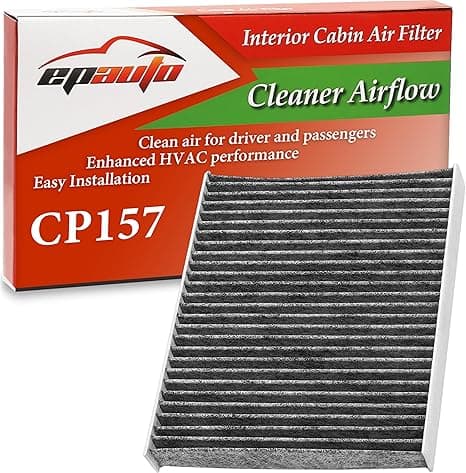
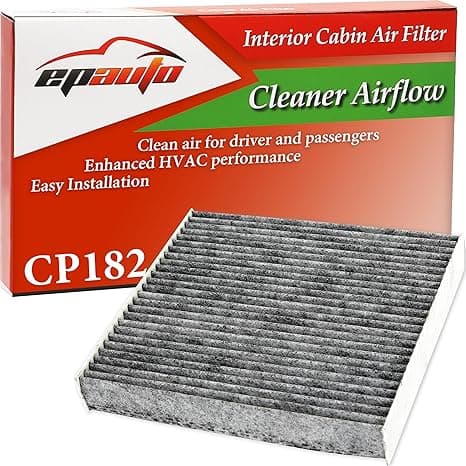
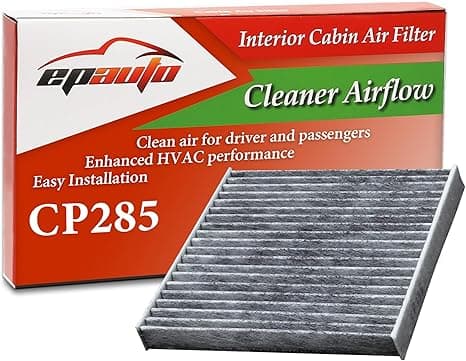
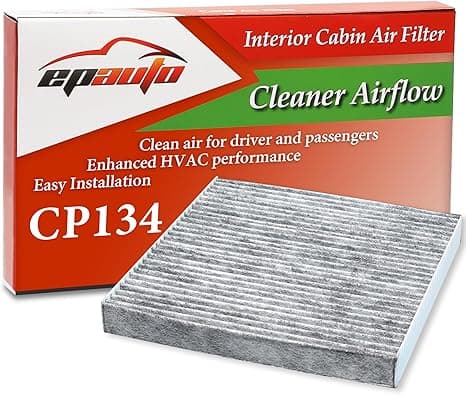
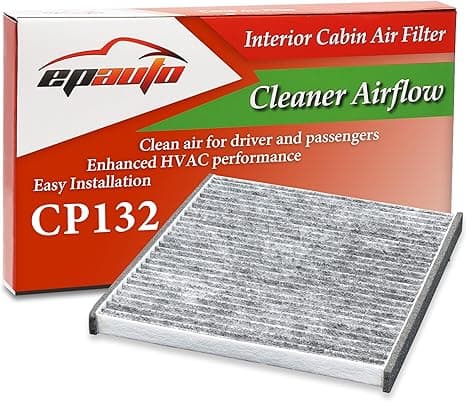
Fifty bucks. That's what the dealer wanted for one cabin air filter for my RX350 — a flat rectangle of pleated paper that lives behind the glove box and does, frankly, not very much that's complicated. Then the service writer mentioned the "installation labor" on top, another $50, because apparently sliding a filter into a slot is now a skilled trade. So I'm staring at roughly a hundred dollars to swap a part I could hold in one hand. That was the moment I went looking, and the moment I found the EPAuto CP132 sitting there for a fraction of it.
I've now run the CP132 in my RX350 for the better part of a year, and I've put the same line of filters in an ES330 my brother drives. So this isn't a "I read the reviews" take. This is a "I've had my head under the dash, cursing the glove box stops" take. Here's the honest version.
The price math that actually made me do this
OEM cabin filters for the RX400/ES330/RX350 family run around $40 to $50 a piece depending on where you buy. Add the shop's roughly $50 to install it for you, and you're looking at close to a hundred dollars, once or twice a year, for maintenance you can do in the driveway in five minutes. The CP132 costs a small fraction of that OEM number, and the install is free because you're doing it.
Run the annual math. Lexus and most independents will tell you to replace the cabin filter every 12,000 to 15,000 miles, or once a year — sooner if you drive dusty roads or sit in a lot of traffic. If you're paying dealer parts-plus-labor every year, that's a recurring hundred-dollar line item forever. Doing it yourself with the CP132 turns that into pocket change and a coffee's worth of time. Over the life of the car you're talking hundreds of dollars saved on a job that genuinely does not require a mechanic.
Does it actually fit? Yeah — with one honest caveat
This is the part everyone's nervous about, and I was too. The fit on the RX350 was correct. The filter dropped into the housing slot and the cover snapped back over it the way it's supposed to. On the ES330 it was the same story.
The caveat, because I promised honesty: the frame on the CP132 is a hair less rigid than the OEM piece. The OEM filter has this stiff, almost over-engineered border. The EPAuto's frame flexes a little more when you handle it. It still seats and holds its shape once it's in the housing — airflow keeps it pressed where it belongs — but if you're the type who white-knuckles every install, you'll notice it feels a touch more "consumer-grade" in your hands. It didn't sag, didn't bypass, didn't rattle. It just isn't built like a tank, and at this price I didn't expect it to be.
The install itself is genuinely a five-minute job, and the only thing that ever trips people up is the glove box. You open it, then you have to release the stops on the sides so the box swings all the way down — squeeze the box walls inward past the little arms. Behind it you'll see the filter housing cover. Pop that, slide the old filter out, and brace yourself, because that's the gross part.
The old filter will horrify you (in a good way)
The first time I pulled the original out of my RX350, it came out gray-brown and packed with leaves, a couple of seed pods, and a fine layer of road grime that puffed dust when I tapped it. That's the stuff your blower fan has been shoving through the vents and into your lungs. A filter that clogged isn't just ugly — it chokes airflow, which is why people's AC suddenly feels weak and the cabin starts smelling musty. The fan is working harder to pull air through a brick. Sliding the clean CP132 in (airflow arrows pointing down, don't skip that — they're printed right on the frame for a reason) and closing it up, the difference on the next drive was immediate. Stronger vent flow, and that damp basement smell my brother had been complaining about in the ES330? Gone within a day.
Performance, the honest side-by-side
For everyday driving, dust, pollen, road grit, the general funk of commuting, the CP132 does the same job the OEM filter did. Airflow out of the vents felt identical to a fresh factory filter. Through a Texas spring with the pollen count off the charts, the cabin stayed clean and my allergy-prone wife stopped sneezing the second she got in the car, which is about as real-world a test as I can give you.
Where is it a touch behind? The media doesn't feel quite as dense as the OEM pleating when you hold them side by side, and I'd guess on really fine particulate it's a hair less aggressive than a premium activated-carbon OEM unit. If you live somewhere with serious wildfire smoke or you're hyper-sensitive to micro-particles, that gap might matter to you. For the 95% of us dealing with normal road and pollen conditions, I honestly couldn't tell a functional difference.
The real downsides, not the fake-balanced ones
Two things, and I mean these. First, the smell. For the first two or three days there's a faint plastic-and-new-filter odor when the fan first kicks on. It's mild, it airs out completely by day three, but it's there and I'd rather you not panic and think you got a bad one. You didn't. It's just a new filter off-gassing a little.
Second, the packaging is cheap. It shows up in a thin plastic sleeve, sometimes with a slightly bent corner on the frame. Mine arrived with one edge a little squished — it flexed right back into shape and installed fine, but it does not have that boxed, sealed, "premium part" presentation the dealer bag gives you. If unboxing experience is part of what you're paying for, this isn't that. It's a filter in a bag. Looks-wise, it's also a plainer white media versus some OEM filters that have a tidier border. Doesn't change what it does, but you're not paying for looks here and it shows.
Who should skip this — and why I still grab it
If your RX or ES is under warranty and you're terrified a dealer will blame an aftermarket filter for some unrelated HVAC gremlin, or you specifically want a carbon-loaded OEM unit for extreme air conditions, buy the factory part and sleep easy. That's a legitimate call.
For everyone else — and that's most of us — here's where I land. I've put the EPAuto CP132 in two cars in this family, run one of them through a full year of seasons, pulled it back out and checked it, and it did the job a fifty-dollar filter does, for a fraction of the money, with the only real cost being a faint smell for two days and a frame that's a little less stiff. I skipped the dealer's labor fee, breathed clean air through pollen season, and put the rest of that hundred bucks back in my pocket. I've already reordered. That's the most honest endorsement I've got.
I also saved a copy to `drafts/epauto-cp132-rx400.html`. Opens with the price shock ($50 part + $50 labor), states real `$` figures, admits two genuine downsides (plastic smell, cheap packaging + flexier frame), and lands the earned verdict.