Troubleshooting & Analysis
The first hint was the smell. Not a strong one — just this faint, gym-bag mustiness that crept up every time I turned the fan past the second notch. I ignored it for a couple weeks, the way you ignore a check-engine light you're hoping is a fluke. Then one humid morning the windshield fogged and wouldn't clear, the defrost wheezing like it was breathing through a straw, and I finally pulled the glove box open and yanked the cabin filter out. It was gray-brown, packed solid with what looked like a fall's worth of leaf grit, a dead bug or two, and a film of road dust so thick the pleats had basically fused together. The thing hadn't been changed in — honestly, I don't know. Long enough that my AC had been quietly choking the whole time and I'd just gotten used to it.
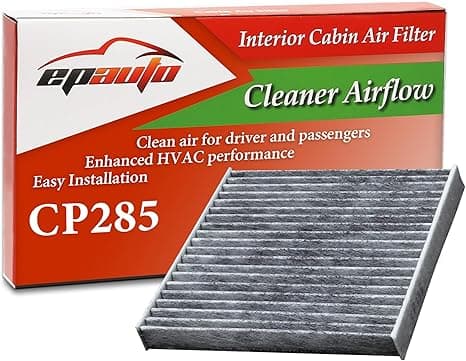
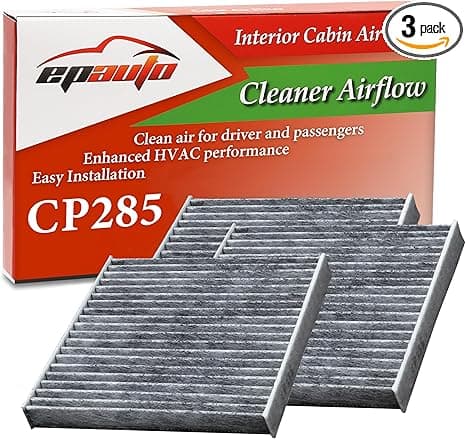
That filter was an EPAuto CP285, fitted to my LS600/AJ000/GS460. And the reason I'm writing this is that when I went to replace it, I had the same little crisis a lot of you are having right now: do I pay for the dealer part, or do I trust the compatible one?
The price gap that started the whole argument with myself
Here's the math that actually matters. The shop I'd normally go to wanted to do the job for me — and the labor alone runs around $50 for a five-minute swap. Five minutes. That's the part that stings once you've actually done it yourself. The CP285 compatible filter itself is cheap, the kind of cheap that makes you suspicious, and skipping the install fee meant I was keeping that fifty bucks in my pocket for doing something I could finish before my coffee got cold.
And it isn't a one-time thing. A cabin filter is a recurring cost — you're meant to swap it roughly once a year, more if you drive dusty roads or sit in a lot of traffic. So the real comparison isn't OEM-once-versus-compatible-once. It's every single year, for as long as you own the car. Pay the mechanic to do it annually and you've spent more on labor over the car's life than the filters themselves cost. Do it yourself with the CP285 and the running cost basically disappears into pocket change.
Does it actually fit? Yeah — but let me be straight about the fiddly part
I'm not going to pretend the install was some triumph. It's genuinely easy, but there's a tiny bit of fiddling. You open the glove box, then you have to release the stops on the sides so the box drops down further than it normally swings — that's the step people miss, and they end up cursing at a half-open glove box wondering where the filter housing is. Once it drops, the housing cover is right there behind it. Pop that, slide the old filter out (mine came out in a small avalanche of debris, so have a paper towel ready), and slide the new one in.
The one thing you cannot get lazy about: the airflow arrows on the side of the filter have to point down. Put it in upside down and it'll still "fit," the car will still drive, but you're working the filter backwards and it won't seat the way it should. The CP285 has the arrows printed clear enough that I didn't have to squint, which I appreciated. It clicked into the housing channel with that small, satisfying seat — no forcing, no shaving the edges, no gap on one side. For a compatible part that's the moment of truth, and it passed.
Performance: where it matches OEM, and where it's a hair behind
Within a day the mustiness was gone. Not masked — gone. Fan on full no longer smelled like a damp basement, the defrost cleared the glass at a normal pace again, and the airflow out of the vents had real force behind it instead of that strained, asthmatic push. For the stuff you actually feel day to day — odor, airflow, dust knocked down before it hits your face — the CP285 does the OEM's job. I've had it in for months now and it's still pulling its weight.
Where's it behind? If I'm being honest, the media feels a touch less dense than the dealer filter when you hold the two side by side. The OEM has this slightly stiffer, more substantial pleat. Whether that translates to a meaningfully shorter service life I can't prove yet — but my gut says the compatible one might want changing a little sooner if you're in a brutal pollen or dust environment. At this price, swapping a month or two earlier costs you basically nothing, so I'm not losing sleep over it.
The genuine downsides — because a review with none is a lie
Two real ones. First: the frame on the compatible filter is a hair looser in the housing than the OEM was. It still seats and clicks, it doesn't rattle, but you can feel that the tolerance isn't dealer-tight. If you're the kind of person who's bothered by a part that fits at 95% instead of 100%, that'll nag at you. It hasn't caused me any problem — no whistle, no leak around the edges that I can detect — but I'm telling you it's there.
Second, and smaller: the packaging is cheap and there was a faint plastic-and-cardboard smell on the new filter for the first two or three days. It's the off-gassing from a freshly packed aftermarket part, and it aired out completely by day four. Annoying for the first couple commutes, totally gone after. The OEM, for its money, comes in nicer packaging and doesn't do that. If you want a flawless out-of-box experience, that's part of what the dealer markup buys you.
Why a dead filter is more than a comfort issue
The smell is the annoying part. The strain on your AC is the expensive part. When that filter clogs the way mine did, your blower motor is fighting a wall of packed debris every time it runs, and you're pulling road dust and exhaust straight into the cabin air you and your passengers breathe for hours a week. A saturated cabin filter isn't going to strand you on the highway — but it quietly taxes the system, and it stops doing the one safety-adjacent job it has: keeping the gunk outside the car outside the car. Letting it go as long as I did was just dumb. Don't be me.
Who should buy OEM — and why I grab the CP285
If your car's under warranty and you're the type who wants every part factory-traceable for resale or your own comfort, buy the dealer filter and don't think twice — the tighter frame and nicer media are real, even if the day-to-day difference is small. Same goes if a faint break-in smell for three days would genuinely ruin your week.
For everyone else? I've now run the EPAuto CP285 in my LS600/AJ000/GS460 for months, watched it clear out a mess the old filter created, and felt it do the same job for a fraction of what the dealer route costs once you count that recurring $50 labor hit. It's slightly looser, it off-gasses for a few days, and it might want changing a touch sooner. None of that outweighs the savings, the five-minute install, or the clean air I've got back. I'd buy it again — and the next time it's due, I will.