Troubleshooting & Analysis
The day my DEEBOT started smelling like a wet dog
It crept up on me. The N79S had been running its evening loop in my living room for the better part of a year, and one night I noticed the air behind it smelled — off. Musty. Like a vacuum that's eating dust but not actually holding it. I flipped the thing over and found out why: the foam filter was gray-brown and packed solid, the main brush was a felted tangle of hair and lint, and one of the side brushes had splayed out so far it was barely touching the floor. The dust bin had a fine film of escaped dust around the seal. That "clean" the robot had been doing? It was mostly pushing dirt around and venting half of it back into the room.
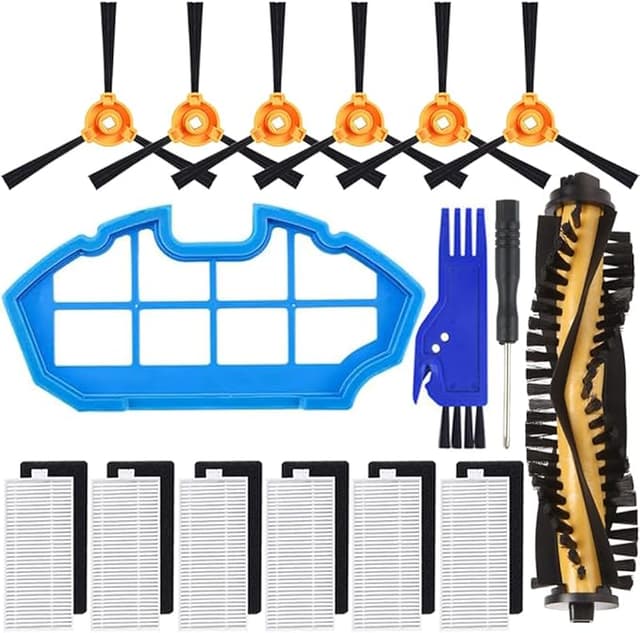
That's the moment most people meet me, metaphorically. They search "DEEBOT N79S replacement filter" or land here looking for parts for a 661 or a 500, and they're staring at the same fork in the road I was: pay Ecovacs for a name-brand kit, or grab one of these generic multi-packs and hope it's not garbage.
The price math that pushed me to the generic kit
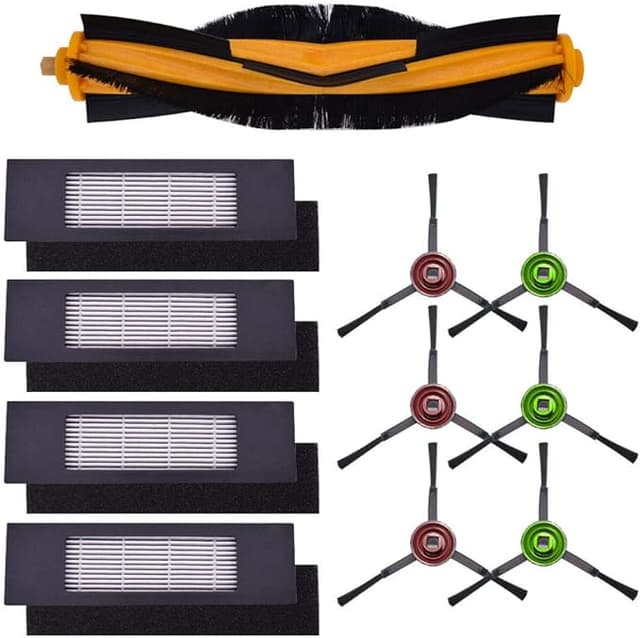
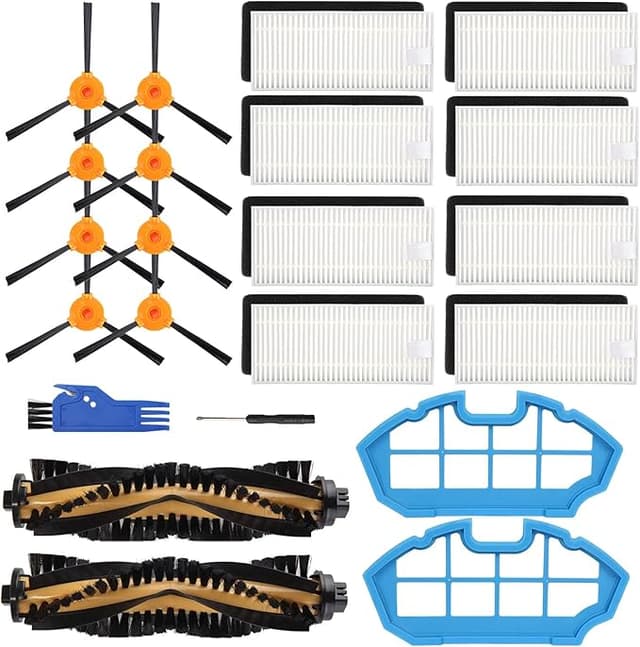
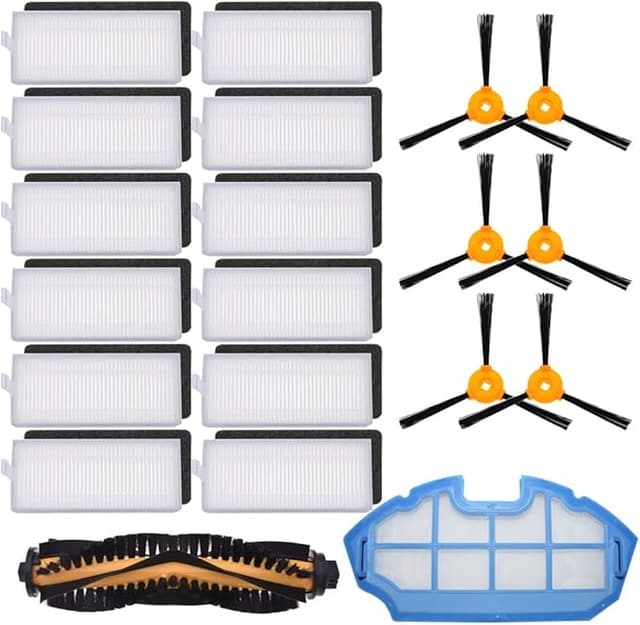
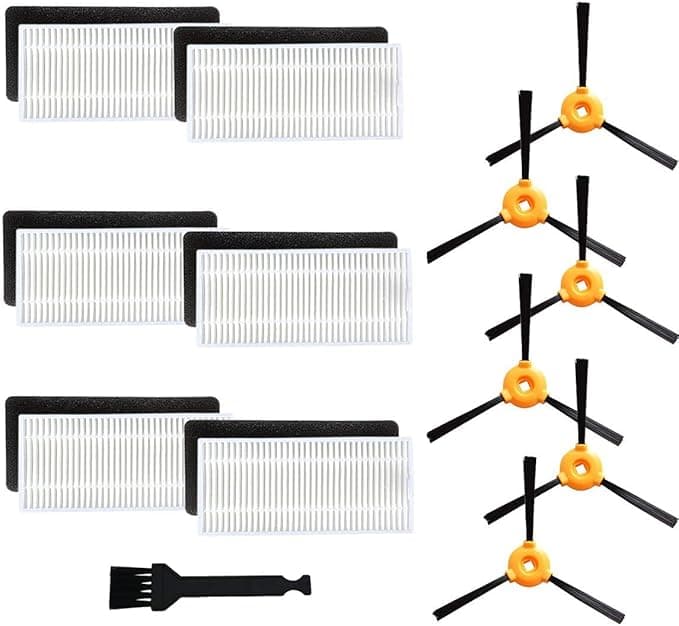
Here's the thing that bugged me. A genuine Ecovacs accessory kit — filters, brushes, side brushes — runs around $35 if you buy it as a bundle, and that's before you start adding mop pads. The generic kit I landed on was about $18 for a stack that included more of everything: extra HEPA-style filters, two main brushes, a fistful of side brushes, mop pads, the works. So you're looking at roughly a $17 gap on a single purchase, and because this is gear you replace two or three times a year, that gap compounds. Over a year I'm spending maybe $36 on the generic stuff versus $70-plus going OEM. Same job. Honestly, the savings is what got me to even try it.
And I was skeptical. The N79S isn't a precision instrument, but it's still a $200-ish robot and I didn't want to feed it parts that would gum up the motor or rattle loose mid-cycle.
Does the generic stuff actually fit?
Mostly, yes — and I mean that with the small asterisk it deserves. The install is exactly what you'd expect if you've ever swapped these before. You flip the DEEBOT upside down on a towel, pop the bin, lift the old foam-and-mesh filter straight out, and seat the new one. The main brush drops into its cradle under the little hinged cover and clicks down. Side brushes screw or press onto their posts. Mop pads attach to the plate. No tools needed for the filter and brushes, despite what some instructions tell you — keep a small screwdriver nearby only if a side-brush post is stubborn.
The generic filters seated cleanly in my unit. The mesh frame is a hair less rigid than the Ecovacs original — you can feel it flex a touch more between your fingers — but it dropped into the bin slot and the lid closed with the same snap. The main brushes are the part I was most worried about, and they spun true with no wobble. Side brushes, same.
How it actually cleans now — the honest version
First loop after the swap, the difference was loud, literally. The robot sounded healthier, the bin filled the way it used to when the machine was new, and that wet-dog smell was gone within a day. Pickup on my low-pile rugs and hardwood is, as far as my eyes and the dust bin can tell, indistinguishable from the genuine parts. Pet hair — I've got a shedding mutt — gets wound onto the brush the same way, which means I'm still cutting tangles off every couple weeks, but that's the design, not the brand.
Where's it a touch behind? Two honest things. The generic foam filter feels slightly thinner than OEM, and while it traps the bulk of the fine stuff, I don't fully trust it to be a true HEPA equivalent for the finest dust over its whole life — so I swap it a little more often than I would a genuine one, every six to eight weeks instead of stretching it. And the side brushes are the weakest piece of the kit. The bristles on the generic ones take a set faster; after a month or so one of mine started curling the way my old worn-out brush had. Not a dealbreaker — there were three spares in the pack — but it's real, and you should know it going in.
The downsides nobody puts on the listing
Let me actually sit on the downsides for a second, because a review that's all sunshine is a review you shouldn't trust. The packaging is cheap — everything came loose in one plastic clamshell, no individual wrapping, and one mop pad had a crease folded into it that took a day flat under a book to relax. There was a faint plastic-and-glue smell off the new brushes for the first two or three runs; it aired out completely by day three, but if you're sensitive to that, run the robot once with a window cracked before you call it a night. And because there's no brand stamped on these, you're trusting the seller's quality run, which can vary batch to batch. The set I got was good. I can't promise yours is from the identical mold.
None of that changed the verdict for me. It's the kind of stuff you shrug at when you remember you saved $17 and got more pieces in the box.
Why a clogged filter is more than a smell problem
Quick word on why I don't let this slide anymore, because that musty night taught me something. A saturated filter and a matted brush don't just clean worse — they make the motor work harder, pull more current, and run hotter. Fine dust that should be trapped gets blown back out the exhaust, which for anyone with allergies is the opposite of what you bought a robot vacuum for. Push it long enough and you're risking the suction motor itself, and on these models a dead motor basically means a dead robot. The $18 kit is cheap insurance against turning a $200 machine into landfill.
Who should buy OEM instead — and what I actually do
If your DEEBOT is under warranty and you're worried that third-party parts could give Ecovacs an excuse to deny a claim, buy the genuine kit and keep your receipts — that peace is worth the extra to some people. Same if you have serious dust allergies and want the closest thing to a sealed HEPA filter you can get; spring for the original filter at least, even if you go generic on the brushes.
For everyone else — and that's where I land — I grab the generic kit. I've now run three of these cycles on my N79S, swap the filter a touch early to cover for the thinner foam, and accept that the side brushes are the part I'll burn through fastest. It cleans like it should, it cost me half as much, and the box came with enough spares to last me well into next year. For the money it's doing the same job, and I've bought it again. Twice.